NASA launches IMAP mission to provide real-time space weather forecasts
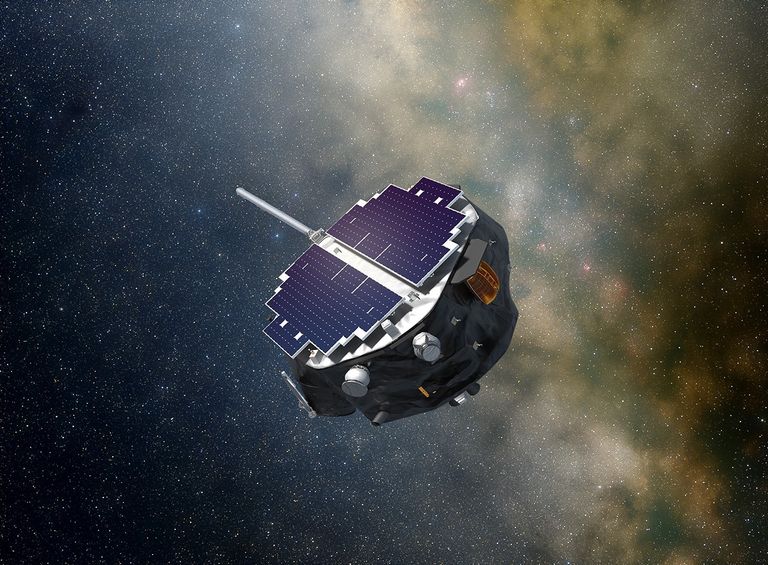 |
NASA has launched a two-year mission to study the boundary of the heliosphere, a huge protective bubble in space created by the Sun. The Interstellar Mapping and Acceleration Probe (IMAP) took off today aboard a SpaceX Falcon 9 rocket from the Kennedy Space Center at Cape Canaveral in Florida. The mission is now on a four-month journey to Lagrange point 1 (L1) – a point in space about 1.6 million kilometres from the Earth towards the Sun.
The solar wind is a stream of charged particles emitted by the Sun into space that helps to form the heliosphere. IMAP will study the solar wind and its interaction with the interstellar medium to better understand the heliosphere and its boundaries, which begin about 14 billion kilometres from Earth. This boundary offers protection from harsh radiation from space and is key to creating and maintaining a habitable solar system.