Αναζήτηση αναρτήσεων

Πέμπτη 21 Μαρτίου 2019

Climate change could allow disease-carrying mosquitoes to spread across Western Europe

Climate change could allow disease-carrying mosquitoes to spread across Western Europe

15 Mar 2019


Climate change could allow disease-carrying Asian tiger mosquitoes to spread across Western Europe, say two independent groups of researchers. The insects are known to spread more than 20 diseases including yellow fever, chikungunya, dengue, and Zika – which could become more common in the region.

According to a new study by Soeren Metelmann of the University of Liverpool and colleagues in the UK, almost all of England and Wales could be warm enough for the species by the 2060s. Meanwhile, an international team including Moritz Kraemer at the University of Oxford has done an independent study that predicts that the mosquito will spread throughout Europe over the next 30 years.

Παρασκευή 15 Μαρτίου 2019

Quantum-computing initiatives worldwide are examined by leading physicists

Quantum-computing initiatives worldwide are examined by leading physicists

01 Mar 2019 Hamish Johnston


Do you wonder how much Canada is spending on the development of quantum science and technologies, or exactly what the European Commission’s Quantum Flagship is? Well, you are in luck because the journal Quantum Science and Technology has put together a special Focus on Quantum Science and Technology Initiatives Around the World.

Written by some of the leading physicists in the field, the first five articles in the collection cover Canada, the EU, Japan, the US, and Australia. Reports from the UK and China will be published later this year.

Machine learning is implemented on an IBM quantum processor

Machine learning is implemented on an IBM quantum processor

14 Mar 2019 Hamish Johnston


Machine-learning algorithms have been run on a quantum computer by physicists at IBM. Although the proof-of-concept demonstration did not involve practical tasks, the team hopes that scaling-up the algorithms to run on larger quantum systems could give machine learning a boost.

Many machine learning algorithms are “kernel methods”, which determine similarities between patterns. The strategy is to transform the data – pixels in a digital image, for example – into a higher-dimensional representation that has clear boundaries between classification types. All images of cats, for example, would reside in one region of this higher-dimensional, space whereas all images of dogs reside in another.

Young forests use carbon most effectively

Young forests use carbon most effectively

15 Mar 2019
For forests, it really does help to be young. British scientists who have identified the vital factor that shows what makes a forest a good carbon sink say young forests use carbon best and absorb it most efficiently.

A new study in the Proceedings of the National Academy of Sciences seems on the face of it to settle an old puzzle with an unsurprising answer. New and young forests make the most efficient and effective carbon sinks.

CT system developers utilize AI to boost patient care

CT system developers utilize AI to boost patient care

14 Mar 2019


Disease detection with CT has benefited greatly from advancements in artificial intelligence (AI) software during the past year. To make the case at the ECR 2019 technical exhibition, many vendors dedicated their CT booth presentations to the integration of AI into the modality. The rewards for patient care are visible for all delegates to see during the recent congress.

With its gaze set firmly on combining AI and CT to enhance care, Siemens Healthineershighlighted its AI-Rad Companion Chest CT, a software assistant for radiology powered by AI technology.

This product is reportedly the company’s first application capable of using AI algorithms to automatically differentiate individual structures on chest CT scans. The algorithms can highlight distinct structures in the thorax and also spot potential abnormalities.

Photonic nanojets achieve super-resolution

Photonic nanojets achieve super-resolution

07 Mar 2019 Lauren Barr


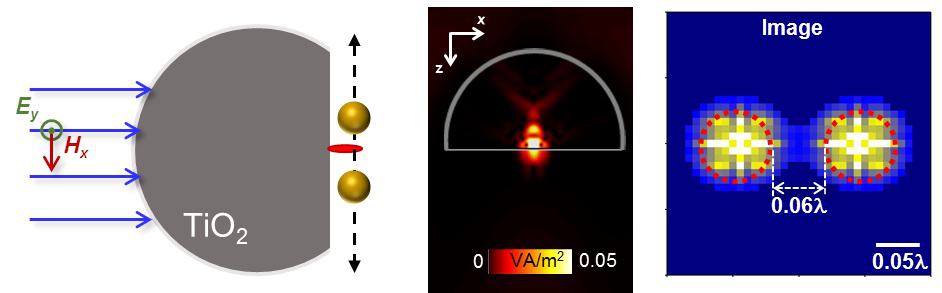
Ways to break through the diffraction limit and into the regime of subwavelength imaging have been growing ever-more creative. One tool that has proven useful in this endeavor is the photonic nanojet (PNJ) – an extremely narrow and intense beam of radiation at the interface between a dielectric particle and its surrounding medium. Now, a pair of researchers have developed a way to simultaneously minimize the particles and enhance the PNJs, which could benefit many imaging, microscopy and sensing applications, offering a resolution five times better than that of traditional PNJ imaging systems.Advertisement

Multipole magnetic tweezers measure organelle mechanical properties


Being able to directly probe organelles (specialized structures inside biological cells) and measure their properties is important for understanding subcellular activity, diagnosing diseases associated with this activity and developing new therapies. Doing this is no easy task, however. A team of researchers in Canada, China, and the US has now developed a new magnetic tweezer system that can measure the mechanical properties of organelles for the first time. The device makes use of a magnetic bead placed inside the cell that can be used to precisely manipulate intracellular structures at any location in 3D and apply a controllable force of up to 60 piconewtons to them for long periods. By relating the applied force and the amount by which the organelle deforms, as a result, the nanobot can measure properties such as viscoelasticity and plasticity of the cell nucleus, mitochondria, and endoplasmic reticulum.

“The mechanical properties of the biggest organelle inside a cell – the nucleus – are altered in cancer cells, cells with progeria, and cells infected with malaria,” explains lead author of this research study Xian Wang of the University of Toronto. “Directly probing the mechanical properties of the cell nucleus inside single cells would thus help us better understand the structural differences between diseased and healthy cells.”