Αναζήτηση αναρτήσεων

Τετάρτη 16 Δεκεμβρίου 2020

New fuel gauge for spacecraft could keep satellites active for longer


New fuel gauge for spacecraft could keep satellites active for longer

06 Dec 2020 Isabelle Dumé


When a spacecraft launches, it uses roughly 75–90% of its propellant getting into orbit. The remaining fraction determines how long it can remain up there, but gauging how much fuel is left in the tank is no easy task in zero gravity. Researchers at the US National Institute of Standards and Technology have now developed a solution based on a suite of sensors that detects the capacitance of liquid inside a spacecraft’s fuel tank and uses these data to reconstruct a three-dimensional picture of the remaining fuel.

Neutron-rich tantalum offers a view of how heavy elements are forged


Neutron-rich tantalum offers a view of how heavy elements are forged

01 Dec 2020


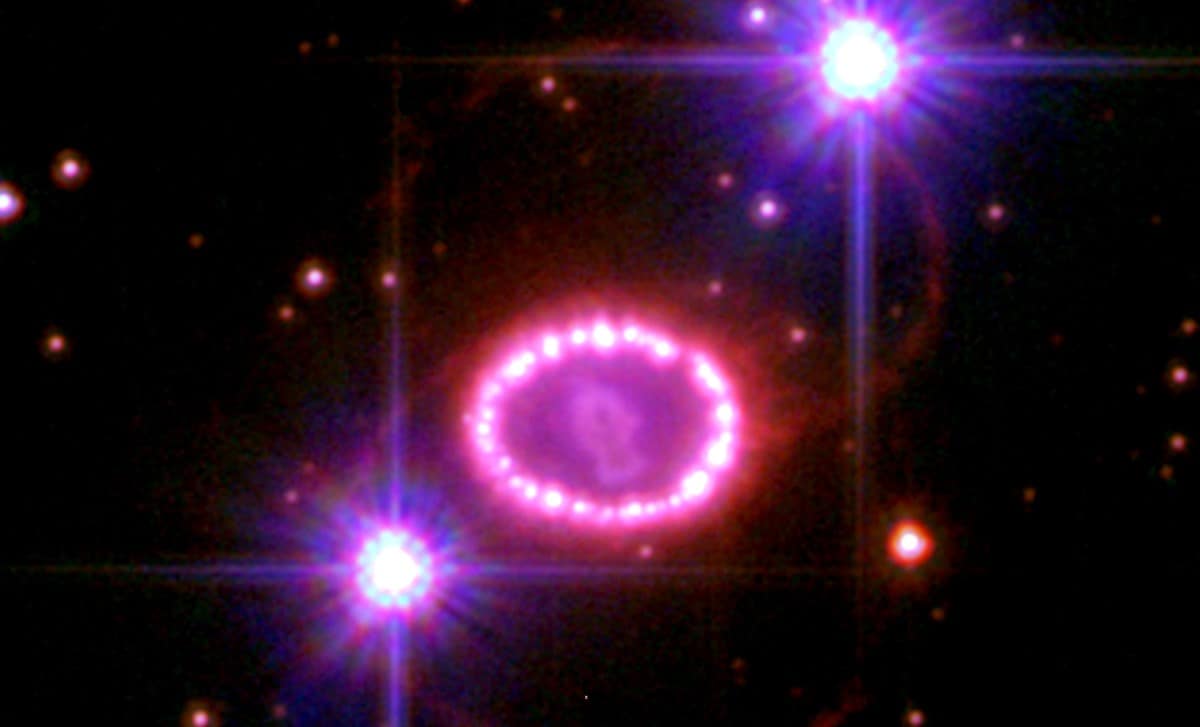
A beam of neutron-rich tantalum ions has been created for the first time by an international team of physicists working at RIKEN’s KEK Isotope Separation Facility (KISS) in Japan. The feat was achieved by Philip Walker at the University of Surrey and colleagues, who used state-of-the-art isotope separation techniques to isolate and study the ions. Their research could soon shed new light on how nuclear processes in dying stars create the heavy elements we observe in the universe today.


Rapid neutron capture, also known as the “r-process”, is a series of nuclear reactions that astrophysicists believe is responsible for about half of the elements heavier than iron in the universe.

MRI during treatment could improve paediatric proton therapy


MRI during treatment could improve paediatric proton therapy

10 Dec 2020


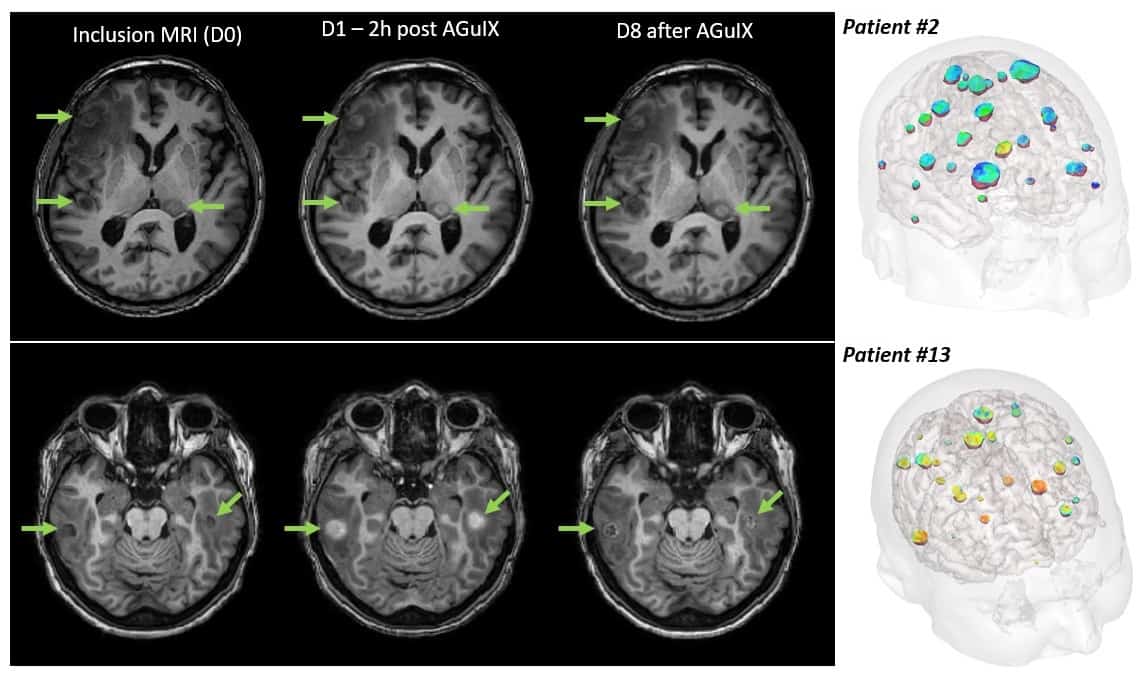
Identifying anatomic changes shown on MRI scans during a course of pencil-beam proton therapy, and adapting treatment plans accordingly, could improve the treatment quality, effectiveness and safety. In a retrospective study, researchers at St. Jude Children’s Research Hospital determined that 27% of paediatric patients, the majority with brain tumours, would have benefited from mid-treatment plan changes.

Nanoparticle sensitizers could enhance radiotherapy effectiveness


Nanoparticle sensitizers could enhance radiotherapy effectiveness

08 Dec 2020 Tami Freeman


Radiotherapy plays an essential role in the management of cancer, but unwanted irradiation of healthy tissues can lead to adverse side effects and limit the deliverable tumour dose. Radiosensitizers, which preferentially sensitize tumour cells to irradiation, can increase the therapeutic window and enable higher target doses without increasing normal tissue damage.

One approach under investigation to improve the effectiveness of radiotherapy is the use of nanoparticles as radiosensitizers. And at the recent ESTRO 2020 congress, attendees heard about some of the latest developments and clinical studies in this field.

Κυριακή 6 Δεκεμβρίου 2020

ΟΔΗΓΙΕΣ ΓΙΑ ΤΗΝ ΕΠΙΛΥΣΗ ΠΡΟΒΛΗΜΑΤΩΝ ΣΤΗΝ ΦΥΣΙΚΗ – ΓΕΝΙΚΟΤΕΡΗ ΜΕΘΟΔΟΛΟΓΙΑ

 ΟΔΗΓΙΕΣ ΓΙΑ ΤΗΝ ΕΠΙΛΥΣΗ ΠΡΟΒΛΗΜΑΤΩΝ ΣΤΗΝ ΦΥΣΙΚΗ – ΓΕΝΙΚΟΤΕΡΗ ΜΕΘΟΔΟΛΟΓΙΑ 


Τα τρία στάδια της διαδικασίας επίλυσης προβλημάτων φυσικής που χρησιμοποιούνται γενικά είναι τα εξής: 
 Στρατηγική: Προσδιορίστε ποιες φυσικές αρχές εμπλέκονται και αναπτύξτε μια στρατηγική για τη χρήση τους για την επίλυση του προβλήματος.
 • Λύση: Κάνετε τα μαθηματικά απαραίτητα για να αποκτήσετε μια αριθμητική λύση με μονάδες.
 • Σημασία: Ελέγξτε τη λύση για να βεβαιωθείτε ότι έχει νόημα (σωστές μονάδες, λογικό μέγεθος και πρόσημο) και εκτιμήστε τη σημασία της. 

ΟΙ ΟΔΗΓΙΕΣ ΓΙΑ ΤΑ ΠΡΟΒΛΗΜΑΤΑ ΦΥΣΙΚΗΣ 

Οι δεξιότητες επίλυσης προβλημάτων είναι σαφώς απαραίτητες για την επιτυχία σε ένα ποσοτικό μάθημα σαν την φυσική. Το πιο σημαντικό, η ικανότητα. Η εφαρμογή ευρέων φυσικών αρχών - που συνήθως αντιπροσωπεύονται από εξισώσεις - σε συγκεκριμένες καταστάσεις απαιτούν ένα ευρύ φάσμα γνώσης. Αυτό είναι κάτι πολύ πιο ισχυρό από την απομνημόνευση μιας λίστας γεγονότων. Οι αναλυτικές δεξιότητες και οι ικανότητες επίλυσης προβλημάτων μπορεί να εφαρμόζονται σε νέες καταστάσεις, ενώ ένας κατάλογος γεγονότων δεν μπορεί να δημιουργηθεί αρκετά για να περιέχει κάθε πιθανή περίσταση.

Παρασκευή 27 Νοεμβρίου 2020

Molecular spins show promise as quantum bits


Molecular spins show promise as quantum bits

23 Nov 2020
Molecular spins
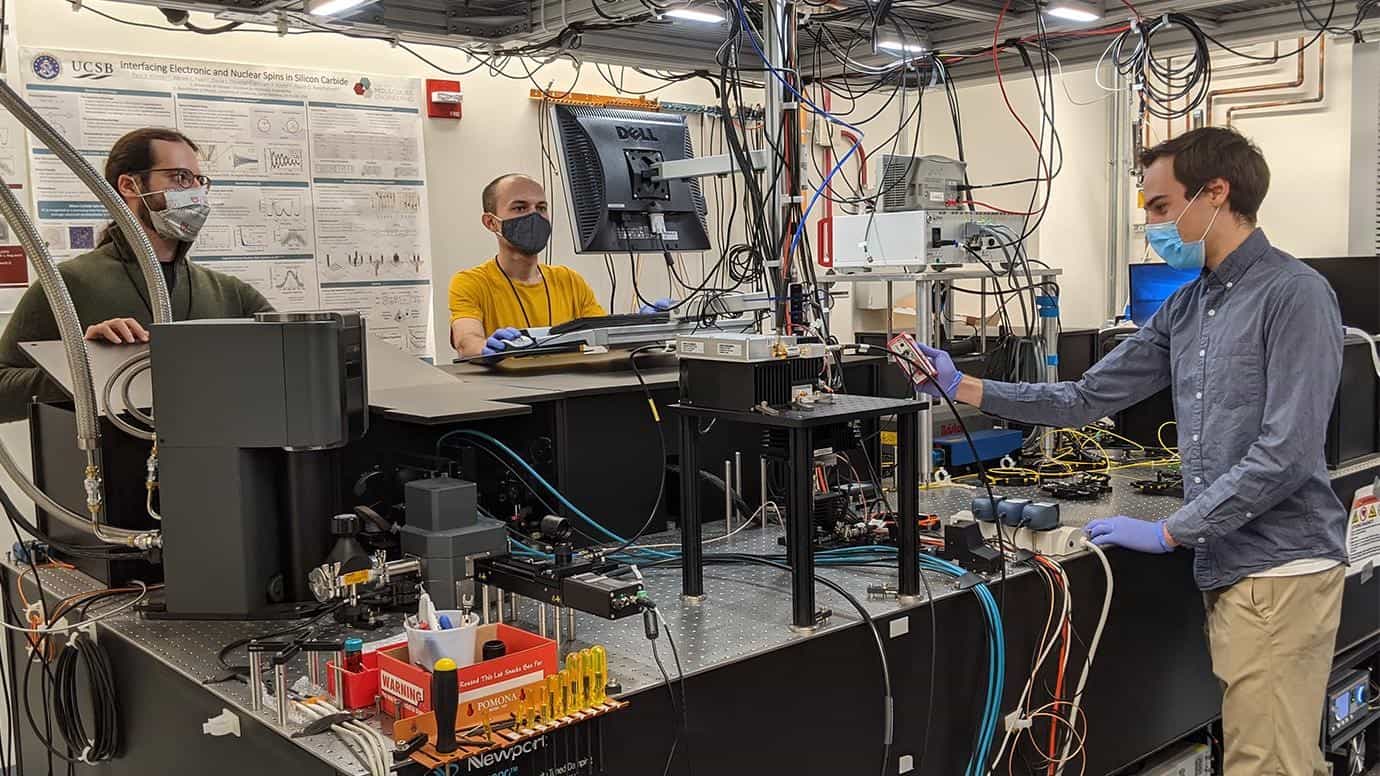
Spin doctors: Berk Kovos, Sam Bayliss and Peter Mintun (left to right) work on qubit technology at the University of Chicago. (Courtesy: Pratiti Deb/University of Chicago)


The states of molecular spins in a crystal can be detected optically using the polarization of the photons they emit, researchers in the US have shown. This allowed the team to prepare and precisely read out spin states within molecules – a capability that could be used to engineer quantum bits (qubits) with greater flexibility and control than possible using other platforms.


So far, the most successful platforms for quantum computing have proved to be trapped-ion qubits and superconducting qubits. However, both technologies have significant drawbacks. Ion qubits require high vacuum and electromagnetic traps, whereas superconducting qubits must be made from identical quantum circuits, which are extremely difficult to produce with the required consistency. One possible alternative is the diamond nitrogen-vacancy (NV) centre, which occurs when two adjacent carbon atoms in a diamond lattice are replaced by a single nitrogen atom.

Gold nanotubes and infrared light could treat asbestos-related cancer


Gold nanotubes and infrared light could treat asbestos-related cancer

20 Nov 2020
Nanotubes in mesothelioma cells
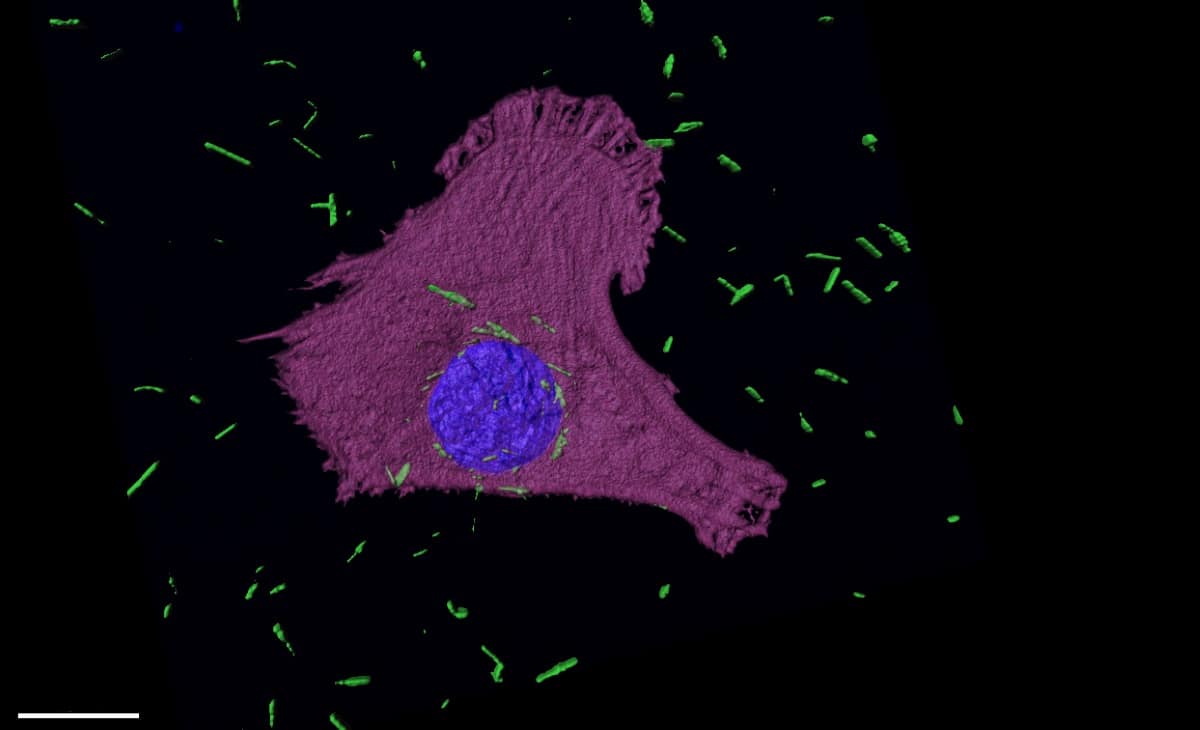
Confocal fluorescence image of gold nanotubes (green) in a mesothelioma cell. Scale bar: 20 µm. (Courtesy: Arsalan Azad)


Gold nanotubes can destroy cancer cells, according to physicists and medical researchers at the University of Cambridge and the University of Leeds. They found that their nanotubes, which were tuned to have strong near-infrared absorption, can enter mesothelioma cells and destroy them when heated with laser light.

Every year, more than 2700 people in the UK are diagnosed with mesothelioma. This cancer usually grows in the pleural membrane, a thin lining that surrounds the lungs. The vast majority of cases are caused by exposure to asbestos dust. When damaged, asbestos releases microscopic fibres that can be inhaled. These fibres can then migrate through lung tissue into the pleural membrane and cause mesothelioma to develop. Asbestos has been banned in the UK since the late 1990s, but mesothelioma can take from 15 to 60 years to develop.