Αναζήτηση αναρτήσεων

Παρασκευή 18 Δεκεμβρίου 2020

Silicon-based material with a direct band gap is the Physics World 2020 Breakthrough of the Year


Silicon-based material with a direct band gap is the Physics World 2020 Breakthrough of the Year

17 Dec 2020 Hamish Johnston


The Physics World 2020 Breakthrough of the Year goes to Elham Fadaly, Alain Dijkstra and Erik Bakkers at Eindhoven University of Technology in the Netherlands, Jens Renè Suckert at Friedrich-Schiller-Universität Jena in Germany and an international team for creating a silicon-based material with a direct band gap that emits light at wavelengths used for optical telecommunications.

Nine other achievements are highly commended in our Top 10 Breakthroughs of 2020.
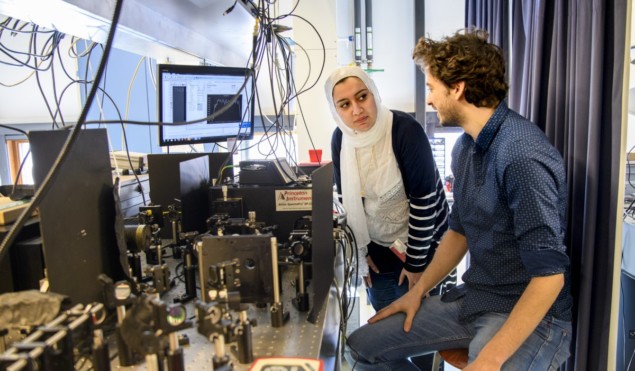
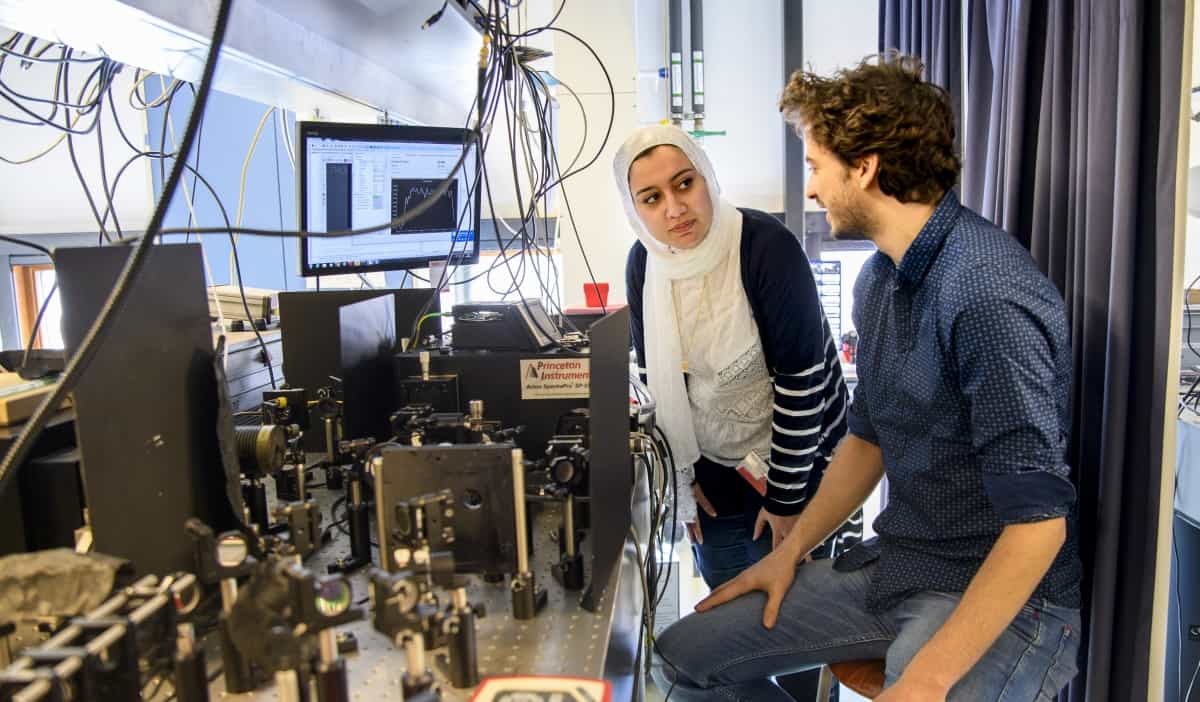


It is no exaggeration to say that finding a silicon-based material that emits useful light has been the Holy Grail of optoelectronics. Normally, silicon has an indirect electronic band gap, which means that it does not emit light. As a result, silicon must be integrated with other direct-band-gap semiconductor materials to create the optoelectronic devices that supply the pulses of light that drive information on the Internet. While this integration is possible, it is difficult and expensive.

Celebrating Black physicists


Celebrating Black physicists

29 Oct 2020 Margaret Harris


This week is #BlackInPhysics week, a series of events dedicated to celebrating Black physicists and their contributions to the scientific community. In this episode of the podcast, we talk to two of the week’s co-organizers, Ashley Walker and Xandria Quichocho, about what #BlackInPhysics week involves, why it’s needed and what they hope to achieve.

Doing physics in the time of COVID-19


Doing physics in the time of COVID-19

28 Apr 2020 James Dacey


Across the world, personal and professional lives have been profoundly affected during the past few months – and scientists are no exception. In this episode of the Physics World Stories podcast, we find out how physics and physicists are adapting to coronavirus-related lockdowns. Among physicists – as with many professions – there is a growing realisation that things are not about to go back to normal anytime soon.

A passion for nanotechnology in medicine: Black in Nanotech Week cofounder Olivia Geneus on inspiring new nanoscientists


A passion for nanotechnology in medicine:  Black in Nanotech Week cofounder Olivia Geneus on inspiring new nanoscientists

03 Dec 2020 Hamish Johnston


The second week in December is Black in Nanotech Week and its co-founder Olivia Geneus is our guest in this episode of the Physics World Weekly podcast. Geneus talks to Margaret Harris about her interest in using nanotechnology to develop new ways of treating cancer, and about the need to highlight the accomplishments of Black scientists in the field of nanotechnology and inspire the next generation of nanoscientists.

Planet Nine: is it a planet, a primordial black hole or something else entirely?


Planet Nine: is it a planet, a primordial black hole or something else entirely?

17 Jul 2020 James Dacey


Planet Nine is a hypothetical world in the far reaches of our solar system. Proposed in 2016 by Caltech astronomers Mike Brown and Konstantin Batygin, its existence would explain the unusual orbits of certain Kuiper belt objects (KBOs). But are we completely sure that Planet Nine in fact a planet?

A paper in September 2019 suggested the gravitational effects could instead be explained by the presence of a primordial black hole smaller than your fist. To get to the bottom of this mystery, there have been recent proposals to send fleets of tiny probes to the general region of this mysterious object.

Could there really be life in the clouds of Venus?


Could there really be life in the clouds of Venus?

23 Sep 2020 James Dacey


The news last week that scientists had spotted a potential signature of life in the clouds of Venus was always likely to cause a stir. But arriving the middle of the COVID-19 pandemic – during which our everyday lives have changed significantly – the story has truly captured the public imagination. In the latest episode of the Physics World Stories podcast, Andrew Glester takes a broad view of the discovery: an inspiring example of lateral thinking, persistence and collaboration.

How capable are today’s quantum computers?


How capable are today’s quantum computers?

14 Oct 2020 James Dacey


Media coverage of quantum computing often focusses on the long term potential for these devices to leave classical computing in the dust. But what about the rudimentary quantum systems that are already being developed and tested by technology companies? What are the latest advances in the field? And what might these systems realistically be able to achieve in the short to medium term? Andrew Glester investigates these questions in the latest episode of the Physics World Stories podcast.