Αναζήτηση αναρτήσεων

Κυριακή 21 Μαρτίου 2021

Proton contains more anti-down quarks than anti-up


Proton contains more anti-down quarks than anti-up

16 Mar 2021
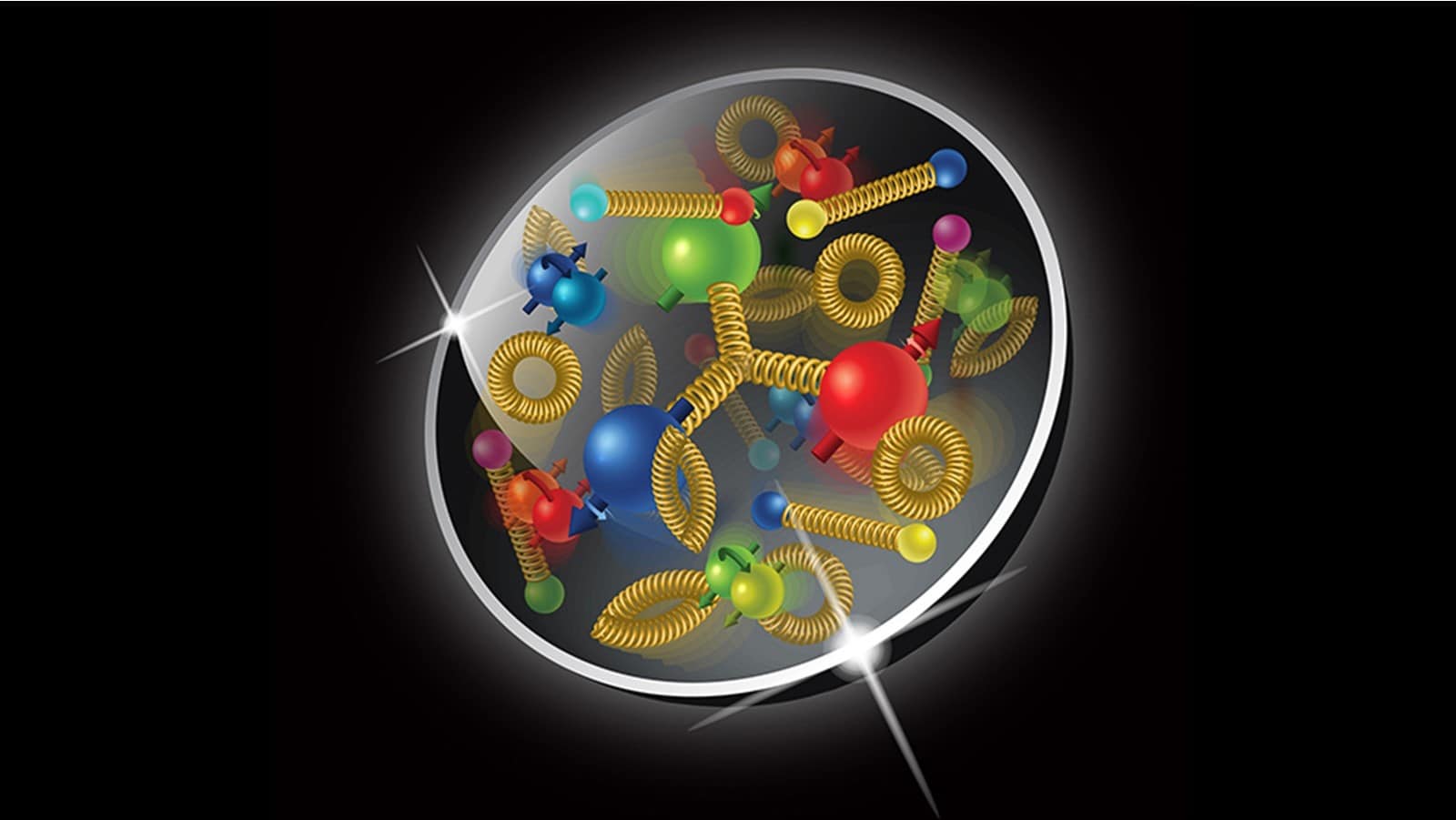


The sea of short-lived particles in the proton has a far higher abundance of anti-down quarks than anti-up quarks, new research has shown. An international team including Paul Reimer of Argonne National Laboratory in the US, discovered the asymmetry by firing a beam of protons at a hydrogen (proton) target at Fermilab. The results shed new light on highly complex interactions within the proton and could lead to a better understanding of the dynamics that unfold following high-energy proton collisions.

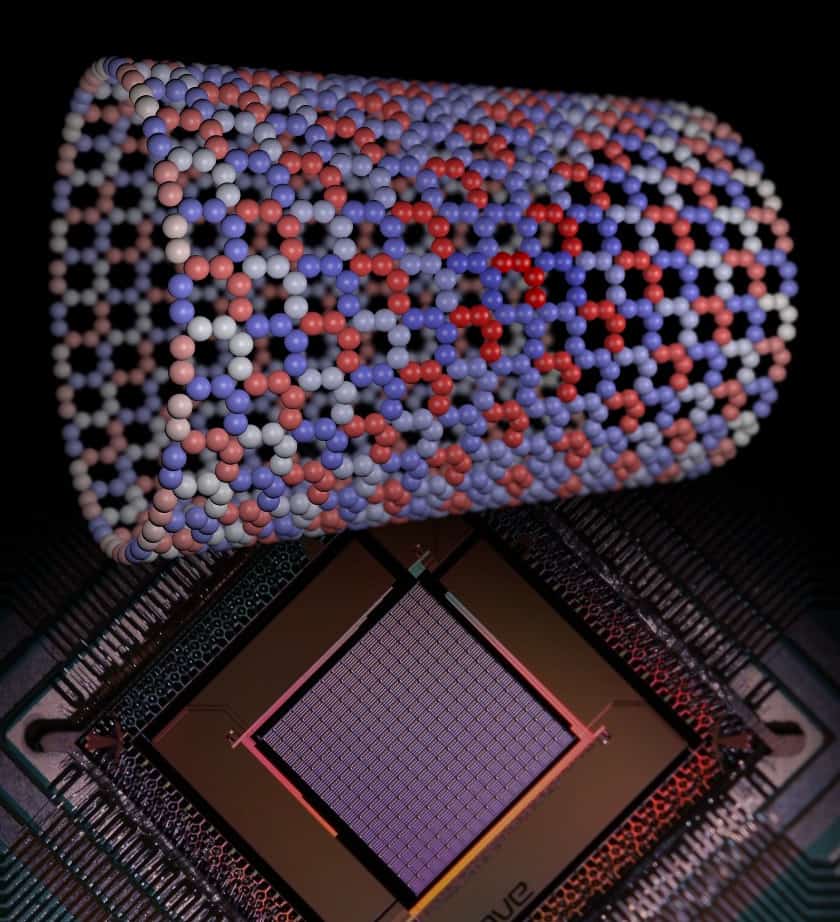
D-Wave demonstrates performance advantage in quantum simulation


D-Wave demonstrates performance advantage in quantum simulation

16 Mar 2021 Maria Violaris


Researchers at the quantum computing firm D-Wave Systems have shown that their quantum processor can simulate the behaviour of an “untwisting” quantum magnet much faster than a classical machine. Led by D-Wave’s director of performance research Andrew King, the team used the new low-noise quantum processor to show that the quantum speed-up increases for harder simulations. The result shows that even near-term quantum simulators could have a significant advantage over classical methods for practical problems such as designing new materials.

Spacecraft in a ‘warp bubble’ could travel faster than light, claims physicist


Spacecraft in a ‘warp bubble’ could travel faster than light, claims physicist

19 Mar 2021


Albert Einstein’s special theory of relativity famously dictates that no known object can travel faster than the speed of light in vacuum, which is 299,792 km/s. This speed limit makes it unlikely that humans will ever be able to send spacecraft to explore beyond our local area of the Milky Way.


However, new research by Erik Lentz at the University of Göttingen suggests a way beyond this limit. The catch is that his scheme requires vast amounts of energy and it may not be able to propel a spacecraft.

Three-node quantum network makes its debut


Three-node quantum network makes its debut

17 Mar 2021


Scientists at the Delft University of Technology in the Netherlands have taken an important step towards a quantum Internet by connecting three qubits (nodes) in two different labs into a quantum network. Such quantum networks could be used for secure communication, for safer means of identification or even distributed quantum computing.

The group, led by Ronald Hanson, is no stranger to setting up quantum links. In 2015 members of the group performed the first loophole-free Bell inequality violation, successfully entangling two electron spin states over 1.3 kilometres in an experiment that finally put the lid on the 80-year-old Einstein-Podolski-Rosen dispute about the nature of entanglement.

Glashow resonance is spotted in a neutrino detector at long last


Glashow resonance is spotted in a neutrino detector at long last

17 Mar 2021


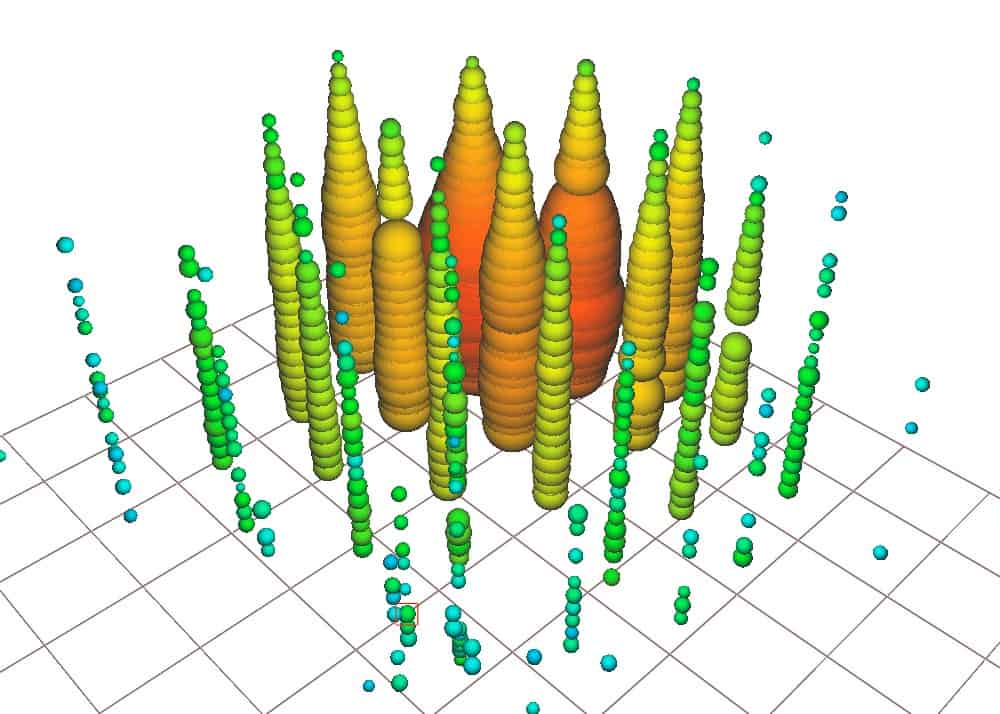
Physicists working on the IceCube Neutrino Observatory in Antarctica say they have made the first observation of the Glashow resonance – a process first predicted more than 60 years ago. If confirmed, the observation would provide further confirmation of the Standard Model of particle physics and help astrophysicists understand how astrophysical neutrinos are produced.


In 1959, the theoretical physicist and future Nobel laureate Sheldon Glashow worked out that an electron and an antineutrino could interact via the weak interaction to produce a W boson. Subsequent calculations indicated that this coupling – known as the Glashow resonance – should occur at antineutrino energies of around 6.3 PeV (6.3 x 10¹⁵ V).

Ultracold atoms permit direct observation of quasiparticle dynamics


Ultracold atoms permit direct observation of quasiparticle dynamics

18 Mar 2021 Oliver Stockdale


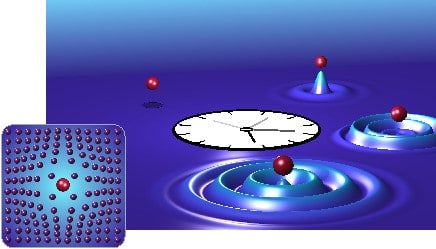
Theories of how quasiparticles form have been around for more than 80 years, but direct observations of the process have remained elusive due to experimental challenges. A team of researchers at the Center for Complex Quantum Systems, Aarhus University, Denmark has recently overcome these obstacles by studying quasiparticle formation and dynamics in ultracold atoms.


The Soviet physicist Lev Landau developed a theory of quasiparticles – emergent phenomena that arise from a complex interaction between many real particles – in the 1930s. This theory, which is still routinely used in practical applications ranging from superconductivity to transport processes in electronic devices, considers the motion of an electron through a solid and describes how the electron (the quantum impurity) triggers the formation of a quasiparticle within the solid.
An ultracold analogue