Αναζήτηση αναρτήσεων

Δευτέρα 2 Μαΐου 2022

Researchers exploit astronomy technology for biomedical imaging

Researchers exploit astronomy technology for biomedical imaging

26 Apr 2022 Tami Freeman
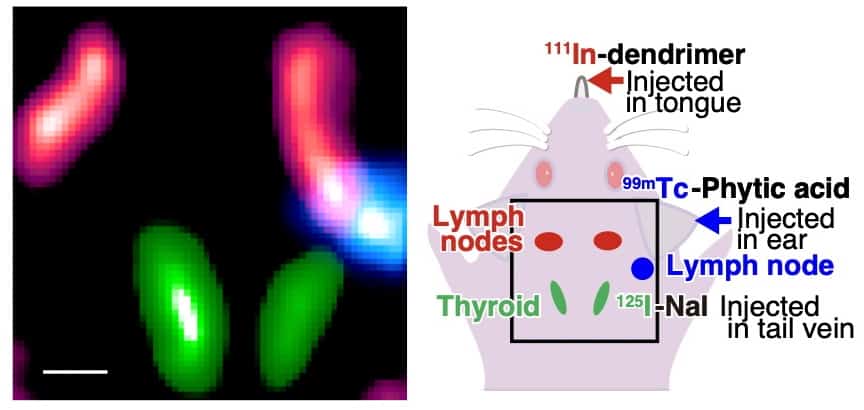


In vivo imaging plays an essential role within medicine, pharmaceutics and biology. Imaging with fluorescent tracers is one promising approach, as multiple tracer types are available to simultaneously visualize the distribution of numerous molecules. Biological tissues, however, will scatter and attenuate visible light, making image reconstruction and quantitative measurements of fluorescent dyes difficult.


Κυριακή 1 Μαΐου 2022

Super-resolution microscopy reveals coronavirus-replicating machinery


Super-resolution microscopy reveals coronavirus-replicating machinery

28 Apr 2022 Isabelle Dumé


The virus-replicating machinery of the SARS-Cov-2 virus and the ribonucleic acid (RNA) molecules it produces as it replicates are located in physically distinct areas of an infected cell. This observation, made by researchers at Stanford University in the US using a new multicolour super-resolution microscopy imaging technique, provides fresh insights into the life cycle of coronaviruses and could aid the development of new therapeutics to fight them.

Solar cell keeps going after sunset


Solar cell keeps going after sunset

27 Apr 2022 Isabelle Dumé


A new type of photovoltaic cell continues working after sunset thanks to an additional generator that harvests electricity from the temperature difference between the cell and its surroundings. The combined device can generate 50 mW or more of power per square metre at night while providing additional power during the day, and its developers say that it could provide a continuous source of renewable energy for people without access to the electrical grid.

Atomic quantum processors make their debut


Atomic quantum processors make their debut

27 Apr 2022


The first quantum processors that use neutral atoms as qubits have been produced independently by two US-based groups. The result is a milestone because atomic quantum computers may be easier to scale up than devices based on superconducting circuits or trapped ions – the two technologies that have dominated so far.

Negative capacitance could make transistors more energy efficient


Negative capacitance could make transistors more energy efficient

29 Apr 2022


By exploiting a curious effect called negative capacitance, researchers have designed a transistor that requires a gate voltage about 30% lower than conventional designs. Led by Sayeef Salahuddin at the University of California, Berkeley, the team based their design around an ultrathin superlattice heterostructure, containing alternating layers of ferroelectric and antiferroelectric materials. The team says that its superlattice could be easily integrated into existing transistor designs, reducing their energy requirements.

Quantum memristor paves the way for neuromorphic quantum computing


Quantum memristor paves the way for neuromorphic quantum computing

30 Apr 2022 Isabelle Dumé


Researchers in Italy and Austria have constructed a new device that can transmit coherent quantum information as a superposition of single photons. Known as a quantum memristor, the device could be used to fabricate quantum versions of so-called neuromorphic architectures that mimic the structure of the human brain.

Research infrastructures found to have an astronomical impact on astronomy’s carbon footprint


Research infrastructures found to have an astronomical impact on astronomy’s carbon footprint

23 Mar 2022


The construction and operation of space missions, telescopes and other facilities produces more greenhouse-gas emissions than any other aspect of doing astronomy and cosmology research. That is according to a new study, which shows that if the field is to become more sustainable in future then the pace of building new observatories and space missions will need to be slower than it has been during the past few decades.