Αναζήτηση αναρτήσεων

Τρίτη 9 Αυγούστου 2022

Weyl loops link up


Weyl loops link up

12 Jul 2022 Isabelle Dumé
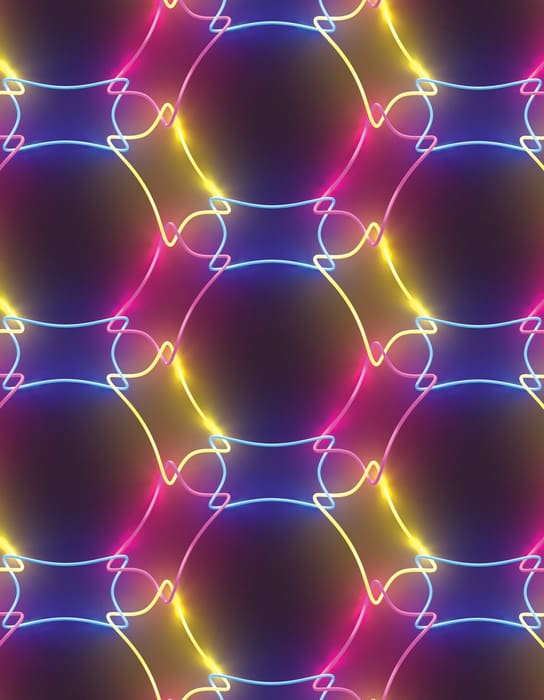

The quantum electronic link in momentum (velocity) space observed in the topological Weyl magnet Co2MnGa. (Courtesy: Ilya Belopolski and M Zahid Hasan, Princeton University)

For the first time, a team of physicists have observed quantum mechanical structures known as Weyl loops linking up to form chains. These structures, which are formed from quantum states of electrons in crystalline cobalt manganese gallium (Co2MnGa), have a novel topology and must be described using knot theory. According to the team, this same theory could help explain other quantum behaviours, with possible applications including topological conductors, superconductors and even quantum bits.


Falling rockets pose increasing danger to human life, study reveals


Falling rockets pose increasing danger to human life, study reveals

02 Aug 2022


Lift off A United Launch Alliance Atlas V rocket safely carried the Mars 2020 mission with the Perseverance rover. (Courtesy: ULA)

The risk to people on the ground of being killed by the uncontrolled descent of a rocket stage is increasing, with legislation urgently needed to prevent potential tragedies, says a team of political scientists and astronomers in Canada.

Biofinder could detect signs of extraterrestrial life


Biofinder could detect signs of extraterrestrial life

06 Aug 2022 Isabelle Dumé


Biofinder detected biological residues in fish fossils. (Courtesy: Misra, et al., 2022)

A highly sensitive instrument has picked up strong bio-fluorescence signals from fossilized organisms that perished millions of years ago. According to its developers, the new Compact Color Biofinder would be similarly handy at detecting signs of life on other planetary bodies and could therefore play a critical role in future missions by NASA and other space agencies.

Citizen scientist discovers 34 brown dwarfs in binary systems


Citizen scientist discovers 34 brown dwarfs in binary systems

08 Aug 2022


Two's company Artist’s conception of a brown dwarf in a binary system with a white dwarf star. (Courtesy: NOIRLab/NSF/AURA/M Garlick)

New research has uncovered 34 new binary-star systems in which low-mass stars partner up with a so-called “failed star” or brown dwarf. The discoveries almost double the number of known systems and could help astronomers better understand where the dividing line between planets and stars is.

3D printed sensor lines up for space plasma detection


3D printed sensor lines up for space plasma detection

08 Aug 2022


Low-cost production: The 3D printed plasma sensor performs as well as more expensive, semiconductor sensors, and could prove ideal for use on CubeSats. (Courtesy: The researchers; edited by MIT News)

Researchers at Massachusetts Institute of Technology (MIT) have developed a new 3D printing technique that could make it far easier to build detectors for measuring cold, dense plasma in Earth’s upper atmosphere. Javier Izquierdo-Reyes and colleagues hope that their simple, low-cost approach could open up this region of space to a far wider range of research groups.

Unexpected phase transition appears in elemental neodymium


Unexpected phase transition appears in elemental neodymium

09 Aug 2022 Isabelle Dumé


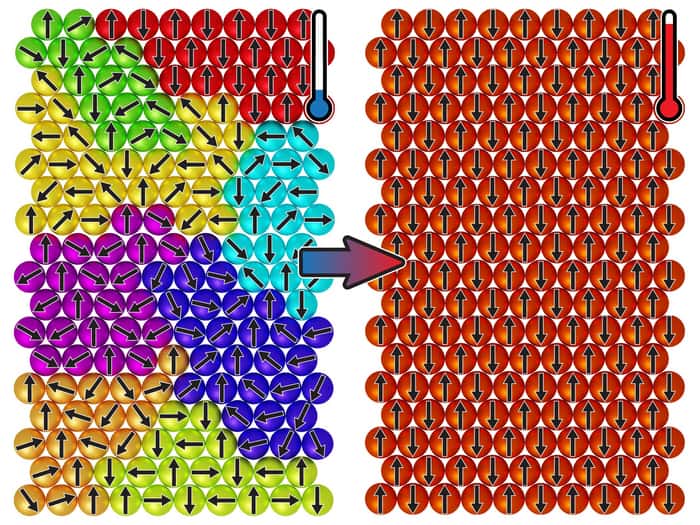
Magnetic spins that 'freeze' when heated (Courtesy: Radboud University)

Usually, when materials heat up, they become more disordered. Now, researchers at Radboud University in the Netherlands have found evidence for the opposite happening in the element neodymium, which develops long-range order as its temperature increases. The presence of this phase transition could shed light on the behaviour of materials known as spin glasses and could also aid the development of devices for information storage or neuromorphic computing.

Bipolar transistors go organic


Bipolar transistors go organic

04 Aug 2022 Isabelle Dumé


Organic bipolar transistors can also handle demanding data processing and transmission tasks on flexible electronic elements - for example here, for electrocardiogram (ECG) data. Courtesy: © Jakob Lindenthal

Researchers in Germany have created the first bipolar transistor made from an organic semiconductor. The new transistor boasts outstanding performance, a vertical architecture and a high differential amplification, and could find applications in high-performance thin-film and flexible electronics where data must be analysed and transmitted at high speeds.