Αναζήτηση αναρτήσεων

Δευτέρα 14 Νοεμβρίου 2022

Half-light, half-matter quasiparticle appears in a van der Waals magnet


Half-light, half-matter quasiparticle appears in a van der Waals magnet

14 Nov 2022 Isabelle Dumé
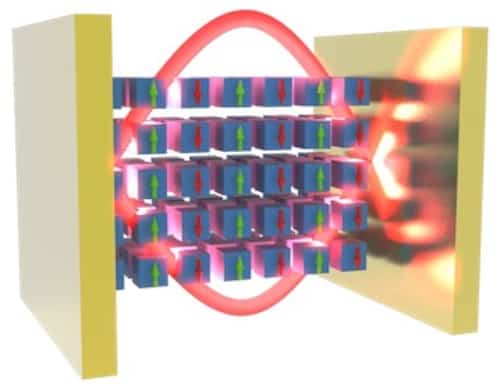


Realization of half-light half-matter magnetic quasiparticles in an optical cavity embedded with a van der Waals magnet. (Courtesy: Rezlind Bushati)

A new quasiparticle that is part matter, part light has emerged in experiments by researchers at the City College of New York, US, who observed it by coupling light to a stack of ultrathin two-dimensional antiferromagnets. The work could have implications for devices like lasers or for digital data storage.

Modified gravity describes how open star clusters ‘dissolve’


Modified gravity describes how open star clusters ‘dissolve’

09 Nov 2022


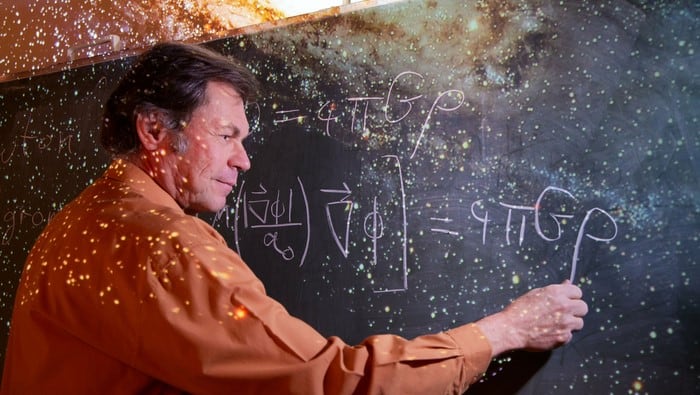
Modifying gravity: Pavel Kroupa and colleagues have shown that Modified Newtonian Dynamics does a good job at describing the properties of open clusters of stars. (Courtesy: Volker Lannert/University of Bonn)

An alternative description of gravity does a very good job of predicting how newly formed star clusters break apart – according to an international team of astronomers. They used new mathematical techniques to show that Modified Newtonian Dynamics (MOND) can reproduce the asymmetry and lifetime of open stellar clusters that have been observed by the Gaia space telescope.

Early stages of an ancient supernova observed using gravitational lensing


Early stages of an ancient supernova observed using gravitational lensing

11 Nov 2022


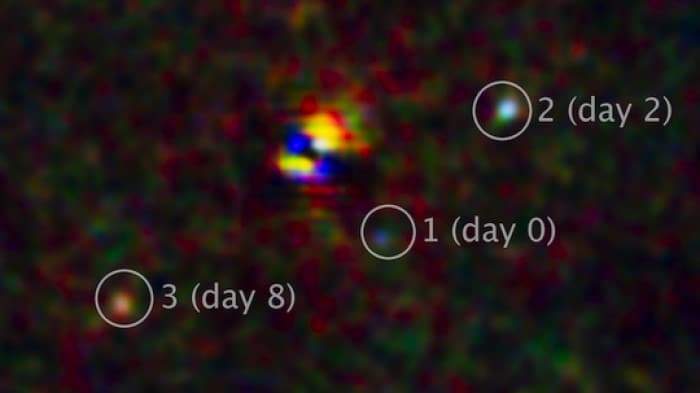
Cooling down: false-colour representation of the three images of the supernova, showing how the object cooled over a period of eight days. (Courtesy: Wenlei Chen/NASA)

Light from a supernova that was emitted just six hours after the initial stellar explosion has been observed along with light emitted two and eight days later. The observation was made by an international team using the Hubble Space Telescope (HST). The supernova is also notable for having occurred around 11.5 billion years ago when the universe was in its relative infancy.

Rubidium vapour makes a good quantum memory


Rubidium vapour makes a good quantum memory

10 Nov 2022 Pradeep Niroula


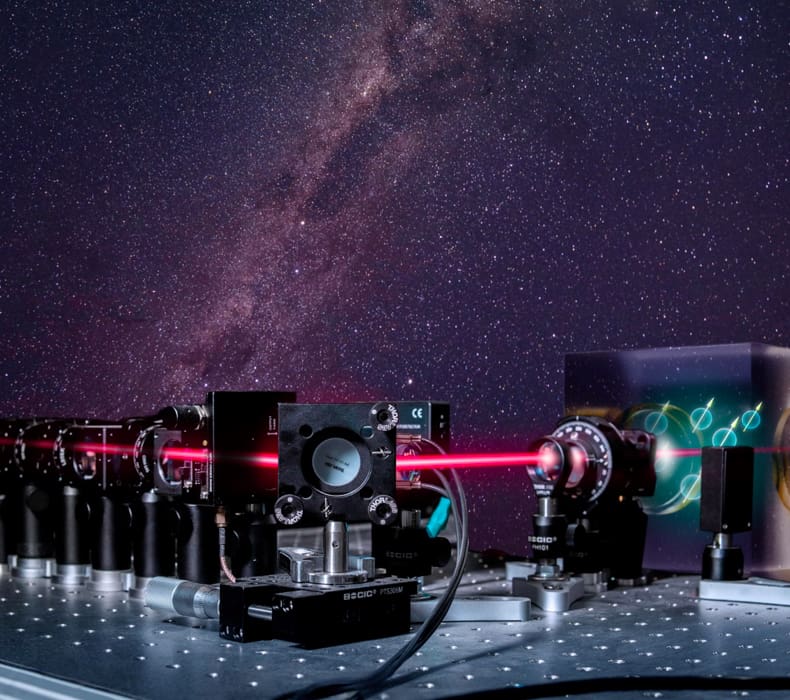
Remember me: The University of Basel lab where the rubidium vapour cell quantum memory was developed. The vapour cell is at the centre, protected by magnetic shielding. (Courtesy: Gianni Buser)

Finding a reliable way to store quantum information is at the heart of efforts to build a quantum­ Internet. Unlike classical data, quantum information cannot be copied or amplified, and while the classical Internet transmits data via mature technologies like routers and switches that link cobwebs of wires and cables, the building blocks of the quantum Internet are still under construction.

Τετάρτη 2 Νοεμβρίου 2022

Spin-based amplifier searches for axions


Spin-based amplifier searches for axions

19 Sep 2022 Isabelle Dumé


Bridging the gap between previous laboratory searches and astrophysical observations. (Courtesy: X Peng)

A sensitive new way of detecting particle interactions in the laboratory has been used for the first time to search for axions, a hypothetical form of dark matter. Using a so-called spin-based amplifier, an international team of physicists succeeded in constraining the axion mass within the predicted “axion window” of 0.01 meV to 1 meV, thereby bridging the gap between previous laboratory searches and astrophysical observations.

Waving coral synchronizes according to temperature and light conditions


Waving coral synchronizes according to temperature and light conditions

13 Sep 2022


Waving below the waves A study has provided insights into the synchronized motions of coral. (Courtesy: iStock/entwicklungsknecht)

Correlations between the waving motions of individual coral polyps have been observed – a discovery that could boost our understanding of coral reefs. Through a carefully-controlled experiment, Shuaifeng Li and Jinkyu Yang at the University of Washington, Seattle and colleagues found that the random swaying of the animals became more synchronized at cooler temperatures, and under red light.

Cosmic muons probe the interiors of tropical cyclones


Cosmic muons probe the interiors of tropical cyclones

18 Oct 2022


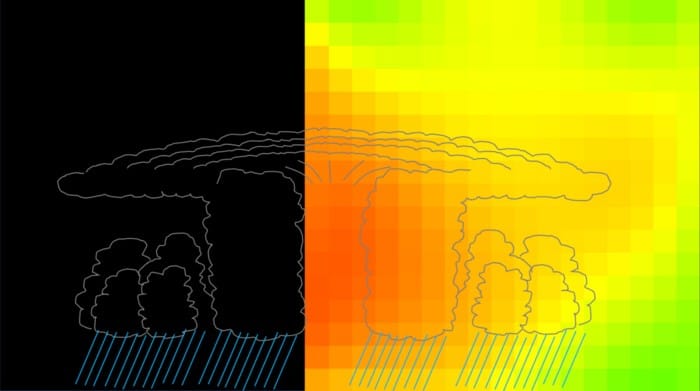
Peering inside: the image on the right shows the interior of a cyclone. The redder areas are regions of lower pressure, and the greener areas are higher pressure. (Courtesy: Hiroyuki KM Tanaka)

Cosmic muons have been used to image structures deep within tropical storms, according to an international team of researchers. Led by Hiroyuki Tanaka at the University of Tokyo, the team used a network of muon detectors to identify differences in air density within several typhoons. Through further improvements, their approach could provide important information for early warning systems for severe storms.