Αναζήτηση αναρτήσεων

Δευτέρα 14 Νοεμβρίου 2022

New neutral-atom qubit offers advantages for quantum computing


New neutral-atom qubit offers advantages for quantum computing

13 Oct 2022 Ali Lezeik


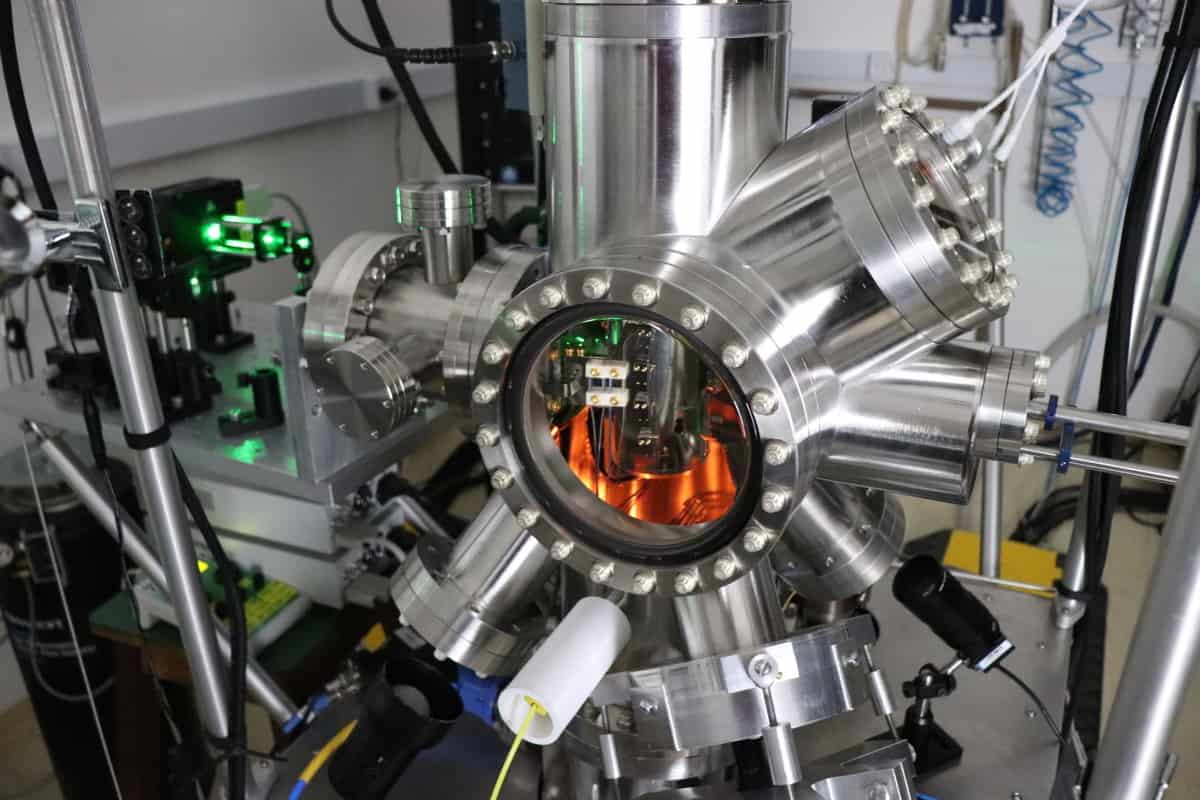
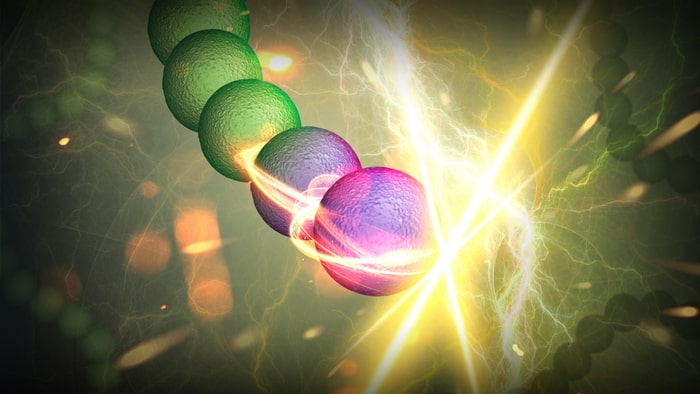
Near-deterministic loading: The neutral-atom qubit setup at JILA. (Courtesy: Kaufman lab)

Two US-based research teams have developed quantum information processors that use neutral ytterbium (Yb) atoms as qubits – the first time this atomic species has been employed for this purpose. Trapping 100 Yb atoms in a 10 × 10 array, the researchers showed that they could perform entangled two-qubit gate operations on them, paving the way towards quantum computers based on this choice of qubit.

Bacteria-based microrobots show potential for cancer drug delivery


Bacteria-based microrobots show potential for cancer drug delivery

08 Nov 2022 Tami Freeman


Enhanced drug delivery: Magnetic bacteria (grey) can squeeze through narrow intercellular spaces to cross the blood vessel wall and infiltrate tumours. (Courtesy: Yimo Yan/ETH Zurich)

Scientists have explored the use of bacteria for cancer treatment for more than a century, with some strains progressing onto clinical trials. More recently, the idea has emerged of using modified bacteria as “ferries” to carry anti-cancer drugs through the bloodstream to the tumours.

Proton therapy planning: how to minimize LET in organs-at-risk


Proton therapy planning: how to minimize LET in organs-at-risk

14 Nov 2022


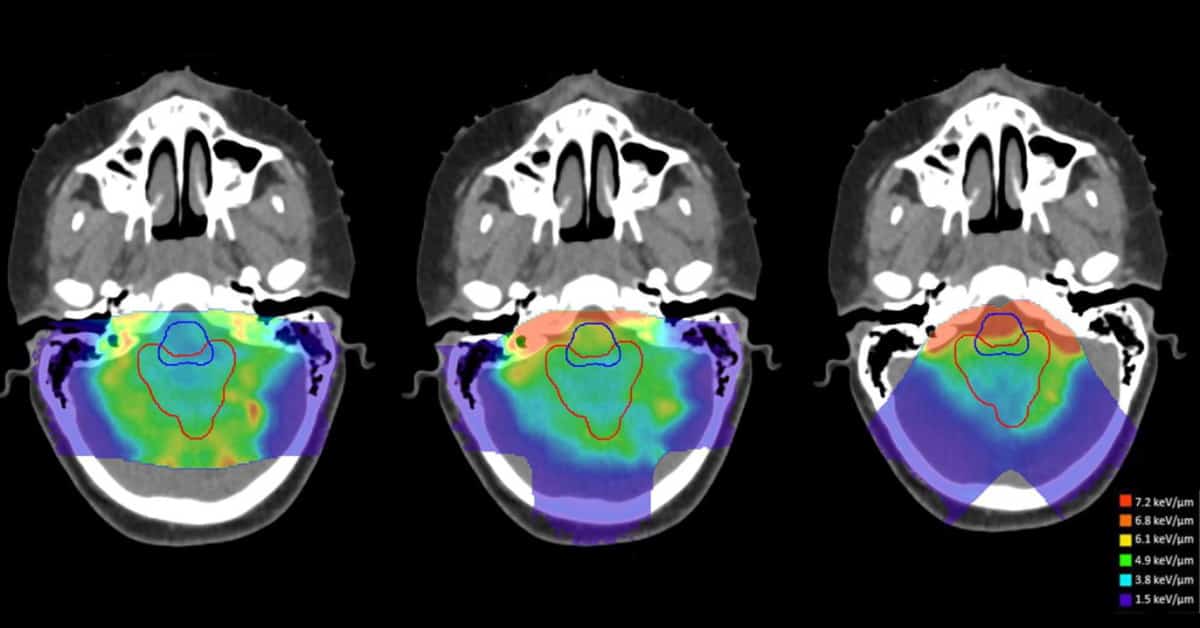
Treatment plan comparisons CT images overlaid with dose-weighted LET distributions for three planning strategies: the base clinical distribution (left), a three-beam orientation (centre) and an alternate-beam-angle setup (right). The clinical target volume is outlined in red and the brainstem in blue. (Courtesy: CC BY 4.0/J. Appl. Clin. Med. Phys. 10.1002/acm2.13782)

Proton therapy can deliver highly conformal dose distributions to a tumour target while minimizing dose to tissues outside the target volume. Creating treatment plans that realize this strength is a top priority for dosimetrists and medical physicists.

Protons deposit dose in a fundamentally different way to X-rays, another type of external-beam radiation therapy. As a proton reaches the end of its trajectory, the rate at which its energy is transferred to tissue – its linear energy transfer (LET), expressed in keV/µm – increases.

RHK Technology plays the ‘long game’ in SPM


RHK Technology plays the ‘long game’ in SPM

07 Nov 2022 Sponsored by RHK Technology


Customer-centric product innovation is helping US manufacturer RHK Technology to prosper at the cutting edge of surface science


Listening to the customer: RHK Technology’s latest commercial SPM, the PanScan Freedom Lumin-SLT, is the result of a collaborative R&D effort with Luiz Zagonel and colleagues in the department of applied physics at UNICAMP, Brazil. (Courtesy: Luiz Zagonel)

Customer service, collaborative innovation, continuous improvement: these are the organizational reference points, writ large, for the scientists and engineers of RHK Technology, a Michigan-based technology company specializing in the design and manufacture of advanced scanning probe microscope (SPM) systems and associated instrumentation, controllers and accessories.

Superconductors strengthen signals in scanning-tunnelling microscopy


Superconductors strengthen signals in scanning-tunnelling microscopy

10 Nov 2022 Isabelle Dumé


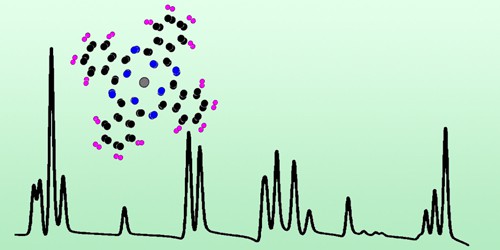
The demonstration relies on a quantum-mechanical effect known as inelastic tunnelling. (Courtesy: A Weismann/Christian-Albrecht University of Kiel)

The sensitivity of a scanning-tunnelling microscope improves by up to a factor of 50 when the microscope’s usual tip is replaced by a superconducting one. The technique, developed by researchers at Christian-Albrechts-University in Kiel, Germany, could provide unprecedented levels of detailed data about molecules on the surface of a material. Such data could help scientists test and improve theoretical methods for understanding and even predicting a material’s properties.

Making graphene nanoribbons stable


Making graphene nanoribbons stable

11 Nov 2022 Isabelle Dumé


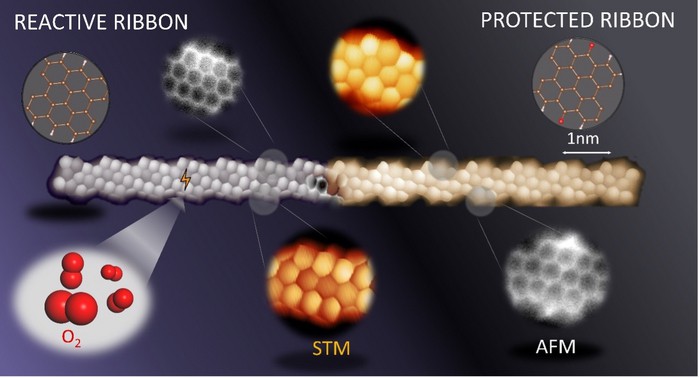
Scanning probe microscopy image of a reactive (left) and protected (right) graphene nanoribbon. (Courtesy: DIPC | CFM | FZU | CiQUS | CATRIN)

Graphene nanostructures with zigzag-shaped edges show much technological promise thanks to their excellent electronic and magnetic properties. Unfortunately, the highly reactive edges of these so-called graphene nanoribbons (GNRs) degrade quickly when exposed to air, limiting their practical applications. A team in Spain and the Czech Republic have now come up with two new strategies for protecting them.

‘Inherited nanobionics’ makes its debut


‘Inherited nanobionics’ makes its debut

03 Nov 2022 Isabelle Dumé


Light-harvesting bacteria infused with nanoparticles can produce electricity in a "living photovoltaic" device. (Courtesy: Giulia Fattorini)

Bacteria that take up single-walled carbon nanotubes (SWCNTs) continue to divide as normal and even pass on the resulting extra capabilities to their descendants. This result, which was recently demonstrated by researchers at the EPFL in Switzerland, forms the basis of a new field they call “inherited nanobionics”. The researchers believe the modified bacteria could be used to make living photovoltaics – energy-producing devices that they say could provide “a real solution to our ongoing energy crisis and efforts against climate change”.