Αναζήτηση αναρτήσεων

Δευτέρα 20 Νοεμβρίου 2023

Physicists Discover a New State of Matter Hidden in The Quantum World


Physicists Discover a New State of Matter Hidden in The Quantum World

PHYSICS
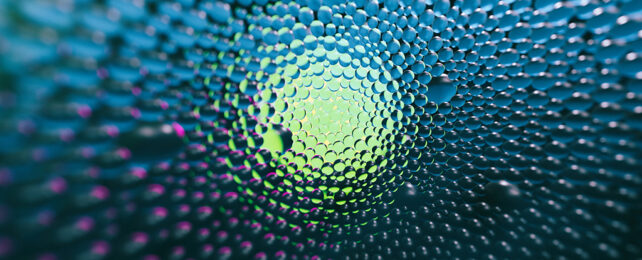
Abstract molecules


You're familiar with the states of matter we encounter daily – such as solid, liquid, and gas – but in more exotic and extreme conditions, new states can appear, and scientists from the US and China just found one.

They're calling it the chiral bose-liquid state, and as with every new arrangement of particles we discover, it can tell us more about the fabric and the mechanisms of the Universe around us – and in particular, at the super-small quantum scale.


States of matter describe how particles can interact with one another, giving rise to structures and various ways of behaving. Lock atoms in place, and you have a solid. Allow them to flow, you have a liquid or gas. Force charged partnerships apart, you have a plasma.

Τετάρτη 15 Νοεμβρίου 2023

Cool Copper Collider most environmentally friendly among Higgs factory designs finds study

Cool Copper Collider Most Environmentally Friendly among Higgs Factory Designs Finds study

15 Nov 2023


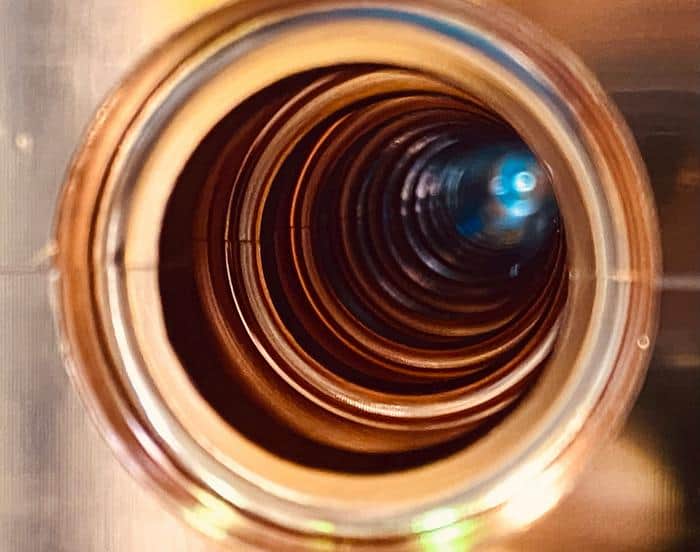
Cool runnings: an analysis finds that the US-based Cool Copper Collider would, if built, have the lowest overall carbon footprint compared to rival Higgs factory designs. (Courtesy: Emilio Nanni/ SLAC National Accelerator Laboratory)

Changes to the operation of a planned Higgs factory could significantly improve its energy efficiency, but construction will have the biggest impact on the facility’s overall carbon footprint. That is the conclusion of an analysis of the potential environmental impact of the Cool Copper Collider (C3) – a proposed successor to CERN’s Large Hadron Collider (LHC).

Electrons accelerated by firing lasers into nanophotonic cavities


Electrons accelerated by firing lasers into nanophotonic cavities

25 Oct 2023


Tiny device: photograph of the microchip containing the Friedrich-Alexander University dielectric laser accelerator. A one cent euro coin is shown for comparison. (Image: FAU/Laser Physics, Stefanie Kraus, Julian Litzel)

Laser-driven particle accelerators on silicon chips have been created by two independent research groups. With further improvements, such dielectric laser accelerators could be used in medicine and industry – and could even find application in high-energy particle physics experiments.

Organic molecule from trees excels at seeding clouds, CERN study reveals


Organic molecule from trees excels at seeding clouds, CERN study reveals

05 Oct 2023


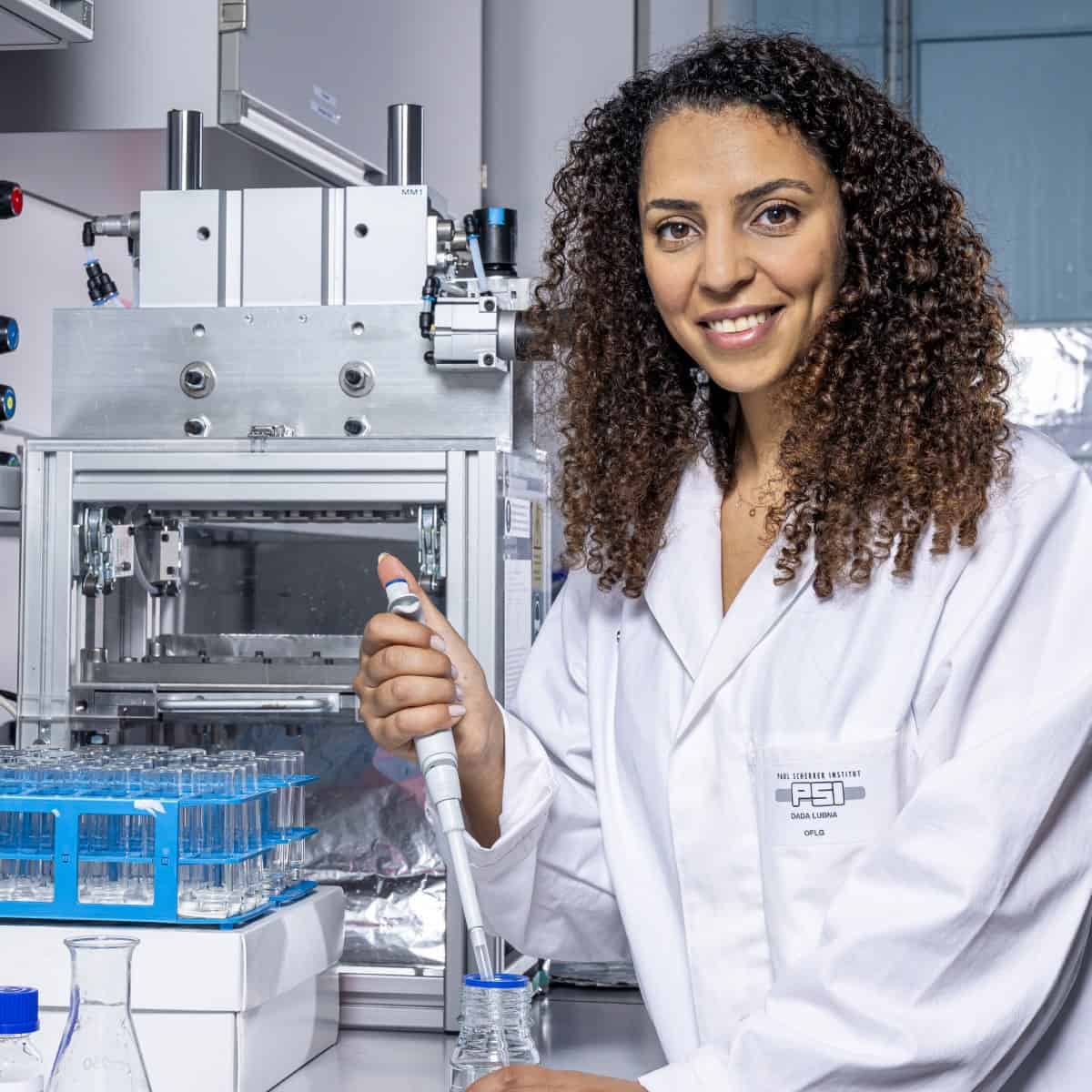
Cloud expert: Lubna Dada and colleagues have found that sesquiterpenes have the potential to play an important role in cloud formation. (Courtesy: Paul Scherrer Institute/Markus Fischer)

A family of organic compounds released by trees could play a far greater role in cloud formation than previously thought. That is the conclusion of Lubna Dada at Switzerland’s Paul Scherrer Institute and an international team, who say that their insights could play a crucial role in predicting the future of Earth’s climate.

When trees come under stress, they release organic molecules that react with ozone, nitrate radicals and other compounds in the atmosphere. These reactions create tiny solid particles called ultra-low-volatility organic compounds (ULVOCs).

The three-qubit computing platform is made from electron spins


The three-qubit computing platform is made from electron spins

28 Oct 2023


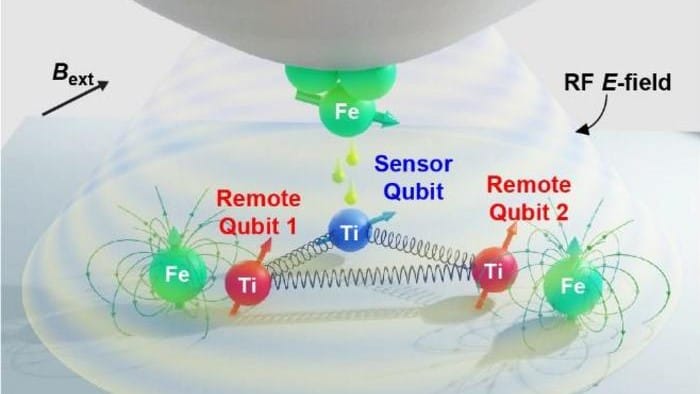
Multiple qubit platform: In this diagram, an STM tip coated with iron (top) operates the sensor spin qubit. Also shown are the remote spin qubits, which are aligned by the magnetic fields of nearby iron atoms. (Courtesy: Institute for Basic Science)

A quantum computing platform that is capable of the simultaneous operation of multiple spin-based quantum bits (qubits) has been created by researchers in South Korea. Designed by Yujeong Bae, Soo-Hyon Phark, Andreas Heinrich, and colleagues at the Institute for Basic Science in Seoul, the system is assembled atom-by-atom using a scanning tunneling microscope (STM).

NASA’s Mars Sample Return mission slammed by independent review panel


NASA’s Mars Sample Return mission slammed by independent review panel

20 Oct 2023


Under fire: the Mars Sample Return mission would bring back Martian samples that had been collected by NASA’s Perseverance Rover (courtesy: NASA/JPL-Caltech)

The future of NASA’s next flagship mission to Mars has been put in doubt following a scathing report from the agency’s Independent Review Board. It concludes that the Mars Sample Return mission, which is set to be launch in 2028, faces a series of technical problems, a runaway budget as well as a dubious launch timetable.

NASA and its collaborator on the project — the European Space Agency – regard the mission as a “critical next step” in plans to explore Mars. Part of that plan involves NASA’s Perseverance Rover, which landed on Mars in 2020. It has already collected a series of Martian samples and deposited them on the surface. They would then be collected by a separate mission – the MSR – and returned to Earth.

Aerosol geoengineering will not stop the Antarctic ice sheet from melting, simulations suggest


Aerosol geoengineering will not stop the Antarctic ice sheet from melting, simulations suggest

31 Aug 2023


Running out of time: geoengineering will not prevent the collapse of the West Antarctic Ice Sheet, study suggests. (Courtesy: Shutterstock Bernhard Staehli)

Artificially dimming the Sun by injecting aerosols into Earth’s atmosphere may help to delay a significant consequence of climate change in Antarctica, but not stop it — researchers in Switzerland and the UK have revealed. Through new simulations, a team led by Johannes Sutter at the University of Bern has showed that the collapse of the West Antarctic Ice Sheet (WAIS) can only be avoided if we eliminate global emissions of greenhouse gases as quickly as possible.