Αναζήτηση αναρτήσεων

Τρίτη 2 Απριλίου 2024

Nanoparticles enhance locusts’ sense of smell


Nanoparticles enhance locusts’ sense of smell

21 Feb 2024
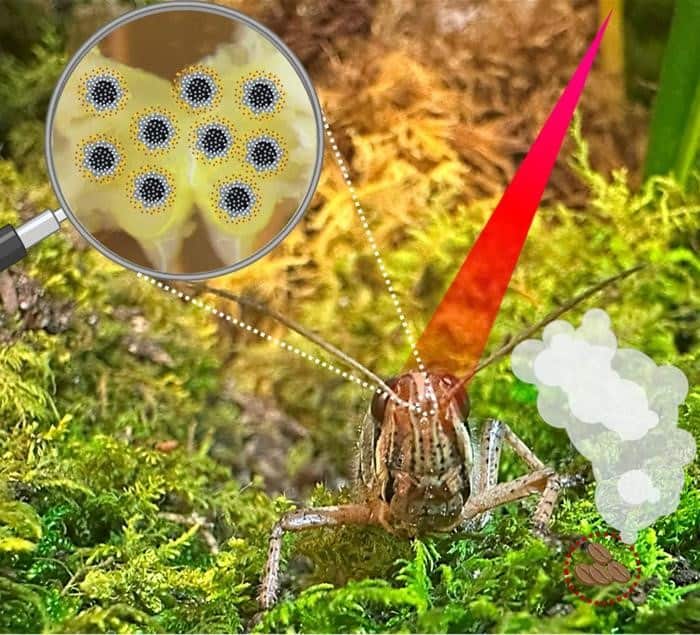

Hot spots: this photo composition has a locust (centre) showing the location of the nanoparticles (left), which are illuminated by near-infrared light (illustrated in red). (Courtesy: Singamaneni Lab/Washington University)

Using specially engineered nanoparticles, a team of US researchers has artificially enhanced the sense of smell in locusts. Led by Srikanth Singamaneni and Barani Raman at Washington University in St Louis, the researchers’ approach could lead to a new type of biological chemical sensors.


Many different animals have evolved a sense of smell that vastly outperforms our own.

Quantum technologies benefit from the bottom-up approach of synthetic chemistry


Quantum technologies benefit from the bottom-up approach of synthetic chemistry

26 Jan 2023 Hamish Johnston


This episode of the Physics World Weekly podcast features an interview with Danna Freedman, who uses synthetic chemistry to create quantum bits (qubits). Based at the Massachusetts Institute of Technology, Freedman explains how this bottom-up approach allows her team to create quantum technologies on a molecular scale.


Freedman explains why this approach could be used to create high-performance quantum sensors with a wide range of applications. These include biocompatible sensors that could someday be incorporated into medical devices. She also talks about another aspect of her research that focuses on materials under extremely high pressures – and chats about the connections between the quantum and high-pressure worlds.

Radiology societies call for critical evaluation of AI, building the UK’s quantum workforce


Radiology societies call for critical evaluation of AI, building the UK’s quantum workforce

29 Feb 2024 Hamish Johnston

Artificial intelligence (AI) shows great promise for use in radiology, which involves the use of medical imaging to diagnose and treat disease. Integrating AI tools into radiology could advance the diagnosis, quantification and management of multiple medical conditions. However, it is essential to acknowledge that some AI products may be add little value or even have potential to cause harm.


To ensure that AI is used appropriately, five radiology societies in the US, Canada, Europe, Australia and New Zealand have come together to publish a joint statement on the development and use of AI tools in radiology.

Ask me anything: Katrin Erath-Dulitz ‘As a researcher, I rely on creative thinking’


Ask me anything: Katrin Erath-Dulitz ‘As a researcher, I rely on creative thinking’

29 Mar 2024 Katherine Skipper


Katrin Erath-Dulitz is an assistant professor of physics at the University of Innsbruck, Austria. Her work aims to understand the fundamental aspects of chemical reactions, which involves using lasers at low temperatures to control the quantum states of the reactants. She was awarded a 2022 Journal of Chemical Physics Best Paper by an Emerging Investigator award for work published with her colleagues for which she was the principal investigator

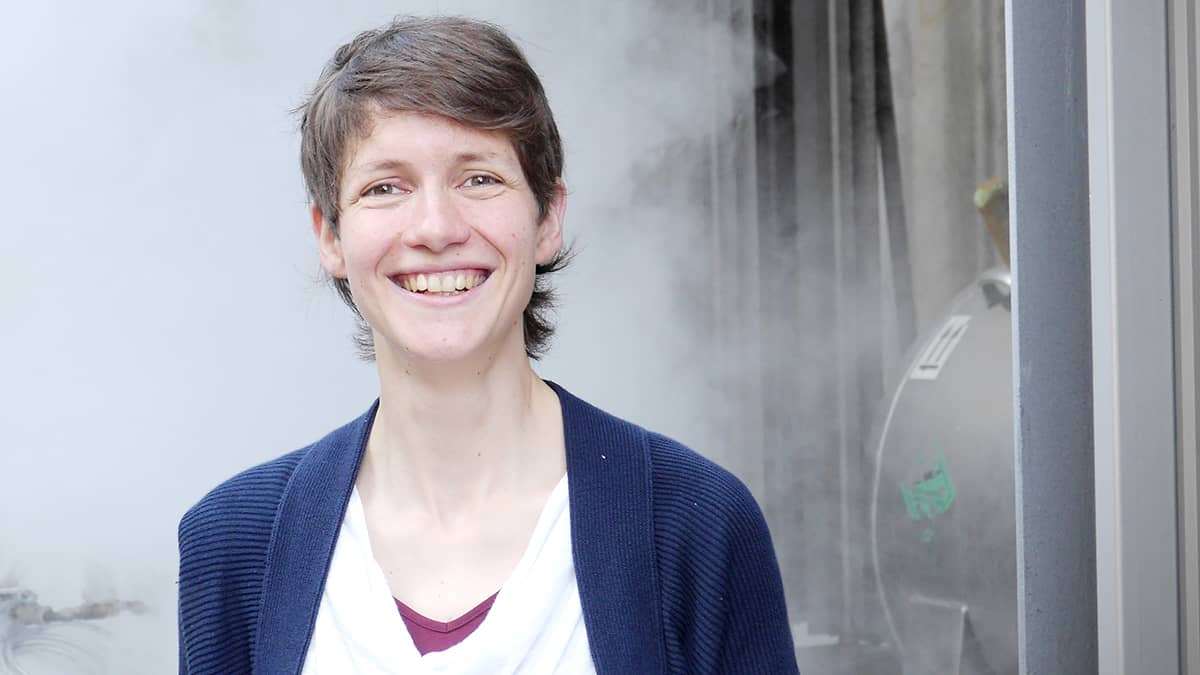
Working together Katrin Erath-Dulitz is a researcher at the University of Innsbruck who specializes in understanding molecular interactions, and who actively supports a collaborative environment. (Courtesy: Anna Schlieben, University of Freiburg)
What skills do you use every day in your job?

Magnetic monopoles appear in haematite.


Magnetic monopoles appear in haematite.

23 Feb 2024 Isabelle Dumé


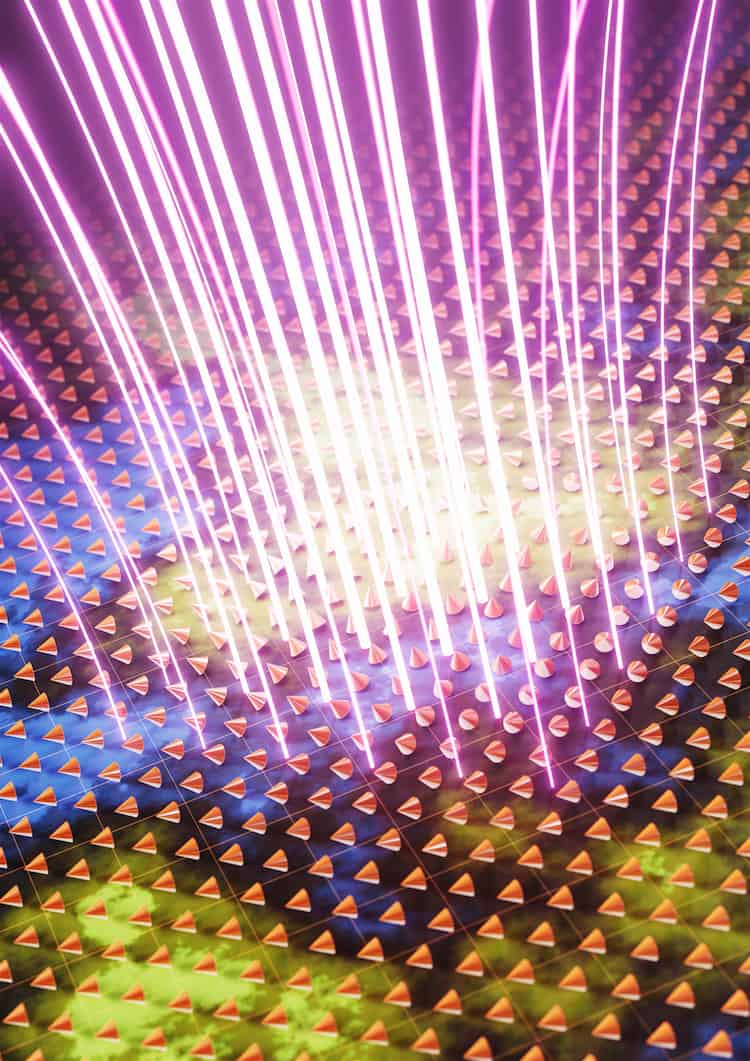
An illustration of magnetic monopoles in haematite. (Courtesy: Ella Maru Studio)

Physicists at the universities of Oxford and Cambridge in the UK have spotted signatures of magnetic monopoles and other unusual magnetic structures in haematite, a naturally occurring antiferromagnetic iron oxide material. The structures, which the researchers discovered using quantum sensing measurements, could form the basis for novel devices such as racetrack memories and super-fast, energy-efficient neuromorphic computing.

An ordinary bar magnet consists of a north and a south pole. Slice it in two, and each of the resulting halves – no matter how small – will also have two poles. Indeed, the bipolar nature of magnetism is so fundamental that it crops up in Maxwell’s equations, which imply that although isolated positive and negative electric charges exist, isolated magnetic charges cannot.

Entangled photons enhance adaptive optical imaging


Entangled photons enhance adaptive optical imaging

02 Apr 2024


Guide star-free imaging Image of a bee head acquired with a wide-field transmission microscope in the presence of aberrations (left) and after correction (right). The image inserts represent quantum correlation measurements between photons. (Courtesy: Hugo Defienne and Patrick Cameron)

Researchers are harnessing the properties of quantum physics to measure distortions in microscopy images and produce sharper images.

Molecular imaging techniques could improve breast cancer screening


Molecular imaging techniques could improve breast cancer screening

28 Mar 2024


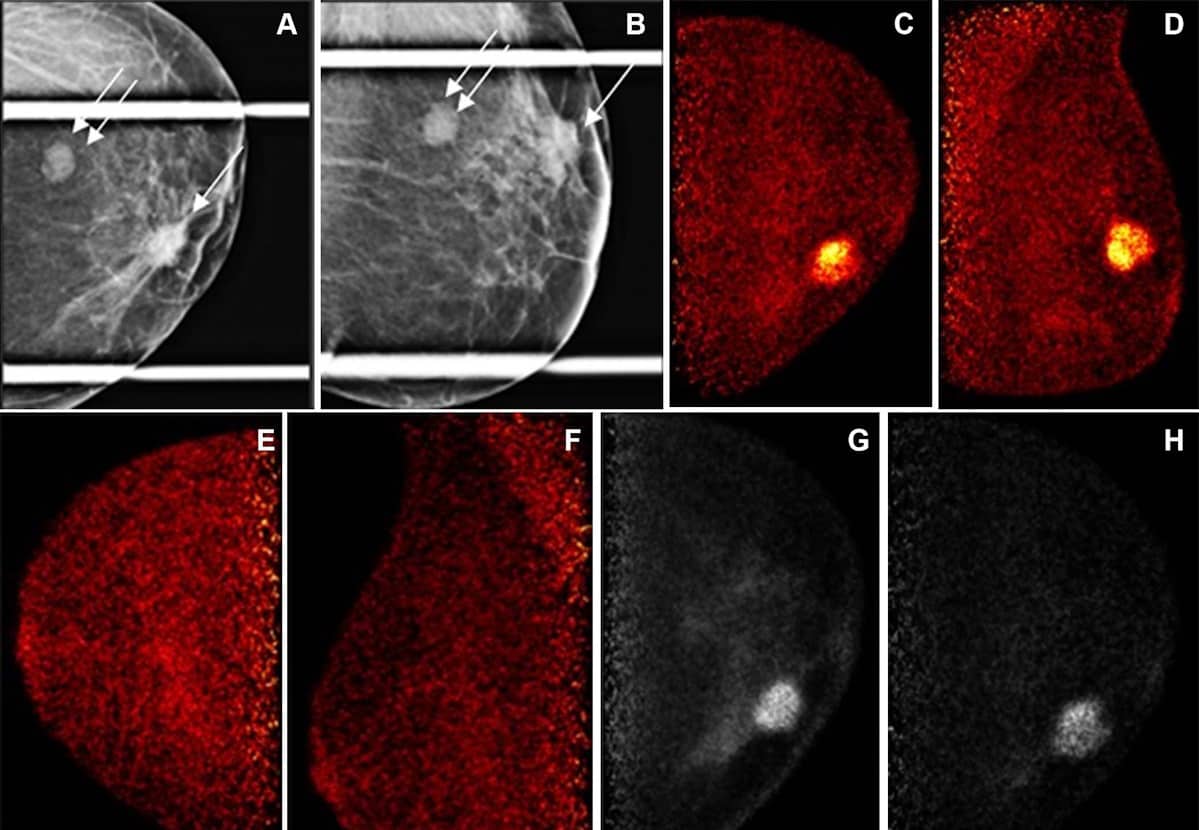
Cancer detection Mammographic images (A, B) of lesions in the left breast, confirmed as invasive ductal carcinoma (arrow) and fibroadenoma (double arrow). Left PEM images (C, D) show intense uptake in the known cancer and no uptake in the fibroadenoma. Right PEM images (E, F) do not show any abnormal uptake. Left PEM images obtained 1 h (G) and 4 h (H) after 18F-FDG injection show no substantial visual difference in uptake. (Courtesy: Radiological Society of North America)

Mammography is a widely employed and effective tool for early detection of breast cancer, but dense breasts pose a significant challenge in cancer screening. Not only does dense breast tissue increase the risk of developing breast cancer, the high proportion of fibrous and glandular tissue can mask the presence of a tumour on a screening mammogram.