The brain region used for speech decoding also supports BCI cursor control
 |
Sending an email, typing a text message, or streaming a movie. Many of us do these activities every day. But what if you couldn’t move your muscles and navigate the digital world? This is where brain–computer interfaces (BCIs) come in.
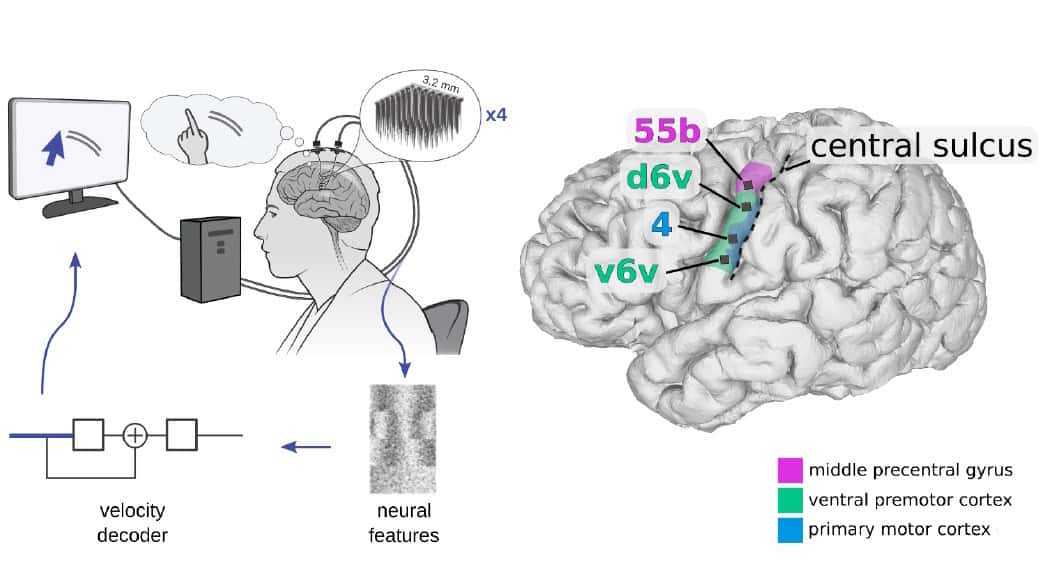
BCIs implanted in the brain can bypass pathways damaged by illness and injury. They analyse neural signals and produce an output for the user, such as interacting with a computer.
Scientists developing BCIs have primarily focused on interpreting brain activity associated with movements to control a computer cursor. The user drives the BCI by imagining arm and hand movements, which often originate in the dorsal motor cortex. Speech BCIs have also been developed, which restore communication by decoding attempted speech from neural activity in sensorimotor cortical areas such as the ventral precentral gyrus.