Αναζήτηση αναρτήσεων

Τρίτη 28 Μαΐου 2019

Does the brain awaken via a continuous phase transition?

Does the brain awaken via a continuous phase transition?

23 May 2019 Hamish Johnston
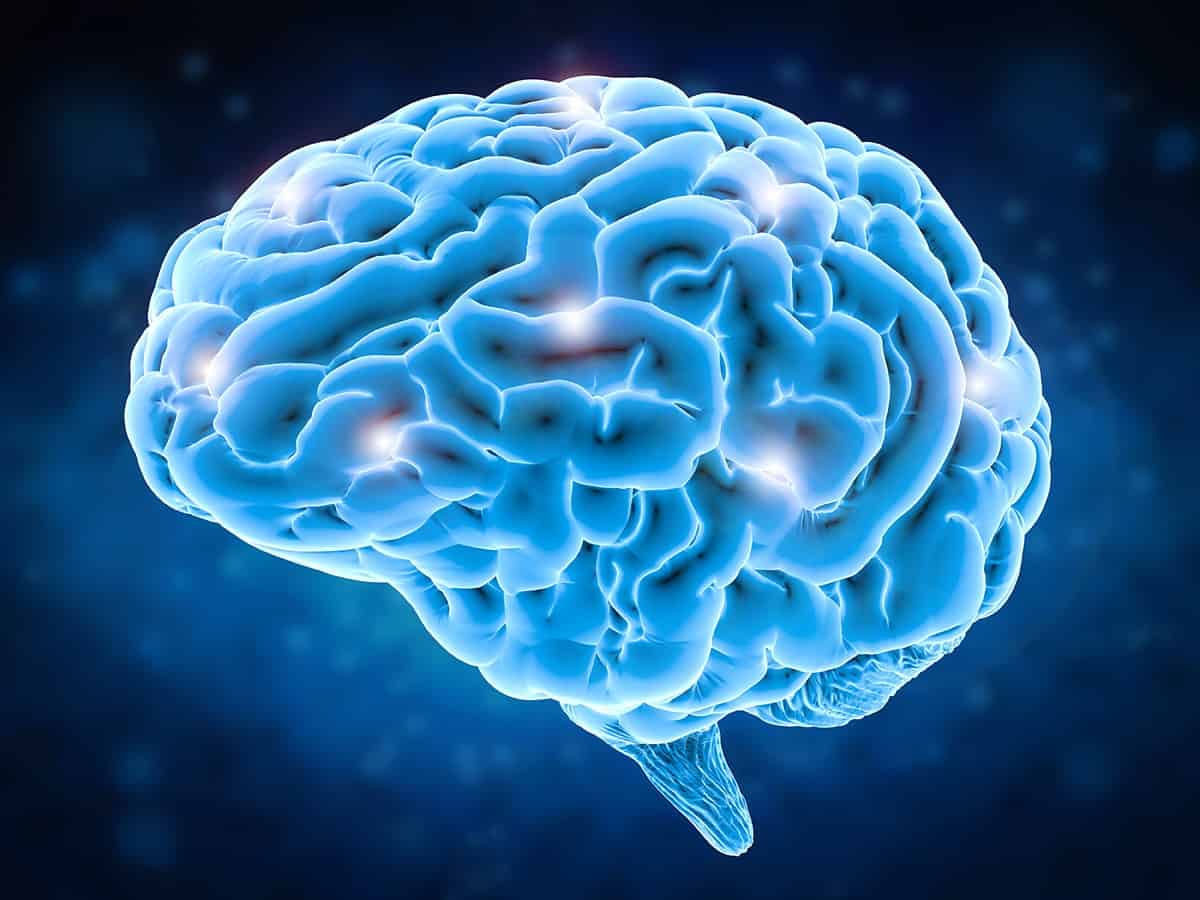


Further evidence that the brain undergoes a continuous phase transition when we awaken from sleep has been discovered by physicists in Brazil. The team studied patterns in the spiking of neurons in the brains of sleeping and awake rats and found evidence for a critical point where the transition occurs.

An important unanswered question is how the brain makes the transition between these two different states – or phases – of consciousness. One possibility is that brain activity undergoes a continuous phase transition. This process occurs in a wide range of physical systems including the transition between the magnetic and non-magnetic phases of iron when the material is heated above a critical temperatureWaking up in the morning certainly feels like a transition between two states of mind, but scientists do not have a good understanding of how the brain shifts from one state to the other. Researchers do know that brain activity involves neurons creating small voltage spikes. By studying these spikes in mammals, scientists know that the spikes are emitted in synchronous repeated bursts during sleep and as asynchronous noise-like signals when the animals are awake.

Batteries for electric vehicles, advances in radiotherapy, squid-inspired blankets

Batteries for electric vehicles, advances in radiotherapy, squid-inspired blankets

09 May 2019 Hamish Johnston


In this episode of the Physics World Weekly podcast, Anna Demming reports back from an event at the Society for Chemical Industry in London that focused on developing a supply chain in the UK for manufacturing the batteries that will be needed to create fleets of electric vehicles.

Tami Freeman talks about her visit to the European Society for Radiotherapy and Oncology in Milan, where she discovered what medical physicists think will be the most important issue for training new colleagues ten years from now.

James Dacey is also on hand to explain how the skin of a squid has inspired a new type of space blanket.

Hamish Johnston is the general-physics editor of Physics World

As quantum technology matures what industries should care?

As quantum technology matures what industries should care?

24 May 2019 Anna Demming


“In the next 5-10 years a quantum computer will do a calculation that a supercomputer can’t do,” Rupesh Srivastava told around 65 invited attendees at the OxLEP led Quantum Technologies briefing at the UK’s House of Commons. No-one can predict the future, but as a Technology Associate at Oxford University’s Clarendon Laboratory working for Networked Quantum Information Technologies (NQIT) Srivistava is well placed for an educated guess, and there is increasing confidence that in the not so distant future, quantum phenomena will descend from the lofty realms of the wacky and inscrutable to be harnessed in technologies that are useful and eventually indispensable for human activities. However as to what those activities are and who should care, it seems the jury is still out.

Battle of the elements: what makes carbon King of the Elements?

Battle of the elements: what makes carbon King of the Elements?

24 May 2019 Anna Demming


Which is your favourite chemical element? To mark the International Year of the Periodic Table, our science journalists will be arguing for their pick from the 118 known elements. In this instalment, Anna Demming argues the case for carbon as a fundamental building block of life and chemistry, and the new science that has emerged from carbon nanomaterials.(Adapted from shutterstock/agsandrew)

What links the Earth and the air? What both sparkles like starlight and reflects almost nothing at all? What underpins the chemistry of biological molecules – life itself – and has launched a whole field of materials science in 2D, not to mention its mechanical, electrical and optical properties, which are worth (to funders at least) billions? In some form or another carbon and carbon compounds take a piece of the action in almost all fields of science.

So what makes carbon so ubiquitous in so many fields? A chemist might think a good place to start is by looking at how carbon bonds to other elements. As a physicist by training, though, I’d add that where it gets really interesting is explained by physics.

Metal organic frameworks stiffen up for improved CO2 capture

Metal organic frameworks stiffen up for improved CO2 capture

23 May 2019 Henry R N B Enninful


Roasting metal organic frameworks (MOFs) could make them more effective at capturing CO2to remove a key greenhouse gas from the atmosphere, according to recent research by Kumar Varoon Agrawal and co-workers at the École Polytechnique Fédérale de Lausanne. Reporting in Advanced Materials, they show that heating a membrane of zeolitic imidazolate framework 8 (ZIF-8) to an optimum temperature of about 360°C for about 3 to 5 seconds – what they describe as rapid heat treatment (RHT) – could lead to more selective CO2 capture.
Metal organic frameworks (MOFs)

Polycrystalline MOFs are a class of compounds consisting of metal ions or clusters linked together by organic ligands to form one-, two-, or three-dimensional porous structures. They have applications in a wide range of fields ranging from catalysis, gas storage, biological sensing and imaging, and drug delivery stems, among others.

Magnetic beads help treat preeclampsia

Magnetic beads help treat preeclampsia

21 May 2019 Belle Dumé


Roughly one in 20 women develops preeclampsia during pregnancy, a high blood pressure condition that can be life-threatening to both mother and baby. The disease is characterized by a massive increase in sFlt-1 (the soluble form of the vascular endothelial growth factor 1), which is released by the placenta into the maternal bloodstream. It is this growth factor that causes blood vessel wall dysfunction by binding two important angiogenic molecules that are responsible for maintaining healthy blood vessel walls. These molecules are endogenous PIGF (placental growth factor) and VEGF (vascular endothelial growth factor).

Terahertz light pulses speed up spin switching

Terahertz light pulses speed up spin switching

22 May 2019 Belle Dumé


A new technique to rapidly reverse a magnet’s polarity in a way that all of its spins coherently rotate could be used to develop more energy-efficient data storage devices and superfast computers in the future. The technique, which works by applying ultrashort pulses of terahertz-frequency light to the magnet, does not produce any waste heat and requires very little energy – just one photon per spin flip.

Modern-day computer hard drives encode data as binary zeros and ones by orienting the spins in magnetic materials using magnetic field pulses created by an electrical current. This process dissipates huge amounts of energy though (and is relatively slow). Indeed, today’s data centres consume between 2 and 5% of the world’s electricity and produce waste heat that, in turn, requires even more power, to cool the servers down.