Αναζήτηση αναρτήσεων

Παρασκευή 25 Φεβρουαρίου 2022

Ultracold triatomic molecules herald a new frontier for the three-body problem


Ultracold triatomic molecules herald a new frontier for the three-body problem

16 Feb 2022


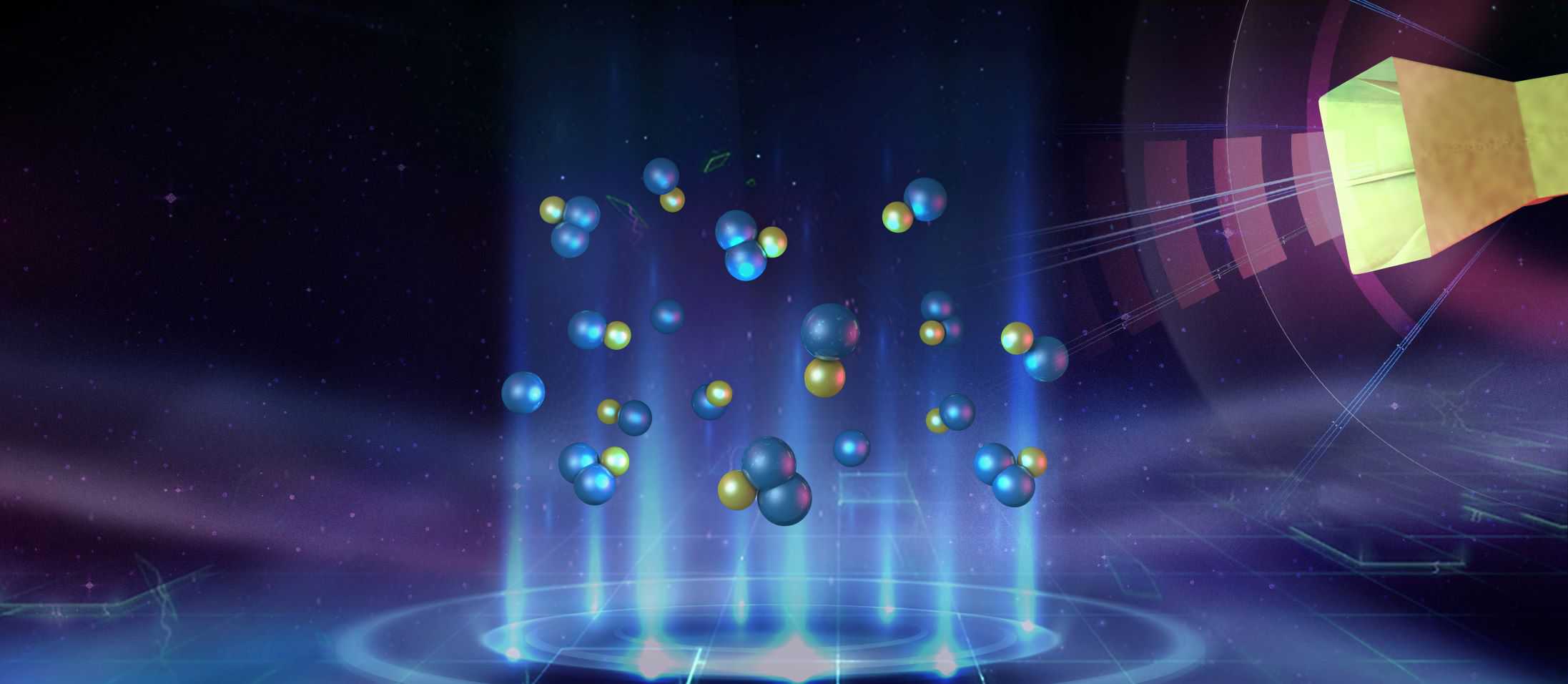
Researchers in China have found strong evidence of ultracold triatomic molecules forming within a mixture of ultracold atoms and diatomic molecules. The result, if confirmed, would provide an ideal pathway to studying chemical reactions on an atomic scale, and could even allow physicists to perform quantum-mechanical simulations of the notoriously difficult three-body problem.


Study underlines AI’s clinical potential in breast cancer screening


Study underlines AI’s clinical potential in breast cancer screening

18 Feb 2022


Artificial intelligence (AI) can help radiologists lessen their workload when reading digital breast tomosynthesis (DBT) images by nearly 40%, according to research published in Radiology.

A team led by Yoel Shoshan and Ran Bakalo from the University of Haifa in Israel developed an AI model that they say can filter out cancer-free cases and keep up with radiologists in terms of accuracy.

Πέμπτη 24 Φεβρουαρίου 2022

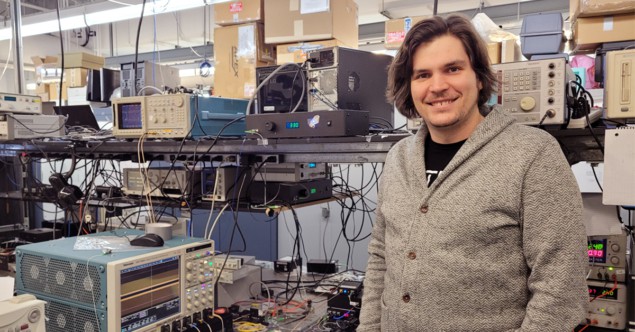
New technique amplifies weak optical signals while reducing noise

New technique amplifies weak optical signals while reducing noise

21 Feb 2022


A technique that can amplify weak optical signals, while simultaneously reducing noise has been developed by researchers in Canada. By exploiting the Talbot effect, the team showed how arbitrarily-shaped signals can be reliably detected, even when buried in background noise. The research was led by José Azaña and Benjamin Crockett at Quebec’s National Institute of Scientific Research.

NASA probe captures optical images of Venus’ surface


NASA probe captures optical images of Venus’ surface

10 Feb 2022 Margaret Harris


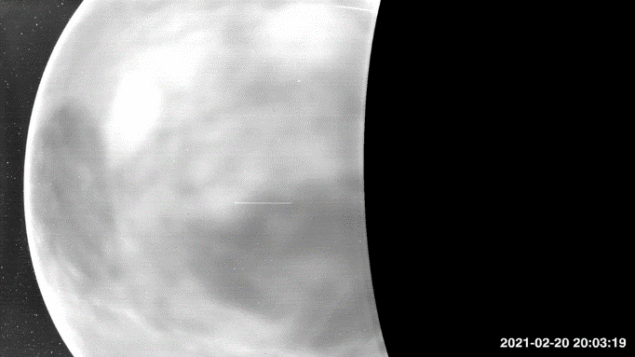
New images from NASA’s Parker Solar Probe offer a rare glimpse of the surface of Venus as the human eye might see it. Recorded as the probe flew past the fiery, cloud-shrouded planet on its mission to the Sun, the visible-light images of Venus’ plains and plateaus are the first to be taken from space, and the first to emerge from the Venusian surface since the early 1980s, when the last in a pioneering series of Soviet probes succumbed to the harsh environment within an hour of landing. By analysing the images, mission scientists hope to better understand how Venus formed, and why conditions on its surface are so different from those that prevail on the Earth and Mars.

Ancient binary stars could give birth to planets, study suggests


Ancient binary stars could give birth to planets, study suggests

08 Feb 2022


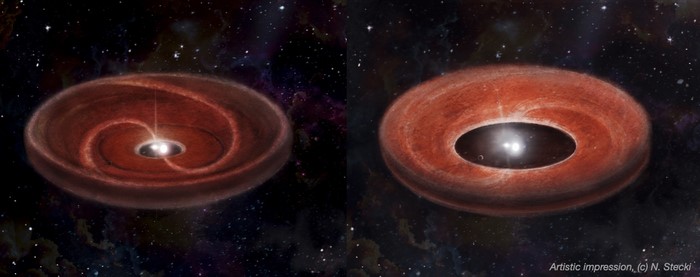
Even as they are dying, ancient stars in some binary systems may be forming planets, an international team of astronomers has found. Through infrared observations of old binary pairs, researchers led by Jacques Kluska at KU Leuven in Belgium discovered 10 cases in which giant planets have likely carved out empty cavities in protoplanetary discs. If more evidence is found for such systems, it could result in a rethink of current ideas about how planets form.

Classical computers race to catch up with quantum advantage


Classical computers race to catch up with quantum advantage

22 Feb 2022 Ieva Čepaitė


For quantum computers to be considered viable, they need to successfully and verifiably perform tasks that are hard to reproduce on any classical computer – a situation known as “quantum advantage”. As both quantum computers and classical methods improve, however, it becomes difficult to draw the line beyond which quantum machines have the upper hand.

AI keeps fusion plasma in check

AI keeps fusion plasma in check

18 Feb 2022


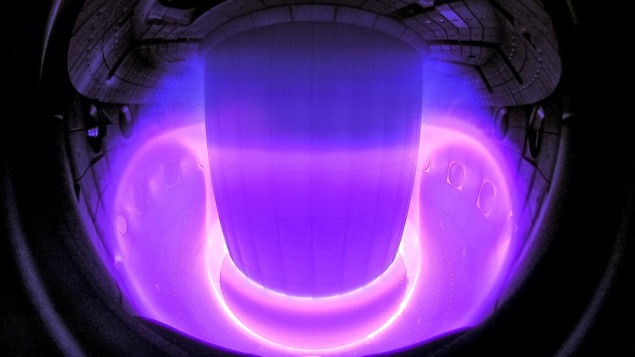
A collaboration of physicists and computer scientists has shown that artificial intelligence (AI) can help control the delicate process of confining an ultra-hot plasma within a fusion reactor. Members of the team say that their demonstration, which exploits a technique known as reinforcement learning to operate the magnetic coils in a tokamak, could enable more speedy development of reactors with novel geometries.