Αναζήτηση αναρτήσεων

Πέμπτη 30 Ιουνίου 2022

KATRIN experiment places upper limit on the mass of the neutrino


KATRIN experiment places upper limit on the mass of the neutrino

14 Feb 2022
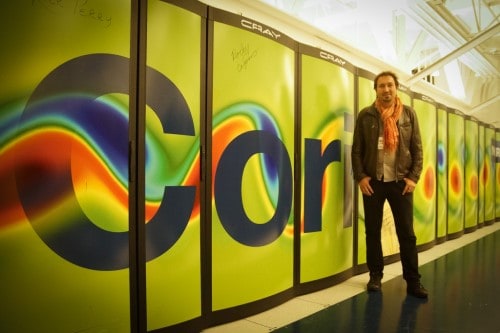

Physicist Björn Lehnert from the Lawrence Berkeley National Laboratory talks to Richard Blaustein about what a new precise measurement of the neutrino means for particle physics


Based at the Lawrence Berkeley National Laboratory in the US, Björn Lehnert is a neutrino physicist who originally did a PhD at the Technische Universität Dresden in Germany on the GERDA experiment.

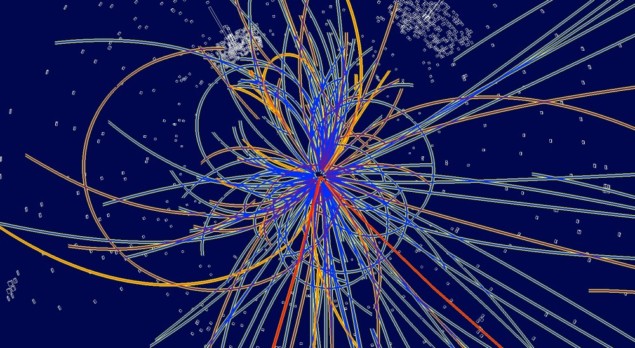
Deep learning identifies head-on collisions in LHC data


Deep learning identifies head-on collisions in LHC data

23 Jun 2022


Deep learning could hold the key to making sense of proton collisions generated in the world’s premier particle accelerator. That is the message from physicists in Europe and the US who have shown how an algorithm developed for language translation can efficiently filter out noise from data taken by detectors at at CERN’s Large Hadron Collider.

How climate change is affecting human and natural systems, test your knowledge of artificial intelligence


How climate change is affecting human and natural systems, test your knowledge of artificial intelligence

30 Jun 2022 Hamish Johnston


In this episode of the Physics World Weekly podcast we explore how climate change is affecting human and natural systems with Noah Diffenbaugh, who leads the Climate and Earth System Dynamics Group at Stanford University in California.

Wearable MEG system evaluates epilepsy in children


Wearable MEG system evaluates epilepsy in children

06 Jun 2022


Optically-pumped magnetometers (OPMs) are a promising emerging technology that could make magnetoencephalography (MEG) more accurate and tolerable for patients who have difficulty remaining motionless while the exam is performed – such as young children.

The glass that offers Ukraine hope: Oksana Kondratyeva on the interface between art, science and architecture


The glass that offers Ukraine hope: Oksana Kondratyeva on the interface between art, science and architecture

23 Jun 2022 James Dacey
Taken from the June 2022 issue of Physics World. Members of the Institute of Physics can enjoy the full issue via the Physics World app.


Just three days before the 1986 Chernobyl disaster, the power plant’s administrative building received a splash of colour. A nine-part stained-glass series was installed depicting the history of humankind’s relationship with energy, from Prometheus stealing fire from the gods, to scientists splitting the atom.

Quantum approximate optimization algorithm can be implemented using Rydberg atoms


Quantum approximate optimization algorithm can be implemented using Rydberg atoms

14 Apr 2022


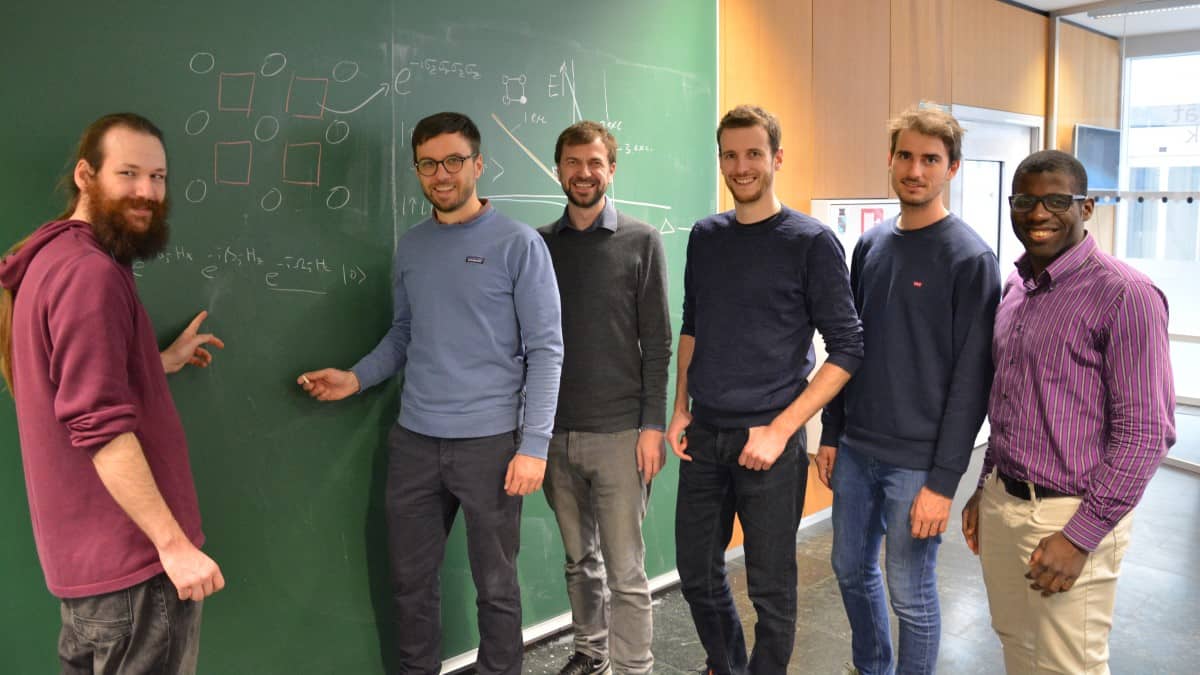
Quantum computers are often discussed as a technology of the future, but many devices exist already. Because there is no consensus on a single, universal quantum computer design, however, determining the best use for each existing device can be daunting. Recently, researchers at the University of Innsbruck in Austria started to address part of that question by proposing a new way to implement a quantum optimization algorithm by using extremely cold atoms.

Bridging the knowledge gap on AI and machine-learning technologies


Bridging the knowledge gap on AI and machine-learning technologies

22 Jun 2022


Medical physicists explored a range of education and training scenarios for AI and machine learning at last month’s ESTRO Annual Congress


How much is enough? How much is too much? These are questions that cut to the heart of a complex issue currently preoccupying senior medical physicists when it comes to the training and continuing professional development (CPD) of the radiotherapy physics workforce.