Αναζήτηση αναρτήσεων

Σάββατο 13 Ιανουαρίου 2024

Our universe is humming with gravitational waves


Our universe is humming with gravitational waves

07 Aug 2023 James Dacey

In recent weeks the astrophysics community has been buzzing following the discovery that the universe appears to be filled with a background hum of gravitational waves. Using radio telescopes in Africa, Asia, Australia, Europe, and the US, several teams have noted the same thing: gravitational waves leave a faint fingerprint in the signals received from pulsars within our galaxy. The discovery is another exciting breakthrough within multimessenger astronomy.

Green and novel: the future of energy generation


Green and novel: the future of energy generation

04 Sep 2023 James Dacey
Energy accounts for more than three-quarters of our greenhouse gas emissions globally yearly. That’s not surprising, given the role of energy in almost every aspect of modern life. To stand any chance of hitting net zero climate targets, we need to accelerate the transition to greener forms of energy generation.

In this episode of the Physics World Stories podcast, Andrew Glester explores two novel forms of renewable energy generation with the potential to scale and not suffer from intermittency issues. READ MORE


Biomedical ethicist calls for rules governing human research in commercial spaceflight


Biomedical ethicist calls for rules governing human research in commercial spaceflight

23 Nov 2023 Hamish Johnston
Our guest in this episode of the Physics World Weekly podcast is the biomedical ethicist Vasiliki Rahimzadeh, who, along with colleagues, has called for the commercial space industry to adopt ethical policies and best practices for research done on humans during space flights.


Rahimzadeh, who is at Baylor College of Medicine in the US, explains that as well as minimizing risks to paying astronauts who take part in experiments, an ethical framework should also ensure that private spaceflight – which is still the purview of the elite – benefits society as a whole.

NASA launches $1.2bn Psyche asteroid mission


NASA launches $1.2bn Psyche asteroid mission

13 Oct 2023 Michael Banks


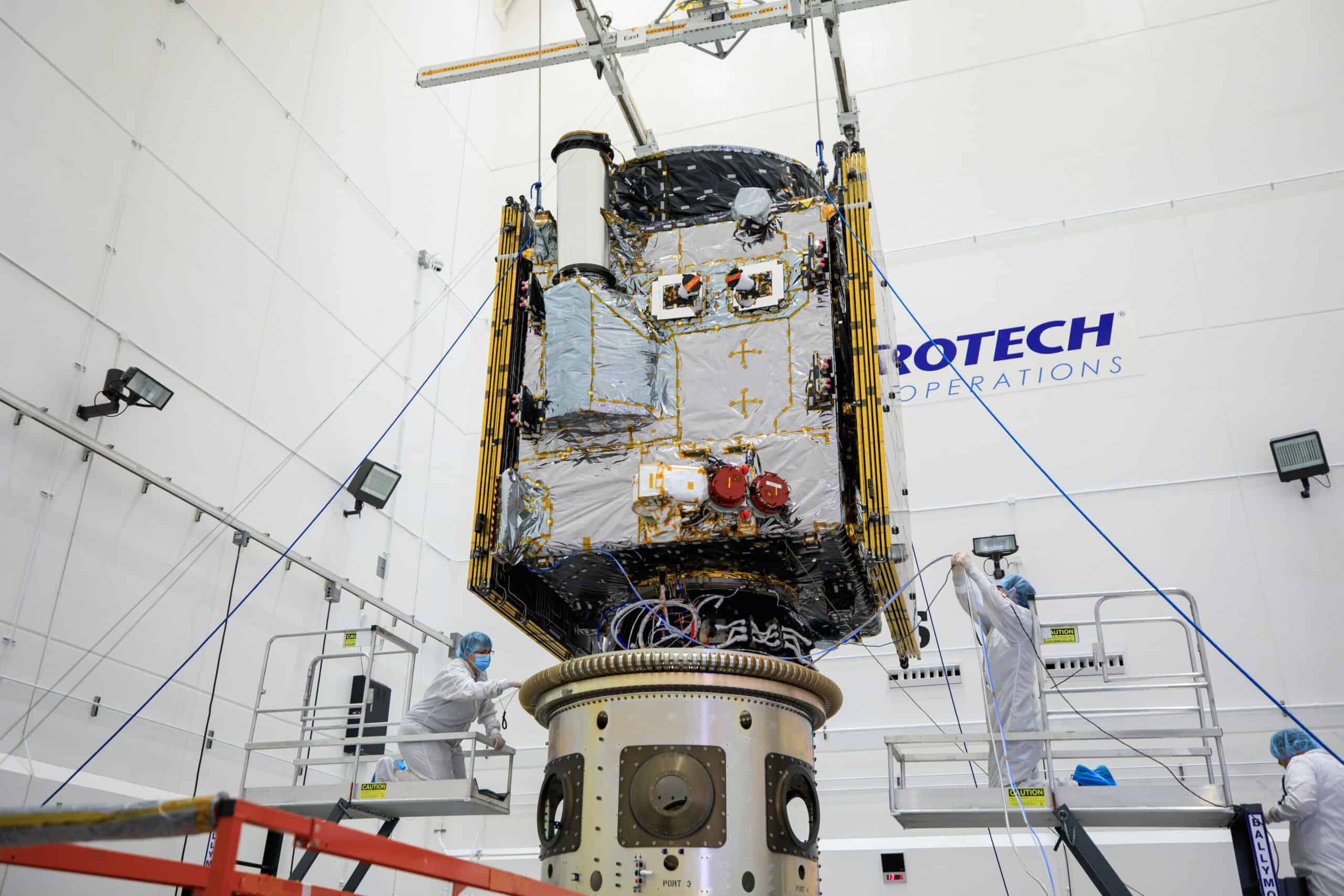
Heavy metal: Psyche will arrive at the metal-rich asteroid in 2029 following a 3.6 billion kilometre journey (courtesy: NASA)

NASA has launched a mission to study an unusually metal-rich asteroid dubbed 16 Psyche. Launched from the Kennedy Space Center in Florida at 10:20 local time today via a SpaceX Falcon Heavy rocket, the $1.2bn mission is expected to reach the asteroid in 2029.

16 Psyche is around 220 km in diameter and consists of almost pure nickel–iron metal. It was discovered in 1852 by Italian astronomer Annibale de Gasparis, who named it after the goddess of the soul in ancient Greek mythology. Located in the asteroid belt between Mars and Jupiter, astronomers speculate that the asteroid is the exposed core of an early planet that lost its rocky outer layers due to a number of violent collisions billions of years ago.

US Peregrine lunar lander suffers propellant leak following launch


US Peregrine lunar lander suffers propellant leak following launch

12 Jan 2024


Lunar bound: the first image taken by Astrobotic Technology’s Peregrine lunar lander shows damage to the craft’s body (courtesy: Astrobotic)

A US firm has announced that its Moon mission will not successfully land on the lunar surface after its fuel tank ruptured and began to leak propellent shortly after launch. The robotic landing craft, called Peregrine and owned by the private firm Astrobotic Technology, was launched on 8 January from Cape Canaveral, Florida, by a Vulcan Centaur rocket. Peregrine was set to be the first US spacecraft to land on the Moon since the Apollo programme.

Shortly after what seemed to be a successful launch, Astrobotic reported a failure in the probe’s propulsion system that sent it into an “uncontrollable tumble.”Mission controllers then managed to align the craft to charge its solar panels and it began taking data as it made its way to the Moon.

Unifying gravity and quantum mechanics without the need for quantum gravity


Unifying gravity and quantum mechanics without the need for quantum gravity

08 Jan 2024


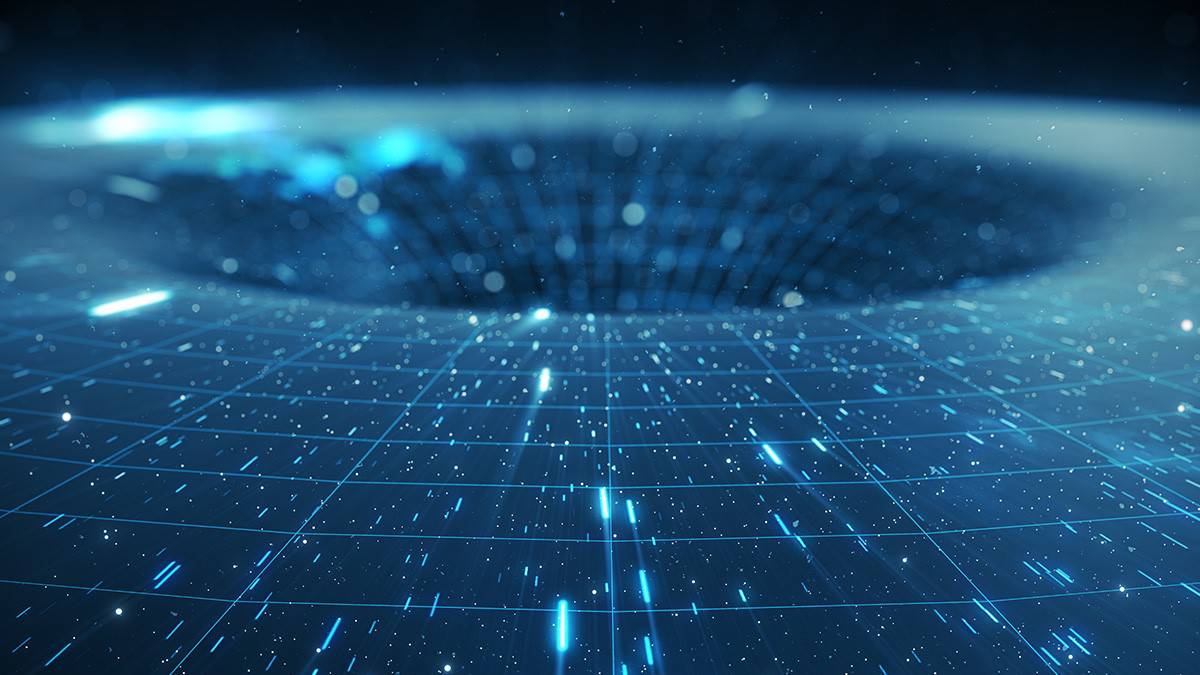
Random coupling: Jonathan Oppenheim has developed a new way to unify quantum mechanics and the general theory of relativity. (Courtesy: Shutterstock/Rost9)

Jonathan Oppenheim at University College London has developed a new theoretical framework that aims to unify quantum mechanics and classical gravity – without the need for a theory of quantum gravity. Oppenheim’s approach allows gravity to remain classical, while coupling it to the quantum world by a stochastic (random) mechanism.


For decades, theoretical physicists have struggled to reconcile Einstein’s general theory of relativity – which describes gravity — with quantum theory, which describes just about everything else in physics.

Πέμπτη 11 Ιανουαρίου 2024

Pierre Agostini, Ferenc Krausz and Anne L’Huillier win 2023 Nobel Prize for Physics


Pierre Agostini, Ferenc Krausz and Anne L’Huillier win 2023 Nobel Prize for Physics

03 Oct 2023 Hamish Johnston


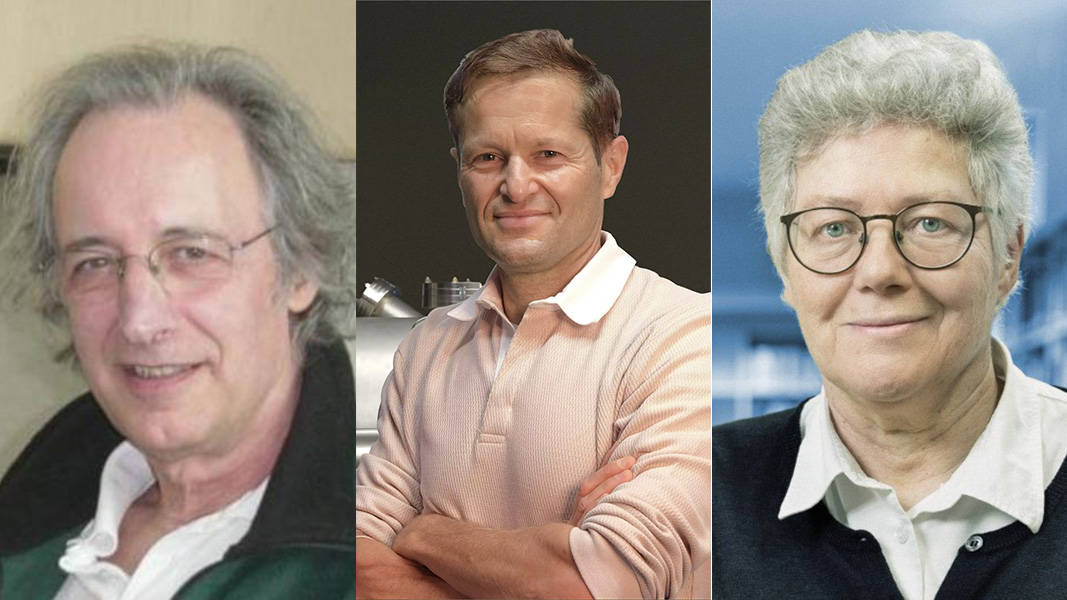
Nobel laureates Pierre Agostini, Ferenc Krausz and Anne L'Huillier win the 2023 Nobel Prize for Physics. (Courtesy: Ohio State University; Max Planck Institute of Quantum Optics; BBVA Foundation)

Pierre Agostini, Ferenc Krausz and Anne L’Huillier have won the 2023 Nobel Prize for Physics for “experimental methods that generate attosecond pulses of light for the study of electron dynamics in matter”.

L’Huillier is based at Sweden’s Lund University; Krausz is at the Max Planck Institute of Quantum Optics and the Ludwig-Maximillians University of Munich in Germany; and Agostini is at Ohio State University in the US. The prize is worth 11 million kronor (one million dollars) and is split equally between the winners. The prize will be presented in Stockholm on 10 December 2023.