Αναζήτηση αναρτήσεων

Πέμπτη 2 Οκτωβρίου 2025

Negative time observed in photon-atom interaction

 

Negative time observed in photon-atom interaction

23 Sep 2025
Abstract rotating clock spiral
Surprising finding New results lead researchers to think more deeply about the meaning of “negative time”. (Courtesy: iStock/FlashMovie)
“Negative time” might sound like science fiction, but an international team of theorists and experimentalists has determined that a photon can, in fact, spend a negative amount of time in an excited atomic state while passing through a cloud of atoms. The finding could have applications in studies of light-matter interactions and quantum sensing – though not, alas, in time travel or other sensational effects.

Quantum mechanics has yielded numerous unexpected results, and the latest one originated in 2022 with an experiment conducted by physicists at the University of Toronto in Canada.

Παρασκευή 6 Ιουνίου 2025


New analysis of M67 cluster helps decode the sound of stars

03 Jun 2025 Sabnam Shrestha
Listening to starquakes Artistic impression of acoustic waves in the interior of a star. Red and blue represent displacements in opposite directions. (Courtesy: ESO)

Stars are cosmic musical instruments: they vibrate with complex patterns that echo through their interiors. These vibrations, known as pressure waves, ripple through the star, similar to the earthquakes that shake our planet. The frequencies of these waves hold information about the star’s mass, age and internal structure.

Δευτέρα 12 Μαΐου 2025

Molecular engineering and battery recycling: developing new technologies in quantum, medicine and energy


Molecular engineering and battery recycling: developing new technologies in quantum, medicine and energy

08 May 2025 Hamish Johnston

This episode of the Physics World Weekly podcast comes from the Chicago metropolitan area – a scientific powerhouse that is home to two US national labs and some of the country’s leading universities.

Physics World’s Margaret Harris was there recently and met Nadya Mason. She is dean of the Pritzker School of Molecular Engineering at the University of Chicago, which focuses on quantum engineering; materials for sustainability; and immunoengineering. Mason explains how molecular-level science is making breakthroughs in these fields and she talks about her own research on the electronic properties of nanoscale and correlated systems.

Harris also spoke to Jeffrey Spangenberger who leads the Materials Recycling Group at Argonne National Laboratory, which is on the outskirts of Chicago. Spangenberger talks about the challenges of recycling batteries and how we could make it easier to recover materials from batteries of the future. Spangenberger leads the ReCell Center, a national collaboration of industry, academia, and national laboratories advancing recycling technologies along the entire battery life cycle.

FROM PHYSICSWPRLD.COM  12-05-2025

Quantum twisting microscope measures phasons in cryogenic graphene


Quantum twisting microscope measures phasons in cryogenic graphene

05 May 2025 Anna Demming
Graphene bilayer structure
Carbon layers Artist’s impression of two graphene layers before a twist is applied. (Courtesy: Shutterstock/Rost9)


By adapting their quantum twisting microscope to operate at cryogenic temperatures, researchers have made the first observations of a type of phonon that occurs in twisted bilayer graphene. These “phasons” could have implications for the electron dynamics in these materials.


Graphene is a layer of carbon just one atom thick and it has range of fascinating and useful properties – as do bilayer and multilayer versions of graphene. Since 2018, condensed-matter physicists have been captivated by the intriguing electron behaviour in two layers of graphene that are rotated relative to each other.

Bilayer optical lattices could unravel the secret of high-temperature superconductivity


Bilayer optical lattices could unravel the secret of high-temperature superconductivity

14 Apr 2025 Yash Wath 
Optical lattice simulating a superconductor
Diagram showing the bilayer geometry Δ represents the potential energy offset between the two layers; J∥ and J⊥ are the intra-layer and interlayer magnetic coupling energy respectively; and t∥ represents the intra-layer atom hopping energy. (Courtesy: Henning Schlömer and colleagues)


A proposed experiment that would involve trapping atoms on a two-layered laser grid could be used to study the mechanism behind high-temperature superconductivity. Developed by physicists in Germany and France led by Henning Schlömer the new techniques could revolutionize our understanding of high-temperature superconductivity.


Superconductivity is a phenomenon characterized by an abrupt drop to zero of electric resistance when certain materials are cooled below a critical temperature. It has remained in the physics zeitgeist for over a hundred years and continues to puzzle contemporary physicists. While scientists have a good understanding of “conventional” superconductors (which tend to have low critical temperatures), the physics of high-temperature superconductors remains poorly understood. A deeper understanding of the mechanisms responsible for high-temperature superconductivity could unveil the secrets behind macroscopic quantum phenomena in many-body systems.
Mimicking real crystalline materials

Tiny sensor creates a stable, wearable brain–computer interface


Tiny sensor creates a stable, wearable brain–computer interface

15 Apr 2025 Tami Freeman
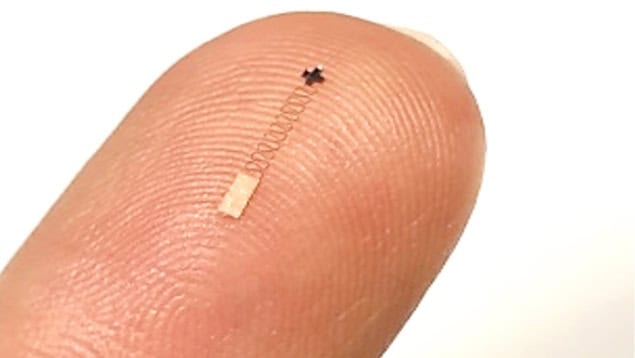
Microscale brain sensor on a finger
Microscale brain sensor The tiny sensor enables thought control of external devices, even during intense motion. (Courtesy: W Hong Yeo)


Brain–computer interfaces (BCIs) enable the flow of information between the brain and an external device such as a computer, smartphone, or robotic limb. Applications range from use in augmented and virtual reality (AR and VR) to restoring function to people with neurological disorders or injuries.

Electroencephalography (EEG)-based BCIs use sensors on the scalp to noninvasively record electrical signals from the brain and decode them to determine the user’s intent. Currently, however, such BCIs require bulky, rigid sensors that prevent use during movement and don’t work well with hair on the scalp, which affects the skin–electrode impedance. A team at Georgia Tech’s WISH Center has overcome these limitations by creating a brain sensor that’s small enough to fit between strands of hair and is stable even while the user is moving.