Αναζήτηση αναρτήσεων

Σάββατο 17 Ιανουαρίου 2026

Solar storms could be forecast by monitoring cosmic rays
 

Solar storms could be forecast by monitoring cosmic rays

14 Jan 2026
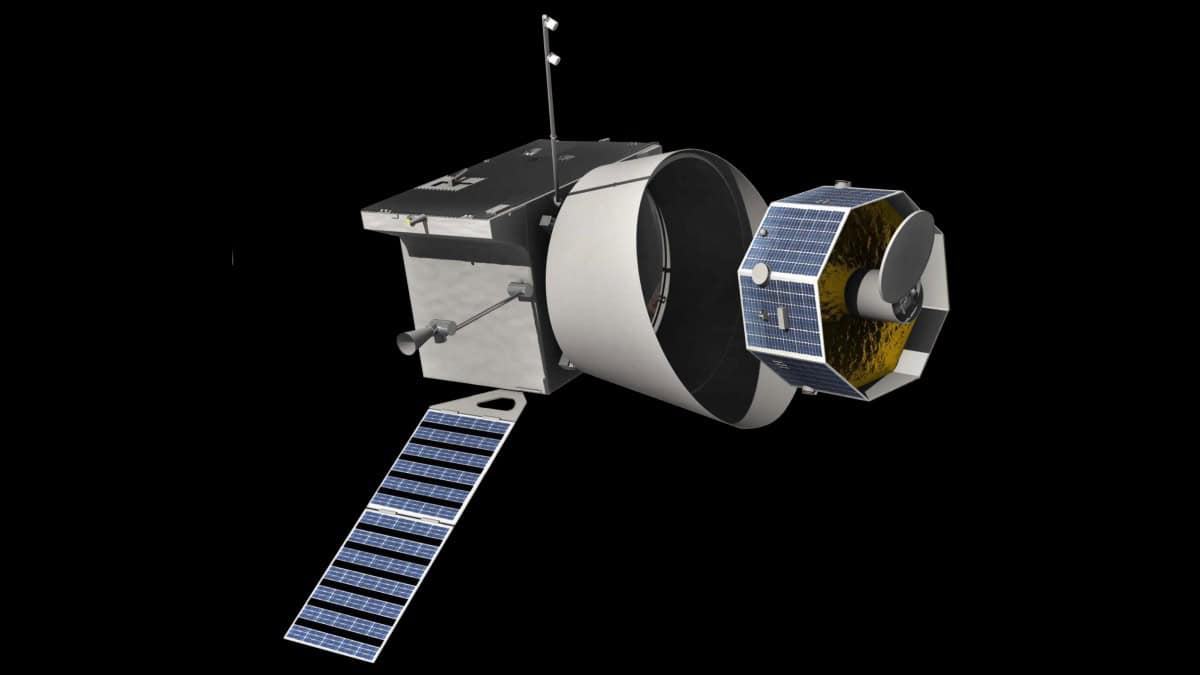
Artist's impression of BepiColombo
Mercurial measurement Researchers have used data from a non-scientific detector aboard BepiColombo to study the effect of the Sun on cosmic rays. (Courtesy: NASA)
Using incidental data collected by the BepiColombo mission, an international research team has made the first detailed measurements of how coronal mass ejections (CMEs) reduce cosmic-ray intensity at varying distances from the Sun. Led by Gaku Kinoshita at the University of Tokyo, the team hopes that their approach could help improve the accuracy of space weather forecasts following CMEs.
CMEs are dramatic bursts of plasma originating from the Sun's outer atmosphere. In particularly violent events, this plasma can travel through interplanetary space, sometimes interacting with Earth's magnetic field to produce powerful geomagnetic storms.

Mission to Mars: from biological barriers to ethical impediments


Mission to Mars: from biological barriers to ethical impediments

14 Jan 2026
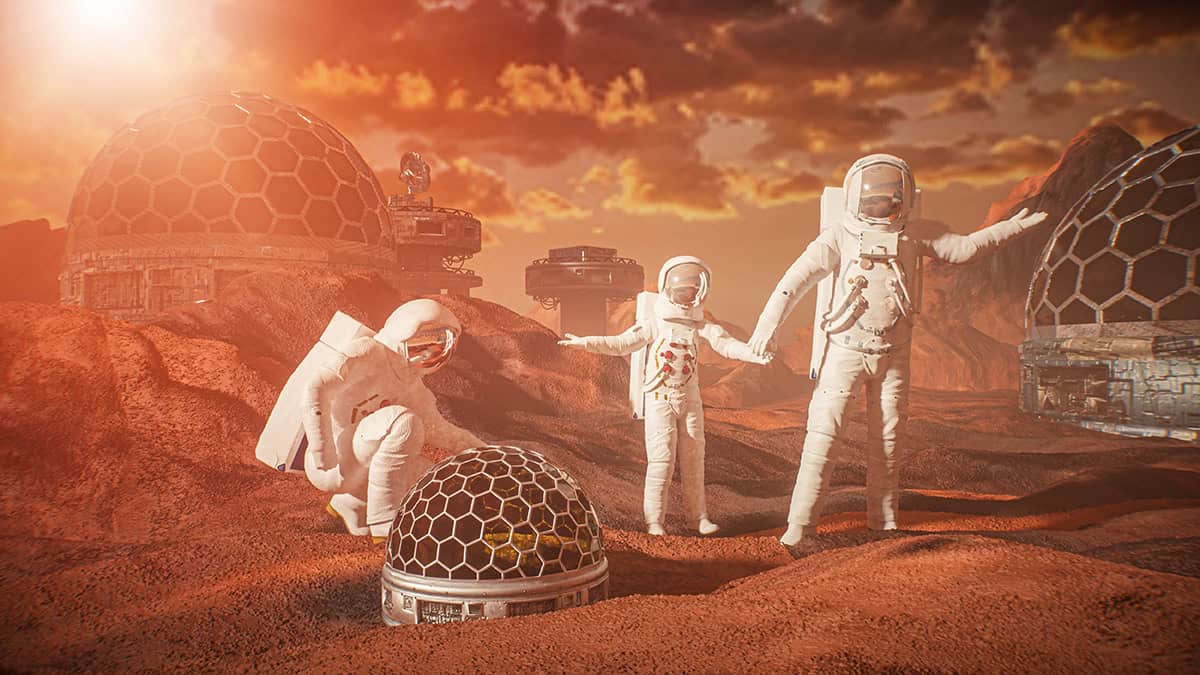
Two adults and a child wearing spacesuits on a red planet with biodomes in the background
Biological limits A sustainable Mars colony will need to include raising children there, but childbirth would be very risky on Mars. (Courtesy: iStock/Denis Art)
“It’s hard to say when exactly sending people to Mars became a goal for humanity,” ponders author Scott Solomon in his new book Becoming Martian: How Living in Space Will Change Our Bodies and Minds – and I think we’d all agree. Ten years ago, I’m not sure any of us thought even returning to the Moon was seriously on the cards. Yet here we are, suddenly living in a second space age, where the first people to purchase one-way tickets to the Red Planet have likely already been born.

The technology required to ship humans to Mars and the infrastructure needed to keep them alive are well constrained, at least in theory. One could write thousands of words discussing the technical details of reusable rocket boosters and underground architectures.

Gravitational lensing sheds new light on the Hubble constant controversy


Gravitational lensing sheds new light on the Hubble constant controversy

16 Jan 2026 Isabelle Dumé
A montage of eight time-delay gravitational lens systems. There is an entire galaxy at the centre of each image, and bright points in rings around them.
Lensing in action: A montage of eight time-delay gravitational lens systems. There is an entire galaxy at the centre of each image, and the bright points in rings around them are gravitationally lensed images of quasars behind the galaxy. These images are false-colour composites of data from different telescopes and instruments. (Courtesy: 2025 TDCOSMO Collaboration et al. CC-BY-ND)
By studying how light from eight distant quasars is gravitationally lensed as it propagates towards Earth, astronomers have calculated a new value for the Hubble constant – a parameter that describes the rate of expansion of the universe. The result agrees more closely with previous “late-universe” probes of this constant than it does with calculations based on observations of the cosmic microwave background (CMB) in the early universe, strengthening the notion that we may be misunderstanding something fundamental about how the universe works.

Anyon physics could explain the coexistence of superconductivity and magnetism


Anyon physics could explain the coexistence of superconductivity and magnetism

13 Jan 2026
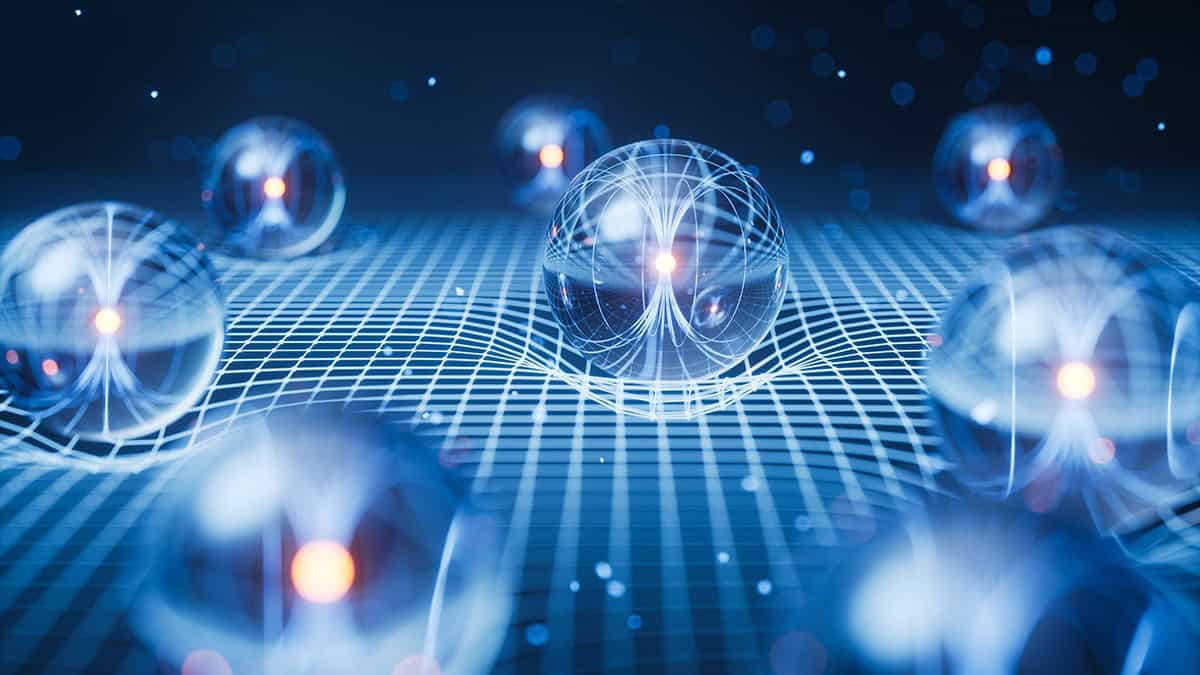
Stock image invoking anyons
Anyonic solution Calculations suggest that anyons are involved in the exotic properties of some 2D materials. (Courtesy: Shutterstock/Vink Fan)
New calculations by US physicists provide deeper insights into an exotic material in which superconductivity and magnetism can coexist. Using a specialized effective field theory, Zhengyan Shi and Todadri Senthil at the Massachusetts Institute of Technology show how this coexistence can emerge from the collective states of mobile anyons in certain 2D materials.
An anyon is a quasiparticle with statistical properties that lie somewhere between those of bosons and fermions.