Αναζήτηση αναρτήσεων

Δευτέρα 1 Οκτωβρίου 2018

Deep learning improves fibre optic imaging

Deep learning improves fibre optic imaging

01 Oct 2018 Belle Dumé
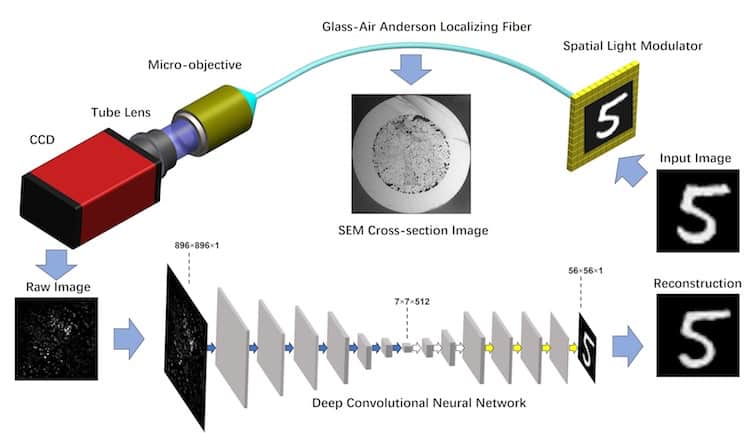


A new flexible, artifact-free and lensless fibre-based imager can reconstruct high-quality images thanks to a trained deep neural network. The device, which is the first of its kind, transmits the images through disordered fibres thanks to an effect called transverse Anderson localization and works even for objects that are located several millimetres away from the fibre input face without the need for any additional distal optics. It might find use in practical endoscopy and other imaging applications.

Fibre optical endoscopes (FOEs) are routinely employed in biomedical research and for diagnosing disease and in surgery. They can be used in situations where conventional microscopy does not work very well. FOEs can also be implanted in patients, so allowing their health to be monitored over the long term.

TRIUMPHS AND FRUSTRATIONS

TRIUMPHS AND FRUSTRATIONS


01 Oct 2018
Taken from the October 2018 issue of Physics World, which celebrates 30 years of the world’s best physics magazine. Members of the Institute of Physics can enjoy the full issue via the Physics World app.


Particle physics has flourished over the past 30 years but, as Christine Sutton points out, there are still few signs of any cracks in the Standard Model

“The Standard Model has survived intact for another year,” declared particle physicist Don Perkins from the University of Oxford three decades ago. “But is this a triumph or a frustration for physics?” Perkins’ remarks appeared in the October 1988 edition of CERN Couriermagazine in a report about the 24th International Conference on High Energy Physics (ICHEP), which had been held in Munich a few months earlier.

Non-invasive NIR imaging tracks brain shrinkage

Non-invasive NIR imaging tracks brain shrinkage

01 Oct 2018 Tami Freeman


Neurodegenerative disorders such as Alzheimer’s disease are often associated with brain atrophy. During disease progression, the brain loses neuronal tissue and reduces in size inside the skull. The left-over space then fills with additional cerebral spinal fluid (CSF) — making CSF variation a potential biomarker for the presence of Alzheimer’s disease.

Paul Corkum bags Isaac Newton Medal from Institute of Physics

Paul Corkum bags Isaac Newton Medal from Institute of Physics

11 Jul 2018 Hamish Johnston


Paul Corkum has won the Isaac Newton Medal and Prize, which is awarded by the Institute of Physics (IOP) for “world-leading contributions to physics”. The Canadian physicist is based at the University of Ottawa, where he is National Research Council-Canada Research Chair in Attosecond Photonics.

“Isaac Newton was one of the greatest scientists to have ever lived, having laid the foundation for much of modern physics,” said Corkum, adding, “It is therefore a tremendous honour to receive a prize named after him. While I may be the first Canadian to win this award, I am surely not the last, as this is a golden age for Canadian science.”

Vertical launch spaceport planned for Scotland with first flights in early 2020s

Vertical launch spaceport planned for Scotland with first flights in early 2020s

16 Jul 2018 Hamish Johnston


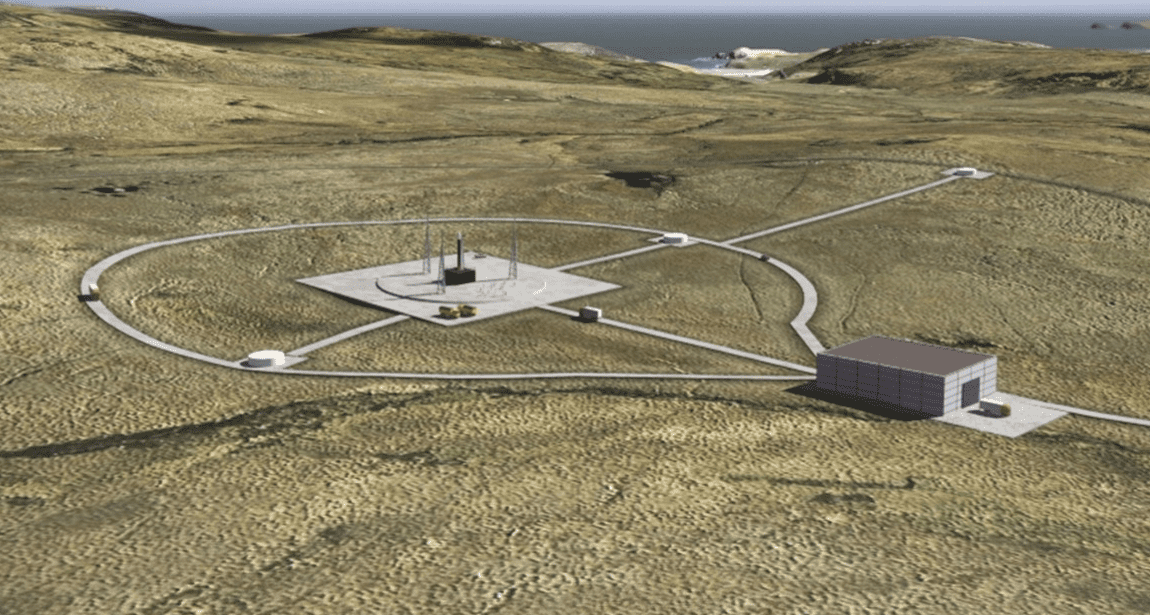
The UK’s first “spaceport” for the “vertical” launch of spacecraft will be built on the A’Mhoine peninsula in Sutherland on the north coast of Scotland. The Highlands and Islands Enterprise(HIE) of Scotland will pay £9.8m towards the initial development of the facility, which could be operational in the early 2020s. A further £5m for the project is expected to come from industry and an additional £2.5m will be stumped-up by the UK Space Agency from an existing £50m fund. Money from that same fund will also be available to airports vying to become the country’s first “horizontal” launch facility.

Despite having a thriving satellite manufacturing industry, the UK currently has no launch facilities for spacecraft. A vertical launch involves a rocket blasting off from a launchpad, with the UK Space Agency saying that northern Scotland is the best place in the UK to reach popular satellite orbits using vertically launched rockets.

China unveils plans for two new gravitational-wave missions

China unveils plans for two new gravitational-wave missions

11 Jul 2018


China has revealed plans for two space-based missions to study gravitational waves. The National Space Science Center, Chinese Academy of Sciences (CAS), announced on 4 July that the country will launch a mission in 2020 to monitor gamma-ray bursts associated with gravitational-wave events. The CAS also gave the go-ahead for a fully-fledged gravitational-wave detector to be sent into space in 2033.

Gravitational waves are distortions of space–time that occur when massive bodies, such as black holes, are accelerated. Since their first direct detection in 2015 by the Laser Interferometer Gravitational-Wave Observatory (LIGO) detectors in Washington and Louisiana, scientists have since picked up several other events from the merger of black holes as well as neutron stars.

Spray-on antennas for the Internet of Things

Spray-on antennas for the Internet of Things

29 Sep 2018 Belle Dumé


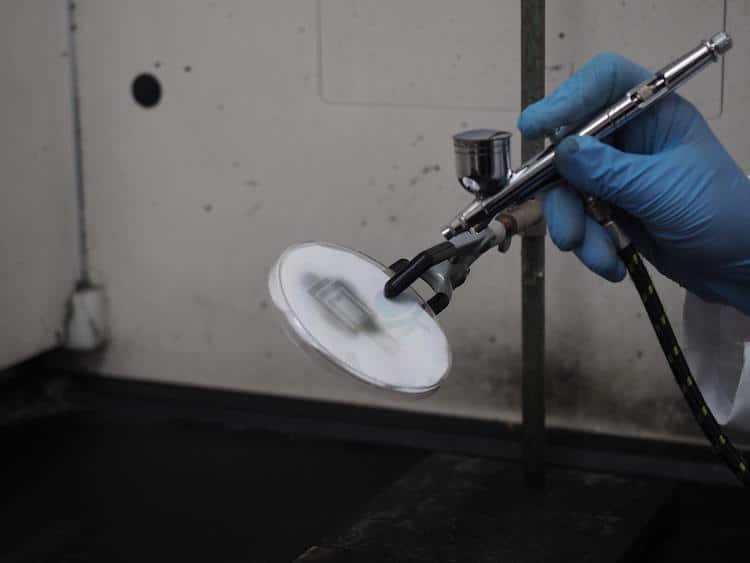
Radio-frequency (RF) antennas, which are used in the Internet of Things, could now be created using a simple, one-step spray-on technique thanks to new work by researchers at Drexel University in the US. The antennas, which are tens of nanometres to a few microns thick, are made of titanium carbide – a material that belongs to the family of 2D transition metal carbides and nitrides known as MXenes – and could allow any object to become connected.

The MXenes have the chemical formula Mn+1Xn, where M is an early transition metal (such as titanium, vanadium, niobium and molybdenum) and X is carbon or nitrogen. They were discovered by the Drexel researchers in 2011, who have been studying them since. Now, the team, led by Yuri Gogotsi of the Department of Materials Science and Engineering, says that the MXene titanium carbide (Ti3C2) can be dissolved in water to create a highly conducting ink or paint.