Αναζήτηση αναρτήσεων

Παρασκευή 9 Οκτωβρίου 2020

Overlooked for the Nobel: Chien-Shiung Wu


Overlooked for the Nobel: Chien-Shiung Wu

02 Oct 2020 Hamish Johnston


The 2020 Nobel Prize for Physics will be announced on Tuesday 6 October. In the run-up to the announcement, Physics World editors have picked some of the people who they think have been overlooked for a prize in the past
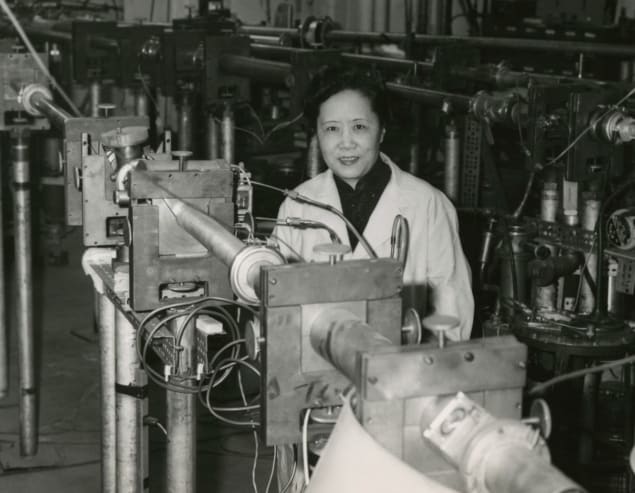


The 1957 Nobel Prize for Physics was shared by Chen Ning Yang and Tsung-Dao Lee “for their penetrating investigation of the so-called parity laws which has led to important discoveries regarding the elementary particles”. However, some physicists argue that the Chinese-American physicist Chien-Shiung Wu should have shared the prize for providing the experimental evidence for Lee and Yang’s theoretical prediction of parity violation. Furthermore, some believe that Wu was denied the prize because she was a woman.


Based at Columbia University in the late 1950s, Wu designed an experiment that tested parity laws by observing beta decay at ultracold temperatures. While Wu was an expert in measuring beta decay, she collaborated with scientists at the National Bureau of Standards (NBS) in Washington DC (now NIST) to meet the cryogenic requirements of what is now known as the “Wu experiment”.

In an 2012 article for Physics World (“Credit where credit’s due?”) the Hungarian chemist and historian of science Magdolna Hargittai dug deep into the claims and counter claims of who, if anybody, should have shared the 1957 prize with Lee and Yang.
Three competing groups

Experiments pin down conditions that make hot water freeze before cold


Experiments pin down conditions that make hot water freeze before cold

05 Aug 2020 Anna Demming


In 1963, a Tanzanian schoolboy called Erasto Mpemba was making ice cream when he noticed something strange: hot water sometimes freezes faster than cold water. Though Mpemba was not the first to wonder about this phenomenon, his report nevertheless captured the scientific imagination. The so-called “Mpemba effect” has remained contentious ever since – not least because the complex matrix of interactions at work when freezing a cup of hot water, coupled with water’s many anomalies, make it difficult to reproduce.

Researchers at Simon Fraser University in Canada have now overcome this problem with a simplified experimental model of a hot system relaxing to equilibrium with a colder heat bath. According to team leader John Bechhoefer, the technique he developed with PhD student Avinash Kumar enabled them to replicate the Mpemba effect in a reliable way, making it possible to pin down the precise conditions it requires.

Πέμπτη 8 Οκτωβρίου 2020

Pions form a new kind of helium


Pions form a new kind of helium

11 May 2020


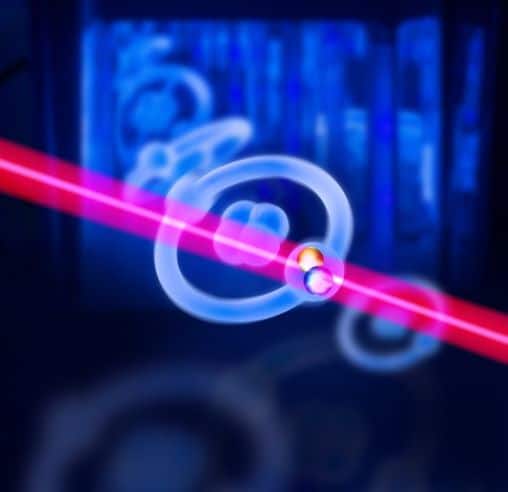
The ability to make artificial atoms containing exotic particles in place of electrons is giving physicists a new way of probing fundamental interactions. Now, researchers have created and interrogated a novel kind of helium atom in which one of the electrons is replaced by a sub-atomic particle known as a pion. The work could shed light on the nature of both pions and neutrinos – tiny, neutral particles for which certain attributes, including mass, remain relatively poorly understood.

Among the particles previously used to make these unusual atoms is the muon, which is about 200 times as massive as the electron but otherwise has identical properties. In 2010 Randolf Pohl and colleagues at the Max Planck Institute of Quantum Optics (MPQ) in Garching, Germany, carried out spectroscopic measurements on muonic hydrogen. They used their data to great effect, calculating a value for the proton’s charge radius that was completely at odds with the then-accepted value and forcing other groups to try to resolve the discrepancy.

New microwave bolometers could boost quantum computers


New microwave bolometers could boost quantum computers

05 Oct 2020 Hamish Johnston


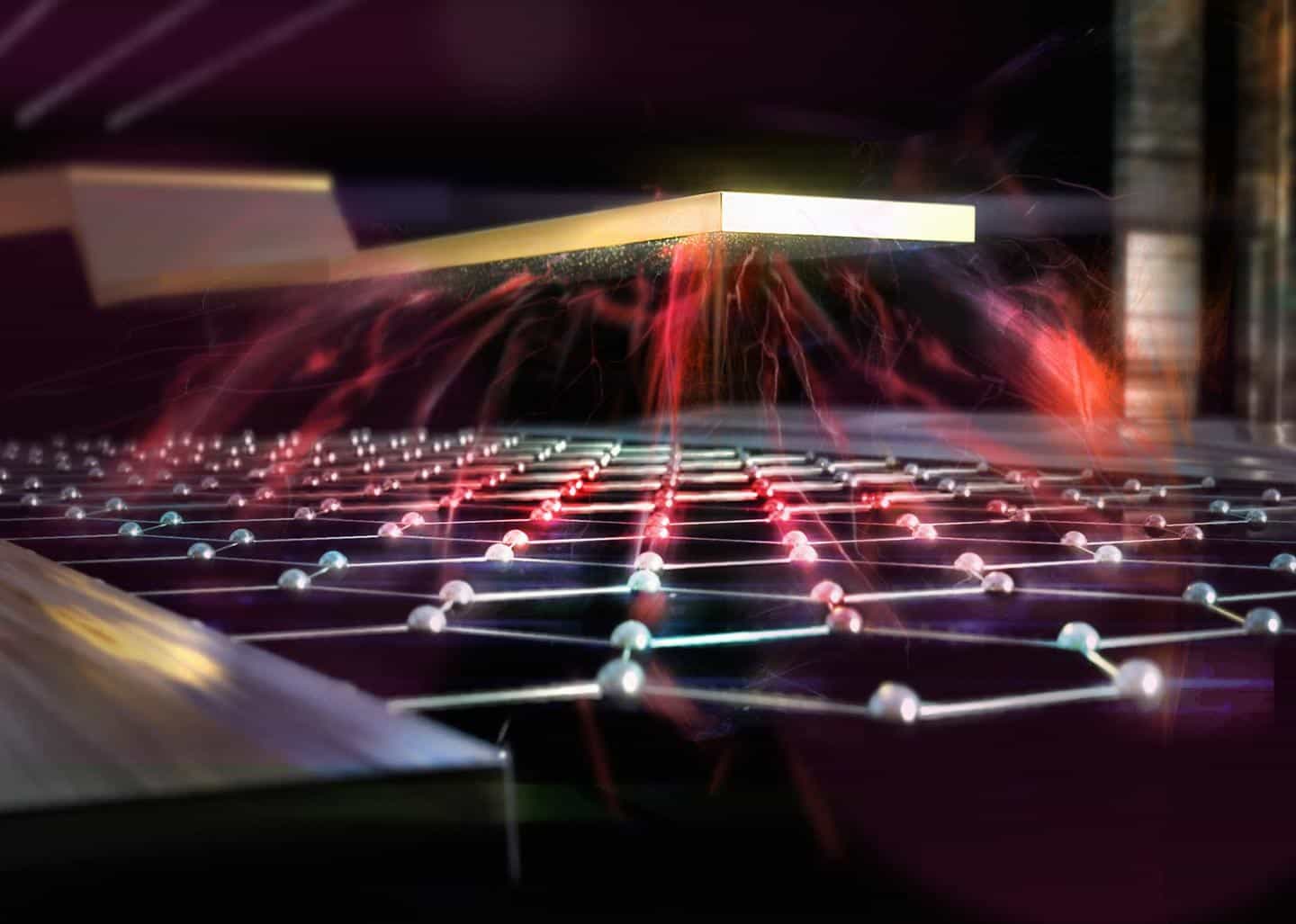
Two graphene-based bolometers that are sensitive to detect single microwave photons have been built by independent teams of physicists. The devices could find a range of applications in quantum technologies, radio astronomy and even in the search for dark matter.


One bolometer was created in Finland by Mikko Möttönen and colleagues at Aalto University and VTT Technical Research Centre of Finland, while the other was created by an international team led by Kin Chung Fong at Raytheon BBN Technologies in the US.

A bolometer measures the energy of incoming radiation by determining how much the radiation heats up a material. Bolometers capable of detecting single microwave photons would be very useful in creating quantum computers and other technologies that use superconducting quantum bits (qubits). This is because superconducting qubits interact via microwaves and single photons provide a very efficient way of transferring quantum information between qubits.

Πέμπτη 1 Οκτωβρίου 2020

Nanoparticles warm-up faster than they cool down


Nanoparticles warm-up faster than they cool down

29 Sep 2020


On the nanoscale, objects warm-up faster than they cool down. That is the surprising conclusion of Alessio Lapolla and Aljaž Godec at the Max Planck Institute of Biophysical Chemistry in Germany, who have predicted this asymmetry using mathematical models of confined nanoparticles.


One basic assumption in thermodynamics is that an object that is either hotter or colder than its surrounding environment will cool down or heat up, respectively, at the same rate. So, an object that is slightly warmer than room temperature will reach room temperature at the same time as an identical object that started slightly below room temperature.

COVID Research and Resources Group brings physicists together


COVID Research and Resources Group brings physicists together

21 Sep 2020 Tami Freeman


Physics has an important role to play in tackling the COVID-19 pandemic. Many physicists are already contributing to COVID-related research, in areas including computational modelling, medical imaging and development of protective and therapeutic equipment. Many such physicists are working in isolation, however, and only interacting on a local level. The newly formed COVID Research and Resources Group (CRRG) aims to bring these physicists and related researchers together, allowing them to benefit from a more coordinated approach.Robert Jeraj.

Leading the initiative is Robert Jeraj, professor of medical physics at the University of Wisconsin–Madison. He tells Physics World how the CRRG originated: “The American Physical Society [APS] has a Topical Group on Medical Physics, GMED, and we had a discussion about how we can help to bring together physicists that are interested in COVID-related research, those already doing research and those who want to contribute and share resources. Partnering with many other APS units, this turned into the COVID Research and Resources Group.”

Machine-learning study of metallic hydrogen provides clues about Jupiter’s interior


Machine-learning study of metallic hydrogen provides clues about Jupiter’s interior

22 Sep 2020
Deep within the interiors of gas-giant planets like Jupiter, materials can be subjected to millions of atmospheres of


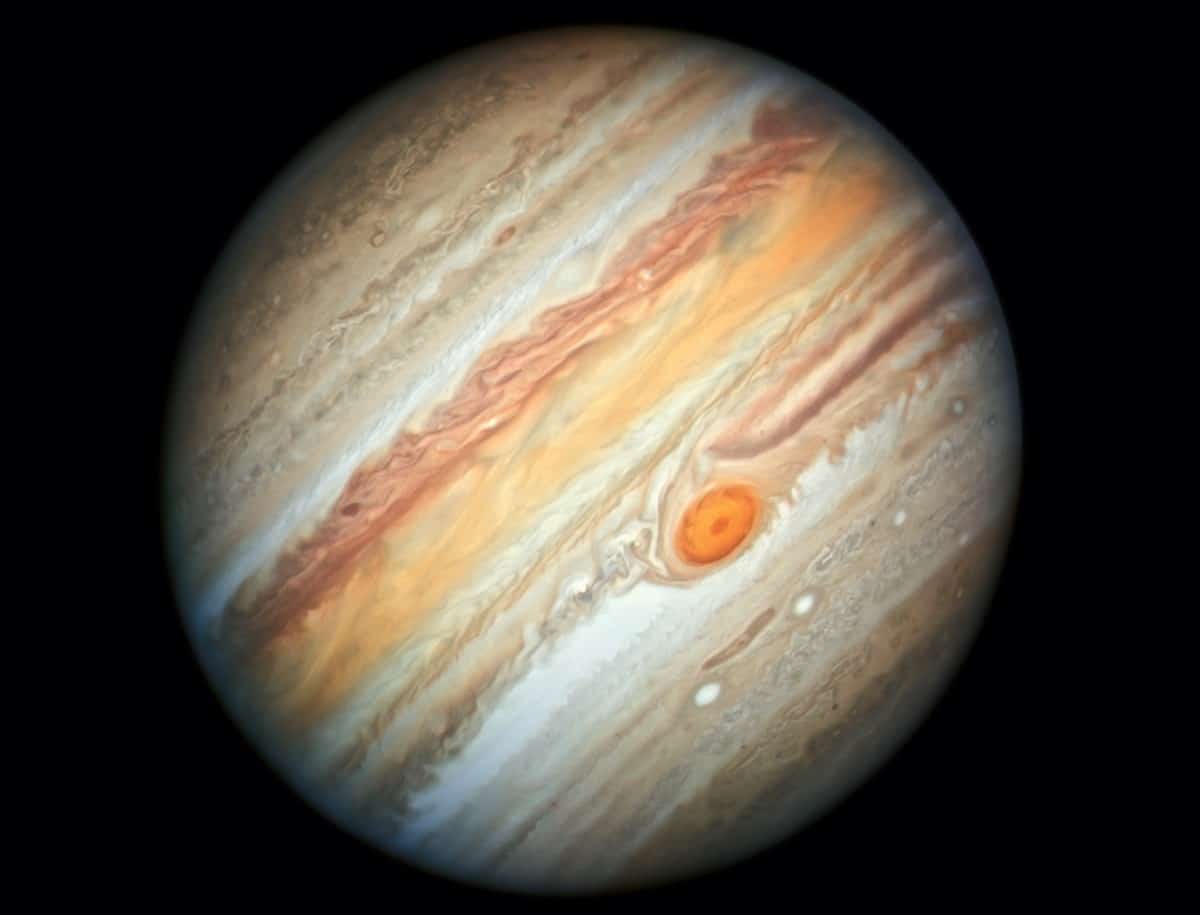
 Smooth transition: a machine learning study of metallic hydrogen could shed light on the interiors of gas giants like Jupiter. (Courtesy: NASA/ESA/A Simon (Goddard Space Flight Center)/MH Wong (University of California, Berkeley))


pressure. In the most extreme conditions, even hydrogen no longer exists in its usual molecular form. Instead, its covalent bonds break down and the material is believed to become a metallic solid. As astronomers seek to understand the physical structures of gas giants, a detailed knowledge of this metallization process is crucial.


To gain these insights, researchers must look to hydrogen’s phase diagram – which depicts how its physical properties vary with temperature and pressure. Although the phase diagram for hydrogen in less extreme conditions has been precisely mapped out, this is far from the case for extremely dense, metallic hydrogen. This gap in knowledge has prompted numerous investigations into where the boundary lies between molecular liquid hydrogen, and its solid metal form. However, it is proving to be extremely difficult to create the necessary high pressures in the lab.