Αναζήτηση αναρτήσεων

Παρασκευή 18 Δεκεμβρίου 2020

Autonomous cars: potential lifesavers but with new risks


Autonomous cars: potential lifesavers but with new risks

26 Aug 2020 James Dacey


Studies suggest that human error is responsible for over 90% of the 1.25 million people who die each year globally due to car accidents. Therefore, improving driver safety is one of the biggest incentives for increasing the autonomy of vehicles. But this brave new world of autonomous driving is not without its own risks – as Andrew Glester discovers in the August episode of the Physics World Stories podcast.

Face shields cannot protect wearers from virus particles carried by vortex rings


Face shields cannot protect wearers from virus particles carried by vortex rings

16 Dec 2020


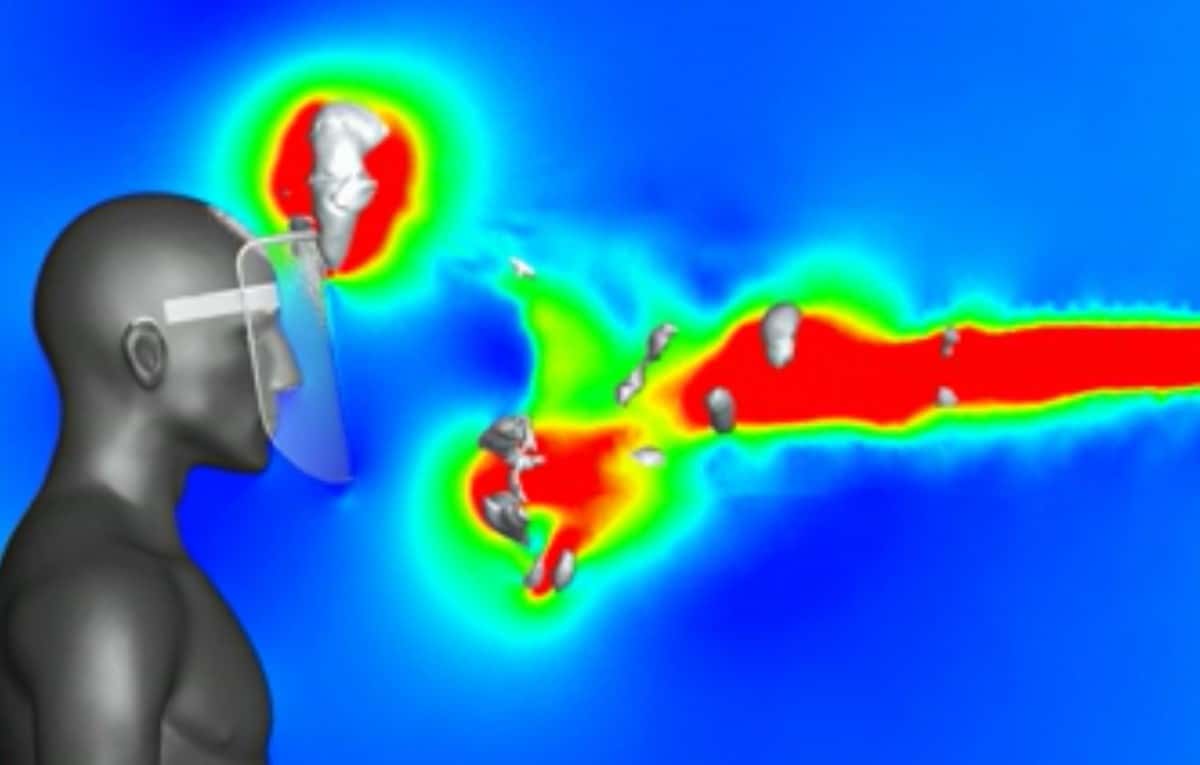
Vortex rings created when a person sneezes can transport virus particles to the noses of people wearing face shields – according to fluid dynamics simulations done by Fujio Akagi and colleagues at Fukuoka University in Japan. Their research reveals how these complex flows allow air-carried particles to enter the gaps between a shield and its wearer’s face. Their discovery exposes a key weakness in existing protective equipment and could lead to face shield designs that are better at diverting airflows away from wearers.

Πέμπτη 17 Δεκεμβρίου 2020

Optical sensor offers non-invasive monitoring of intracranial pressure


Optical sensor offers non-invasive monitoring of intracranial pressure

   17 Dec 2020 Tami Freeman


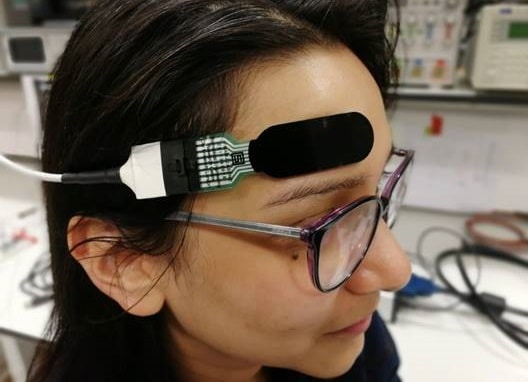
Traumatic brain injury is a major cause of death and disability. When a patient attends an A&E or neurocritical care unit with a head injury, one of the most important parameters to assess injury severity is intracranial pressure (ICP), as raised ICP is particularly associated with poor outcome. Measuring ICP, however, is currently a highly invasive process.

Speaking at the recent IOP symposium “Optics in Clinical Practice”, Panicos Kyriacou from the Research Centre for Biomedical Engineering at City, University of London described his team’s work in designing a non-invasive optical sensor technology for dynamically measuring ICP.

Microtube implosions could produce megatesla magnetic fields


Microtube implosions could produce megatesla magnetic fields

04 Nov 2020 Isabelle Dumé


A newly discovered mechanism known as microtube implosion could make it possible to generate magnetic fields 1000 times stronger than any yet seen in the laboratory. According to the researchers who developed it at Japan’s Osaka University, the new method could be used to generate super-strong magnetic fields for fundamental research in fields such as materials science, quantum electrodynamics and astrophysics.

Laser ‘speed limit’ leaves defects in 3D-printed parts


Laser ‘speed limit’ leaves defects in 3D-printed parts

10 Dec 2020 Isabelle Dumé


3D printing techniques are transforming many areas of manufacturing. One such technique, laser powder bed fusion (LPBF), is particularly attractive because it can be used to make complex metal parts that would be difficult or impossible to manufacture conventionally. However, it suffers from a major drawback in the form of tiny voids that weaken and degrade the metal. Researchers in the US and China have now identified how these voids are generated, and how they become trapped as the metal solidifies – findings that could help manufacturers find ways to control them, and thereby improve 3D metal-printing processes.

In LPBF, a high-power laser, guided by a digital computer-aided design and drafting model, is scanned across a thin layer of metal powder.

Destructive quantum interference improves single-molecule switch


Destructive quantum interference improves single-molecule switch

16 Dec 2020 Isabelle Dumé


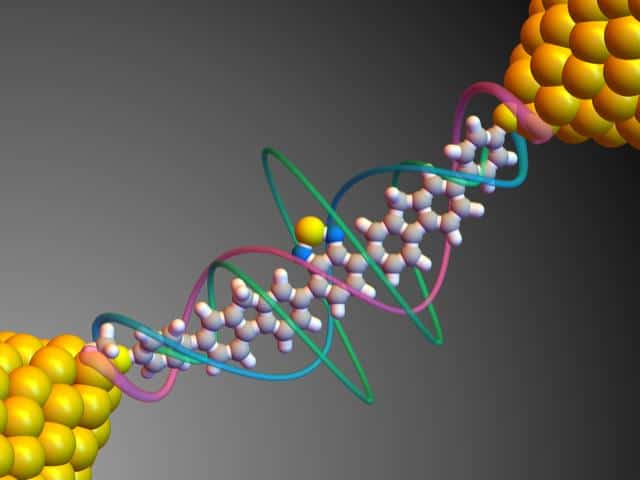
A single-molecule switch that operates via destructive quantum interference has the highest on/off ratio for a device of its kind. The switch, developed by researchers at Columbia University in the US and the University of Glasgow, UK, consists of a molecule six nanometres long (similar in size to the smallest computer chips on the market) and a special central unit. It can carry currents of over 0.1 microamps in its “on” state and could allow for faster, smaller and more energy-efficient transistors.

Tiny particles get the panoramic treatment


Tiny particles get the panoramic treatment

08 Dec 2020 Isabelle Dumé


A new label-free optical imaging technique based on unscattered light can detect nanoparticles as small as 25 nm in diameter. The technology overcomes several limitations of other advanced methods for imaging tiny particles, and its developers at the University of Houston and the University of Texas M D Anderson Cancer Center in the US say it might be used to study viruses and other structures at the molecular level.