Αναζήτηση αναρτήσεων

Τρίτη 2 Νοεμβρίου 2021

All-in-one quantum key distribution system makes its debut


All-in-one quantum key distribution system makes its debut

02 Nov 2021
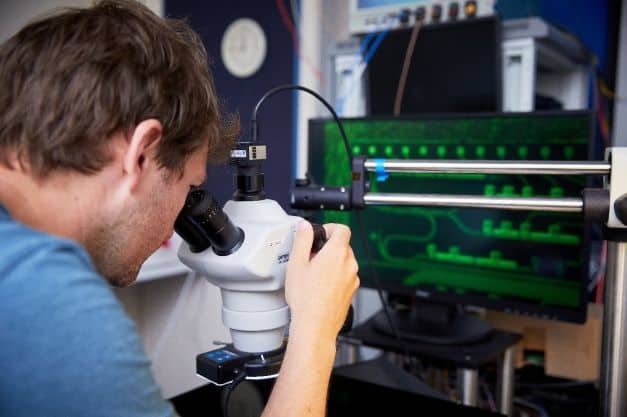


A future in which quantum computers are commonplace might seem like an optimistic fantasy, but it could also involve hackers using those computers to steal important information. To thwart would-be bad actors, researchers developed a cryptographic protocol known as quantum key distribution (QKD) that uses the laws of quantum mechanics to enhance communication security. A team from Toshiba Europe Ltd has now combined a set of chips into compact modules order to build an entire standalone QKD system for the first time, miniaturizing and integrating key components and showing that the resulting system can transmit information autonomously, stably and securely for days, and over tens of kilometres.

Radiation can reverse heart rhythm disorders by reprogramming damaged cardiac cells


Coughed particles float for longer in cold air, study suggests


Coughed particles float for longer in cold air, study suggests

21 Sep 2021


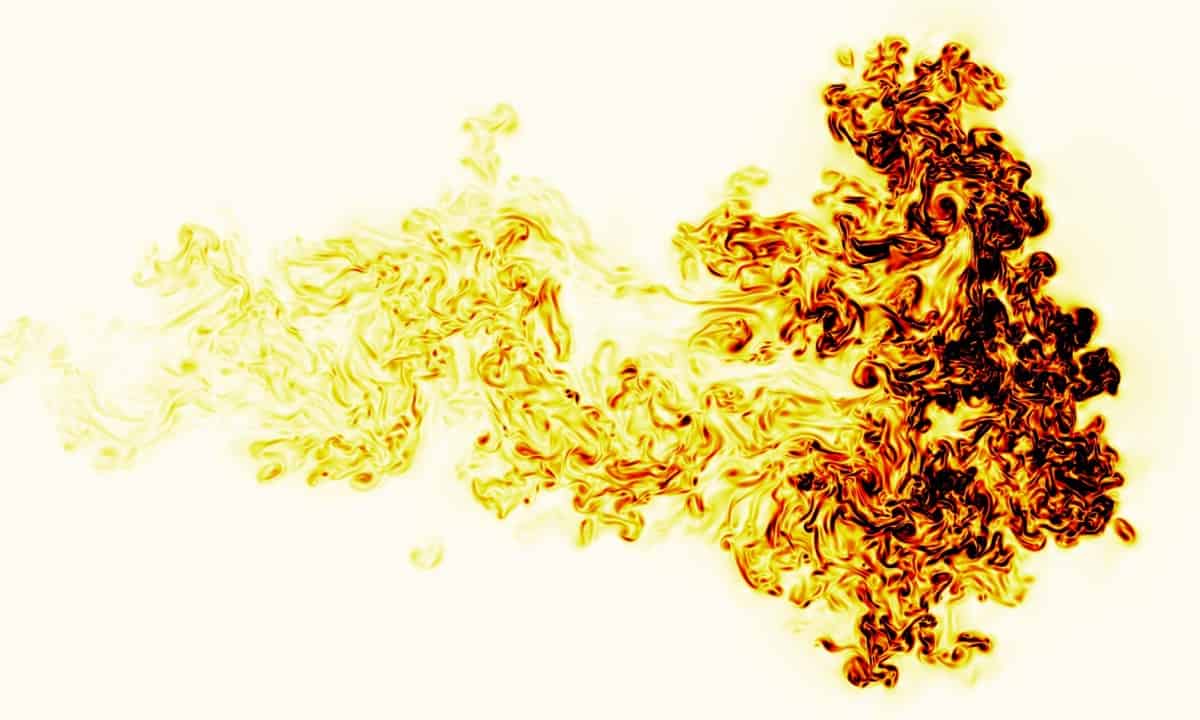
When the temperature drops, turbulent puffs caused by coughs and sneezes become more buoyant and travel further and last longer, scientists in Japan and Italy have discovered. The researchers say the results of their modelling study could help improve our understanding of the airborne transmission of viruses like SARS-CoV-2.

Kagome geometry produces magnetism in a 2D organic material


Kagome geometry produces magnetism in a 2D organic material

29 Oct 2021 Isabelle Dumé


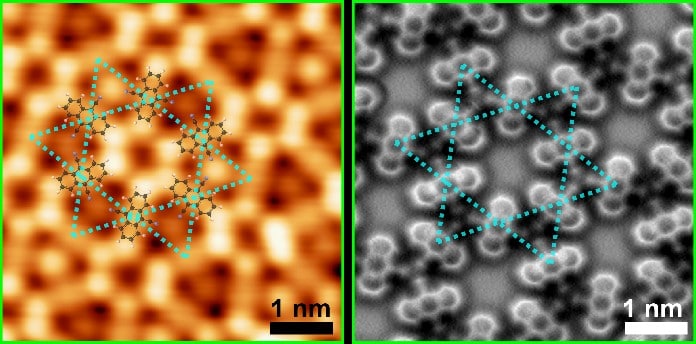
Strong interactions between electrons can cause local magnetic moments to emerge in two-dimensional (2D) organic materials. This insight comes from a study by researchers at Monash University in Australia, who created a metal-organic nanomaterial with its molecules arranged in a so-called kagome geometry – a star-like shape consisting of corner-sharing equilateral triangles. The material and its unusual magnetic properties could find use in next-generation solid-state electronics.

Fusion industry predicts electricity generation by the 2030s


Fusion industry predicts electricity generation by the 2030s

28 Oct 2021 Michael Banks


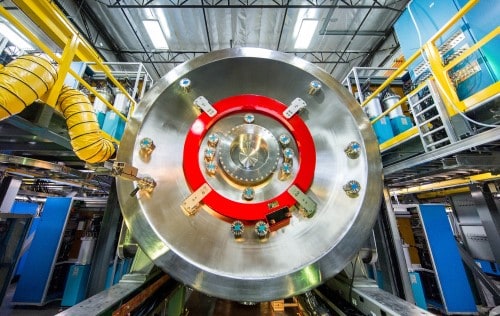
Most private fusion companies expect fusion power to be supplying electricity to the grid in the 2030s. That is according to the first-ever report on the state of the fusion industry, which has been published today by the Fusion Industry Association (FIA) and the UK Atomic Energy Authority (UKAEA). The report – The Global Fusion Industry in 2021 – also finds that private fusion endeavours have received over $1.8bn of funding since the 1990s.

Δευτέρα 1 Νοεμβρίου 2021

Classical Toda Chain as Paradigm for the Hydrodynamics ... (Lecture 2) by Herbert Spohn


Classical Toda Chain as Paradigm for the Hydrodynamics ... (Lecture 2)  by Herbert Spohn

THERMALIZATION, MANY BODY LOCALIZATION AND HYDRODYNAMICS ORGANIZERS: Dmitry Abanin, Abhishek Dhar, François Huveneers, Takahiro Sagawa, Keiji Saito, Herbert Spohn and Hal Tasaki DATE : 11 November 2019 to 29 November 2019 VENUE: Ramanujan Lecture Hall, ICTS Bangalore How do isolated quantum systems thermalize? This is a fundamental question that is related to the foundations of quantum statistical mechanics and also to the question of the arrow of time. The first study goes back to John von Neumann in 1929. Recently, this question was revived, fuelled by several new concepts in theory along with many relevant experiments. This question is now shared by many fields such as statistical physics, mathematical physics, quantum information and cold atomic systems, and the studies around this question have become interdisciplinary. In the broad context of this basic fundamental question, three closely related areas of research have emerged.

Cooper pairs spotted above critical temperature for superconductivity


Cooper pairs spotted above critical temperature for superconductivity

01 Nov 2021


The most direct evidence so far that Cooper pairs of electrons can exist in a material above the critical temperature for superconductivity has been claimed by Koen Bastiaans and Milan Allan of Leiden University in the Netherlands and colleagues. Their work builds on previous research suggesting that electron pairs could be responsible for the mysterious pseudogap state in unconventional superconductors. In the new work, however, researchers have detected Cooper pairs in a superconductor above the critical temperature, but without a pseudogap.