Αναζήτηση αναρτήσεων

Τετάρτη 2 Νοεμβρίου 2022

Engineered DNA nanotubes form tiny pipes into cells


Engineered DNA nanotubes form tiny pipes into cells

06 Oct 2022 Simon Lichtinger
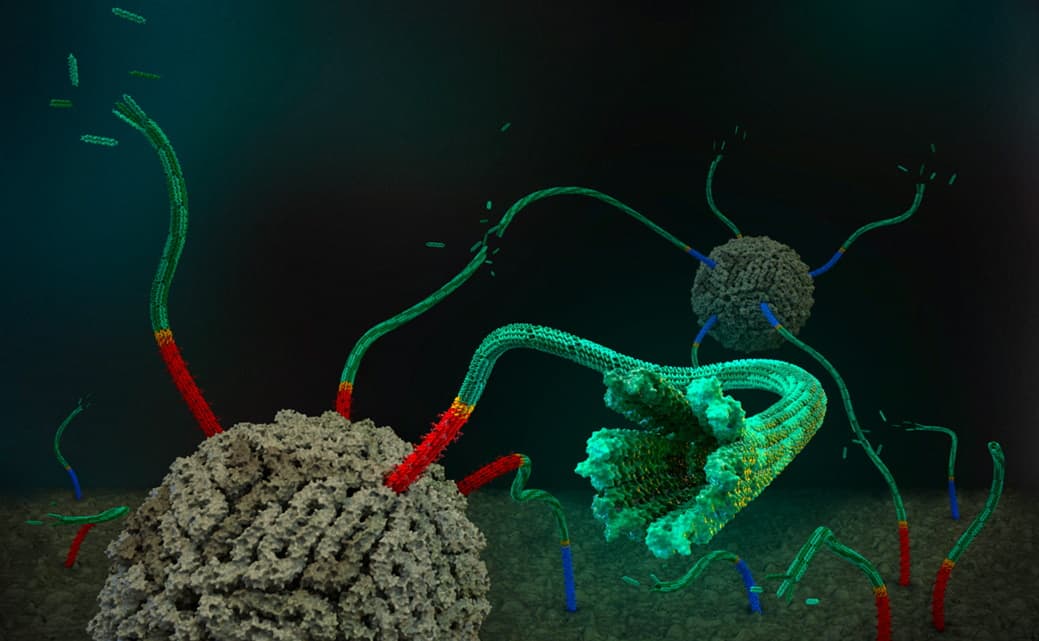


Nano plumbing: An artistic rendering showing how DNA nanotubes could connect artificial cells. (Courtesy: Schulman Lab, Johns Hopkins University)

Synthetic cells, engineered to mimic some of the functions performed by living cells, hold promise for applications in biotechnology and medicine. Even the smallest biological cells, however, are extremely complex and the construction of living artificial cells faces numerous roadblocks. Researchers in the Schulman Lab at Johns Hopkins University have recently made progress towards one of these challenges: the exchange of matter and information across cell boundaries.

Tiny beam shaper fabricated on the tip of a fibre creates twisted light


Tiny beam shaper fabricated on the tip of a fibre creates twisted light

31 Oct 2022


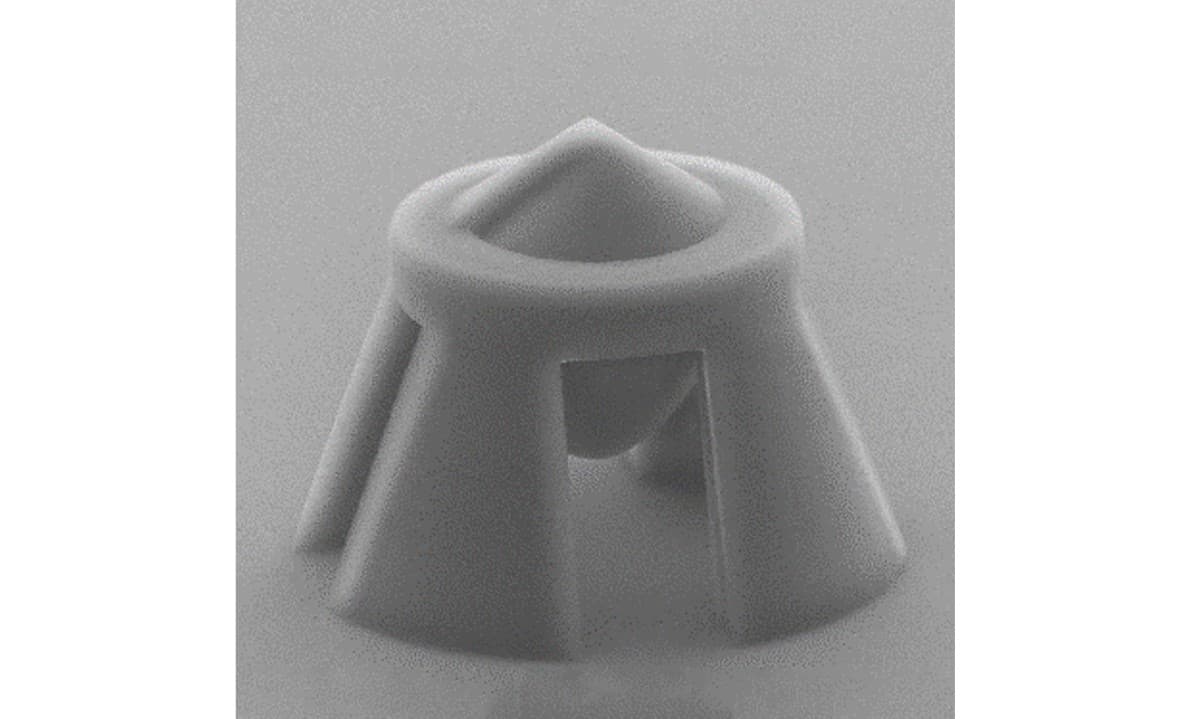
Beam shaping device: Scanning electron microscopy image of the micro-optical element that’s 3D laser printed directly on the end of an optical fibre, showing the helical axicon (top) and the parabolic lens. (Courtesy: Shlomi Litman, Soreq Nuclear Research Center)

Physicists in Israel have printed a micro-optical element that generates a twisted Bessel beam on the end of an optical fibre. The polymer device consists of a parabolic lens for light collimation and a helical axicon that twists the light.

How the Stern–Gerlach experiment made physicists believe in quantum mechanics


How the Stern–Gerlach experiment made physicists believe in quantum mechanics

01 Nov 2022 Hamish Johnston


A century ago, the German physicists Otto Stern and Walther Gerlach carried out an experiment that gave an important credibility boost to the new-fangled notion of quantum mechanics. But as Hamish Johnston discovers, their now-famous experiment succeeded even if the physics on which it was based wasn’t quite right


Quantum test Beams of silver atoms proved crucial to the Stern–Gerlach experiment. (Courtesy: istock/Denis Pobytov)

Despite its counterintuitive weirdness, quantum mechanics ranks as one of the most successful scientific theories of all time.

Ultrasound-induced gas bubbles reduce optical scattering


Ultrasound-induced gas bubbles reduce optical scattering

27 Oct 2022 Isabelle Dumé


Evaluating the imaging performance of US-OCM. (Courtesy: Jin Ho Chang)

Optical scattering is a real problem for biological imaging. By preventing light from being focused deeply into biological tissue, scattering effects limit imaging depths to around 100 microns, producing only blurred images beyond. A new technique called ultrasound-induced optical clearing microscopy could increase this distance by more than a factor of six, thanks to the somewhat counterintuitive step of inserting a layer of gaseous bubbles in the area being imaged. Adding this bubble layer ensures that the photons do not deviate as they propagate through the sample.

Laughing gas could point to alien life on Earth-like planets


Laughing gas could point to alien life on Earth-like planets

31 Oct 2022


Habitable zone: artist’s impression of the TRAPPIST-1 system, where four exoplanets are considered prime targets in the search for extraterrestrial life. (Courtesy: NASA/JPL-Caltech)

The presence of nitrous oxide in the atmospheres of Earth-like exoplanets could be a signature of the presence of extraterrestrial life – according to a study done by researchers in the US led by Edward Schwieterman at the University of California, Riverside.

First trial in humans reveals promise of FLASH proton therapy


First trial in humans reveals promise of FLASH proton therapy

25 Oct 2022 Tami Freeman


First-in-human: FAST-01 is the first clinical trial of ultrahigh-dose rate radiotherapy and the first human treatment using FLASH proton therapy. (Courtesy: iStock/Dr_Microbe)

FLASH radiotherapy – in which therapeutic radiation is delivered at ultrahigh dose rates – shows promise as a new treatment for hard-to-kill tumours. Preclinical studies in animals suggest that the FLASH technique causes less damage to normal tissue than standard radiotherapy, while still effectively killing cancer cells.

Oscillating polaritonic condensate could be used for magnetometry


Oscillating polaritonic condensate could be used for magnetometry

01 Nov 2022


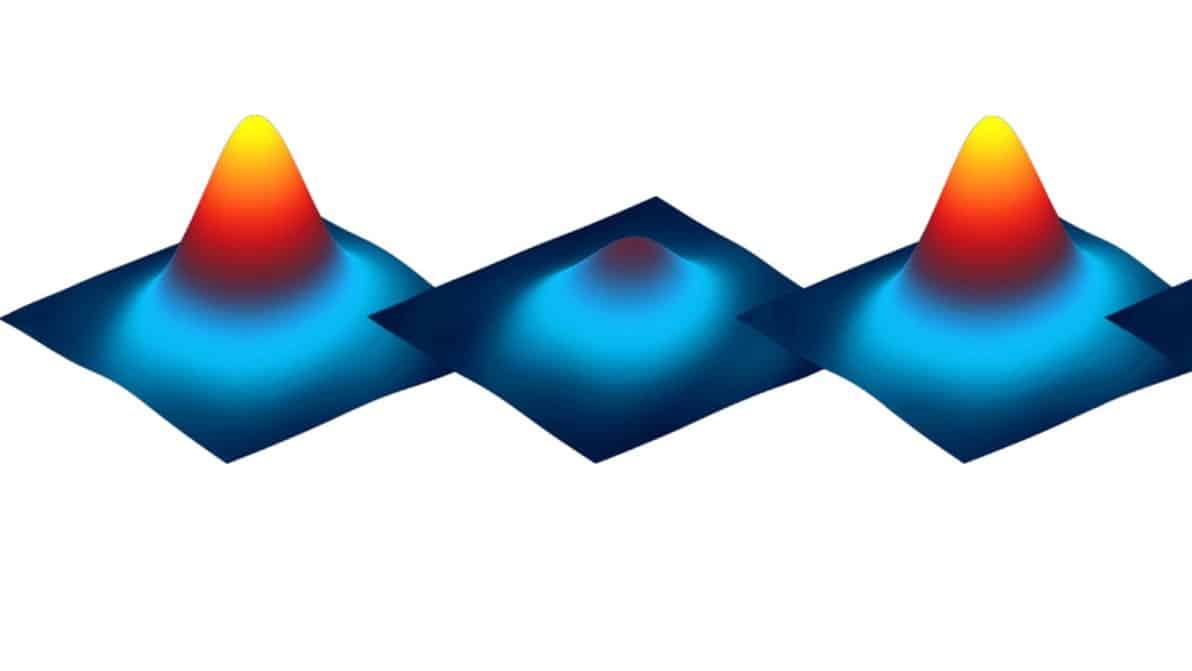
Up and down: Fourier analysis reconstruction of a polariton condensate at time intervals of about 50 ps showing the observed oscillation. (Courtesy: H Sigurdsson et al/Physical Review Letters)

The quantum coherence of a polariton condensate has been seen to oscillate as the condensate decays. The discovery was made by researchers in Russia, the UK, and Iceland who were led by Alexis Askitopoulos at the Skolkovo Institute of Science and Technology. The oscillations are magnetic in nature and the team suggests that the phenomenon could be used to develop new instruments for measuring magnetic fields.