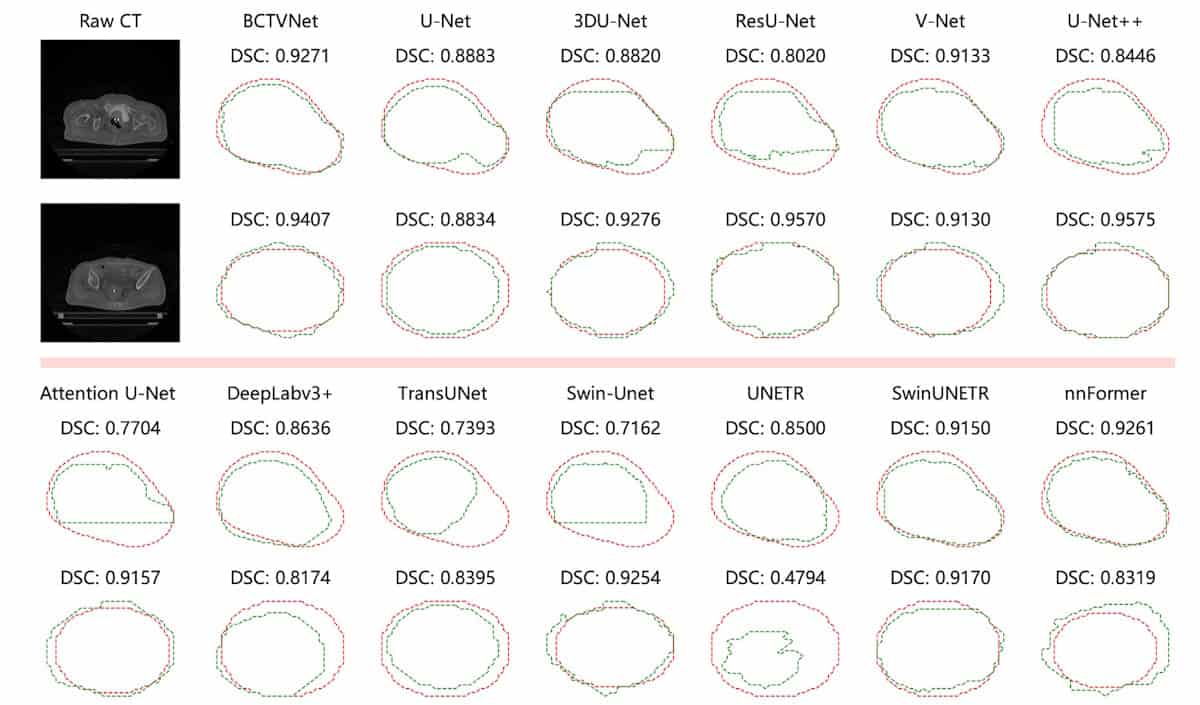
CTV segmentation test: Target contouring in two example slices of a patient’s CT scan, using BCTVNet and 12 comparison models. Red and green contours represent the ground truth and the model predictions, respectively. Each image is annotated with the corresponding Dice similarity coefficient. (Courtesy: CC BY 4.0/Mach. Learn.: Sci. Technol. 10.1088/2632-2153/ae2233
Brachytherapy – a cancer treatment that destroys tumours using small radioactive sources implanted inside the body – plays a critical role in treating cervical cancer, offering an important option for patients with inoperable locally advanced disease. Brachytherapy can deliver high radiation doses directly to the tumour while ensuring nearby healthy tissues receive minimal dose, but its effectiveness relies on accurate delineation of the treatment target. A research team in China is using a hybrid deep-learning model to help with this task.
Planning brachytherapy treatments requires accurate contouring of the clinical target volume (CTV) on a CT scan, a task that’s traditionally performed manually.
Sophisticated control mechanisms: Airborne wind energy systems generate electricity from devices that soar through the sky like birds, in contrast to conventional, Earth-bound turbines, but controlling them is a challenge. (Courtesy: iStock/David Steinbrede)
When people think of wind energy, they usually think of windmill-like turbines dotted among hills or lined up on offshore platforms. But there is also another kind of wind energy, one that replaces stationary, earthbound generators with tethered kites that harvest energy as they soar through the sky.
This airborne form of wind energy, or AWE, is not as well developed as the terrestrial version, but in principle it offers several advantages. Power-generating kites are much lighter than ground-based turbines, reducing both their production costs and their impact on the landscape.
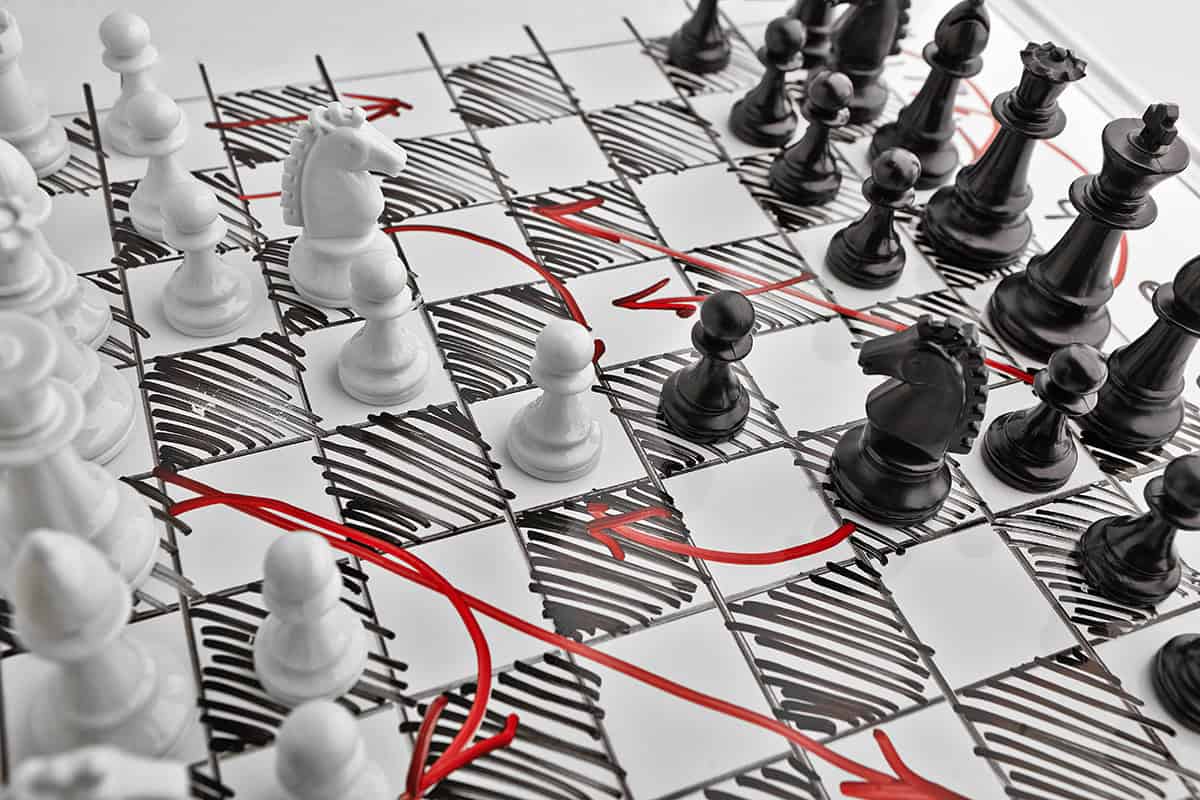
Queen’s gambit: New research finds that the standard game of chess can give an advantage to white – regardless of where the back pieces are placed (courtesy: istock/gedzun)
Chess is a seemingly simple game, but one that hides incredible complexity. In the standard game, the starting positions of the pieces are fixed, so top players rely on memorizing a plethora of opening moves, which can sometimes result in boring, predictable games. It’s also true that playing as white and therefore going first offers an advantage.
In the 1990s, former chess world champion Bobby Fischer proposed another way to play chess to encourage more creative play.
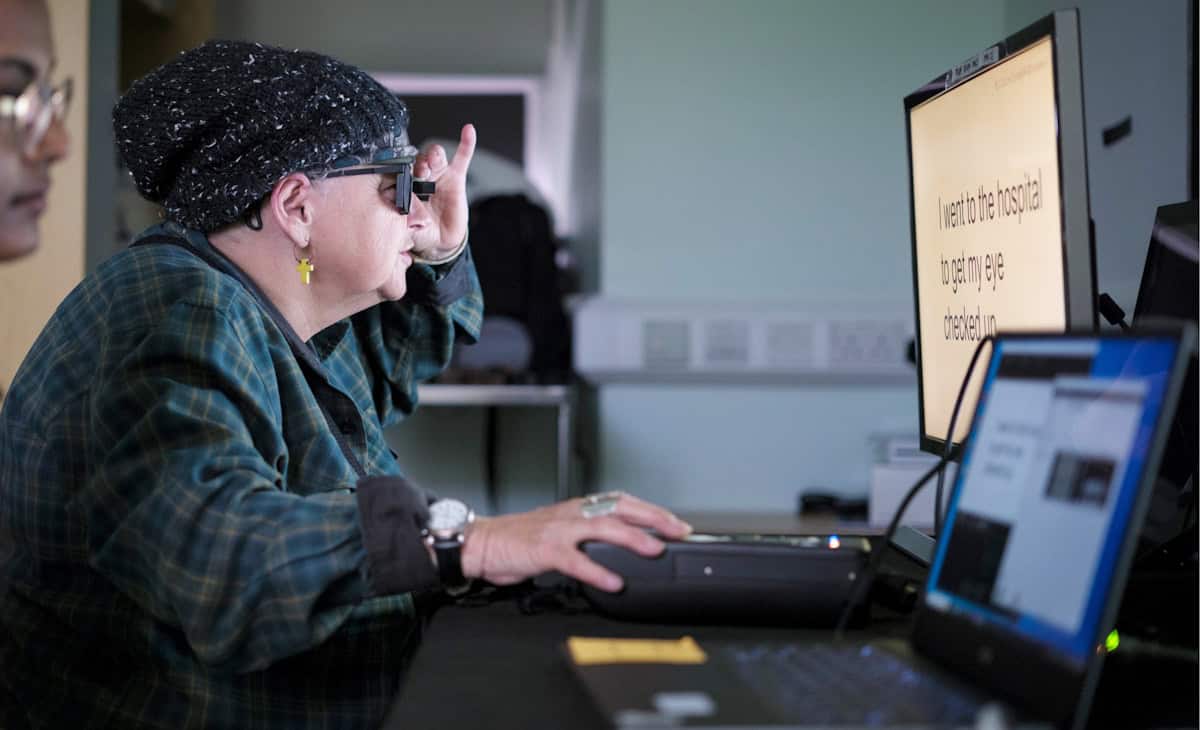
One remarkable device introduced in 2025 was an eye implant that restored vision to patients with incurable sight loss. In a clinical study led by the University of Bonn, participants with age-related macular degeneration had a tiny wireless implant inserted under their retina. Used in combination with specialized glasses, the system restored the ability to read in 27 of 32 participants, followed up a year later. Learning to read again Study participant Sheila Irvine, a patient at Moorfields Eye Hospital, training with the PRIMA device. (Courtesy: Moorfields Eye Hospital)
We also described a contact lens that enables wearers to see near-infrared light without night vision goggles, reported on a fascinating retinal stimulation technique that enabled volunteers to see colours never before seen by the human eye, and chatted with researchers in Hungary about how a tiny dissolvable eye insert they are developing could help astronauts suffering from eye conditions.
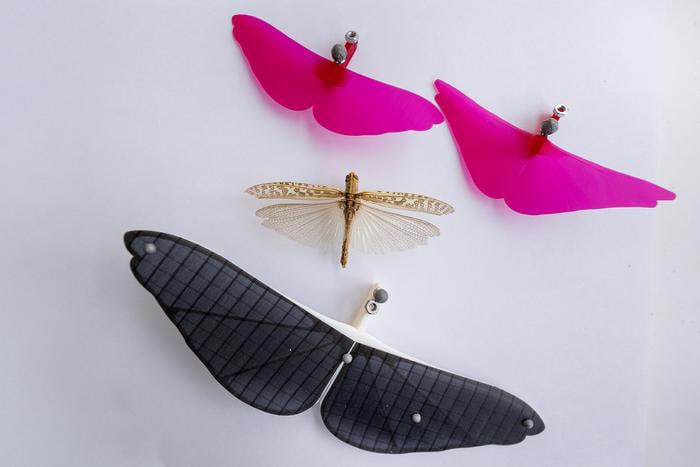
Flight of the grasshopper. Work on how grasshoppers glide could lead to new ways to extend the flight time of insect-sized robots. (Courtesy: Princeton University/Sameer A Khan/Fotobuddy)
Typical insect-inspired robot designs are often based on bees and flies. They feature constant flapping motion, yet that requires a lot of power, so the robots either carry heavy batteries or are tethered to a power supply.
Grasshoppers, however, are able to jump and glide as well as flap their wings, and while they are not the best gliding insect, they have another trick as they are able to retract and unfurl their wings.
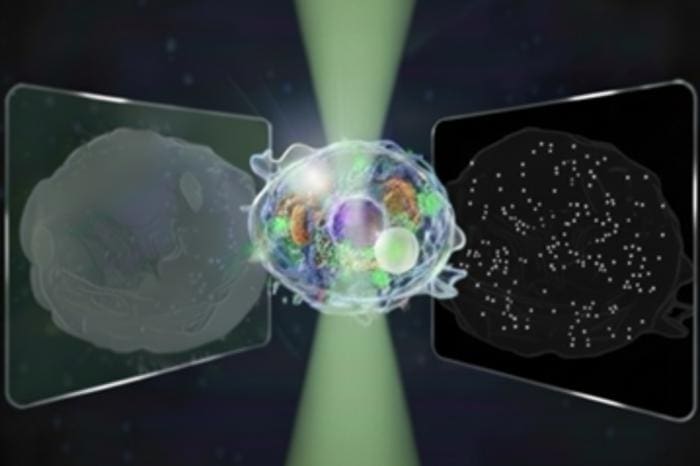
Two techniques in one Conceptual illustration of the bidirectional quantitative scattering microscope, which detects both forward and backward scattered light from cells. This dual detection enables visualization of structures ranging from whole-cell morphology to nanoscale particles. (Courtesy: Horie et al 2025)
A new microscope that can simultaneously measure both forward- and backward-scattered light from a sample could enable researchers to image micro- and nanoscale objects simultaneously. The device could be used to observe structures as small as individual proteins, as well as the environment in which they move, say the researchers at the University of Tokyo who developed it.
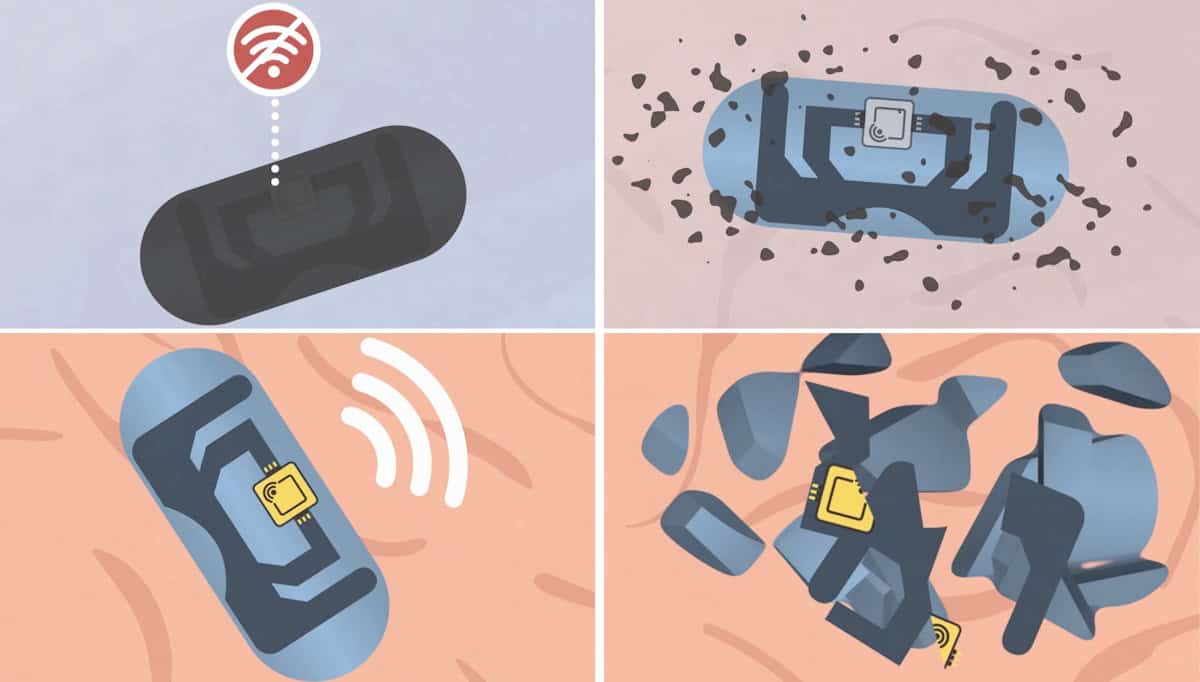
RFID tagged drug delivery. The capsule is coated with materials that block RF signal transmission (top left). Once swallowed, this coating breaks down, releasing medication along with the RF antenna (top right, bottom left). Importantly, the materials are bioresorbable (bottom right). (Courtesy: the researchers)
Taking medication as and when prescribed is crucial for it to have the desired effect. But nearly half of people with chronic conditions don’t adhere to their medication regimes, a serious problem that leads to preventable deaths, drug resistance, and increased healthcare costs. So how can medical professionals ensure that patients are taking their medicine as prescribed?
A team at the Massachusetts Institute of Technology (MIT) has developed a solution: a drug capsule containing an RFID tag that uses radiofrequency (RF) signals to confirm it has been swallowed, then bioresorbs into the body.
“Medication non-adherence remains a major cause of preventable morbidity and cost, but existing ingestible tracking systems rely on non-degradable electronics,” explains project leader Giovanni Traverso. “Our motivation was to create a passive, battery-free adherence sensor that confirms ingestion while fully biodegrading, avoiding long-term safety and environmental concerns associated with persistent electronic devices.”
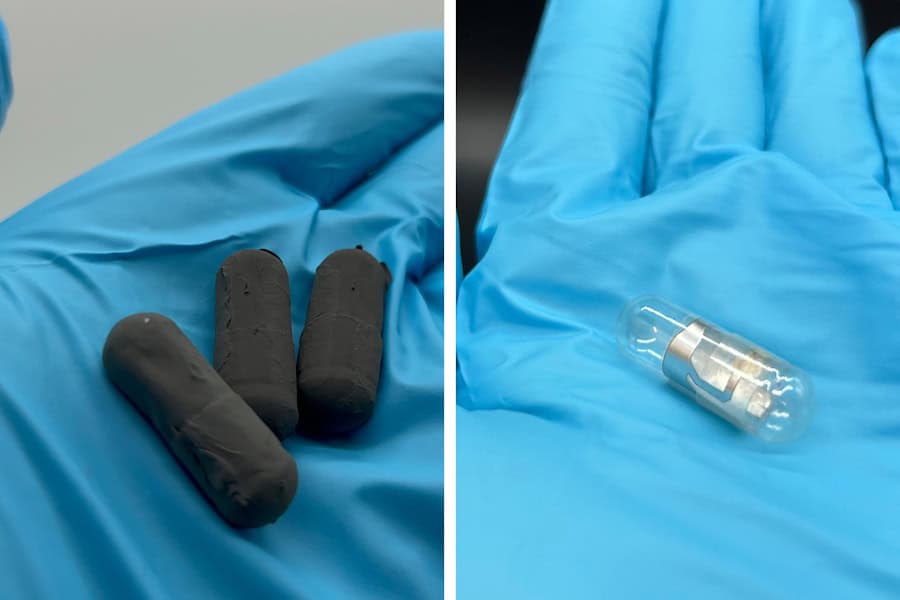
The device – named SAFARI (smart adherence via Faraday cage and resorbable ingestible) – incorporates an RFID tag with a zinc-foil RF antenna and an RF chip, along with the drug payload, inside an ingestible gelatin capsule. The capsule is coated with a mixture of cellulose and molybdenum particles, which blocks the transit of any RF signals.SAFARI capsules Photos of the capsules with (left) and without (right) the RF-blocking coating. (Courtesy: Mehmet Say)
Once swallowed, however, this shielding layer breaks down in the stomach. The RFID tag (which can be preprogrammed with information such as dose metadata, manufacturing details, and a unique ID) can then be wirelessly queried by an external reader, which returns a signal from inside the body confirming that the medication has been ingested.