Αναζήτηση αναρτήσεων

Παρασκευή 17 Ιουλίου 2020

Did a black-hole merger create a flash in a distant quasar?

Did a black-hole merger create a flash in a distant quasar?

13 Jul 2020


A recent electromagnetic signal from a distant quasar could have been created by merging black holes, according to an international team of astronomers led by Matthew Graham at the California Institute of Technology. The researchers made the connection after modelling the aftermath of such a merger in an active galactic nucleus (AGN) and their calculations predict a second related flare from the quasar in the future.


Over the past several years, the LIGO–Virgo observatories have detected gravitational waves from merging black holes. So far, these observations have largely originated from ancient clusters of stellar remnants and no electromagnetic signals from the mergers have been observed. However, Graham’s team believe that electromagnetic signals could be generated when black-hole mergers occur in AGNs including quasars. An AGN is the central core of a galaxy and contains a supermassive black hole that is surrounded by hot, gas-filled accretion discs. AGNs are thought to have dense populations of black holes.

Τρίτη 14 Ιουλίου 2020

Near infrared fluorescence imaging provides early diagnosis of cracked teeth

Near infrared fluorescence imaging provides early diagnosis of cracked teeth

10 Jul 2020


Cracked teeth can be identified in their early stages using near infrared fluorescence (NIRF) imaging, researchers in the US have demonstrated. The approach – which can distinguish between different types of crack and reveal their depth – is more reliable than existing modalities and may help better diagnose the source of otherwise inexplicable toothache.

Cracked teeth are a common condition and, thanks to their potential to allow bacteria across the enamel–dentin junction, also the third highest cause of tooth loss. Despite this, the condition is often overlooked in its early stages. “Cracked teeth can be difficult to diagnose clinically as patients’ symptoms often aren’t reproducible and cracks can be barely visible to the naked eye,” explains oral surgeon James Allison of Newcastle University, who was not involved in the present study.

Brighter prospects for treating a rare lung cancer

Brighter prospects for treating a rare lung cancer

13 Jul 2020 Ben Lewis


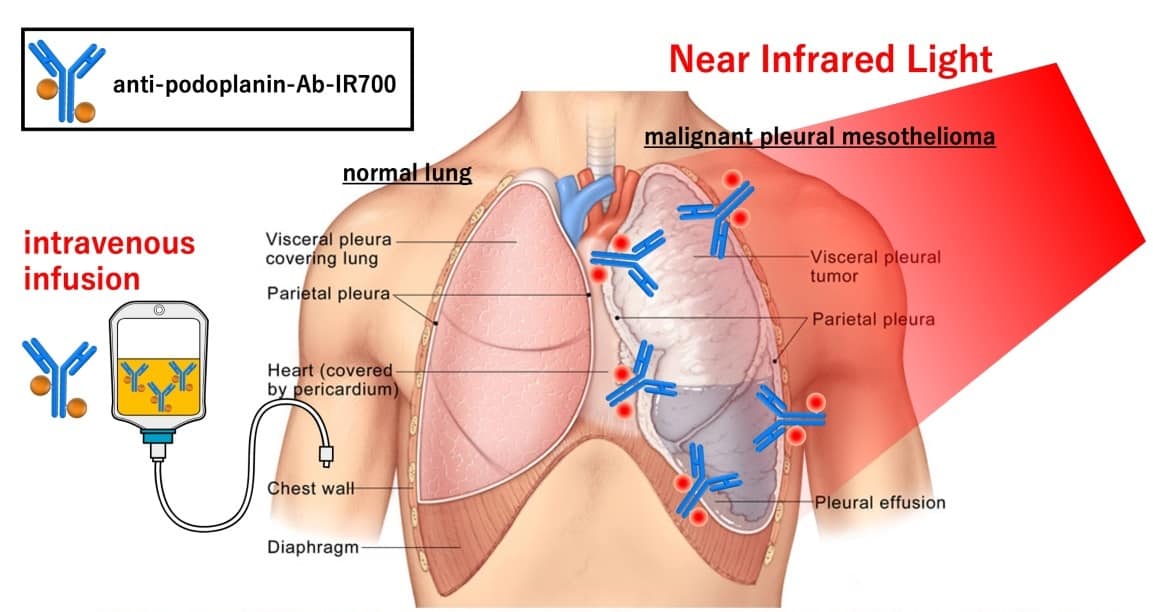
A rare type of cancer affecting the lining of the lung, malignant pleural mesothelioma (MPM) has always been very difficult to treat. That may be about to change, though. Kazuhide Sato and his colleagues at Nagoya University have found a potential new treatment that combines light and a targeted antibody, according to their latest research published in Cells.

MPM, most often caused by exposure to asbestos, is often diagnosed late and has a very poor prognosis, with almost no options for treatment. To overcome this, Sato adapted a strategy recently developed for treating other cancers: near-infrared photoimmunotherapy (NIR-PIT).

Δευτέρα 13 Ιουλίου 2020

ο μυστικό του τέλειου καφέ κρύβεται στο ψυγείο

Το μυστικό του τέλειου καφέ κρύβεται στο ψυγείο


Οι παγωμένοι κόκκοι καφέ όταν αλέθονται προσφέρουν πιο ομοιόμορφο αποτέλεσμα και πλούσια γεύση γεμάτη αρώματα
Για απολαυστικό καφέ με γεμάτο άρωμα παγώστε τους κόκκους του καφέ πριν από το άλεσμα, υποστηρίζουν βρετανοί ειδικοί από το Πανεπιστήμιο του Μπαθ


Για θεϊκή και γεμάτη γεύση στο καφεδάκι μας το μυστικό είναι οι παγωμένοι κόκκοι, υποστηρίζουν βρετανοί ερευνητές από το Πανεπιστήμιο του Μπαθ. Αναλύοντας τη γεύση μιας τέλειας κούπας καφέ, οι ειδικοί διαπίστωσαν ότι η τοποθέτηση των καβουρδισμένων κόκκων του καφέ στο ψυγείο πριν από το άλεσμά τους οδηγούσε σε ένα πιο ομοιόμορφα αλεσμένο καφέ και με πολύ καλύτερη γεύση κατά την παρασκευή του.
Σύμφωνα με τους ερευνητές, οι χαμηλές θερμοκρασίες ενισχύουν την παραγωγή λεπτότερων και πιο ομοιόμορφων σωματιδίων καφέ κατά το άλεσμα, το οποίο επιτρέπει στη συνέχεια την απελευθέρωση της έντονης γεύσης και των αρωμάτων του.
Τα ευρήματα των ειδικών, τα οποία ανακοινώθηκαν λίγες μόλις ημέρες πριν από το Παγκόσμιο Πρωτάθλημα Barista στο Δουβλίνο (22-25 Ιουνίου), θα μπορούσαν να βρουν άμεση εφαρμογή στον χώρο της βιομηχανίας.

Παγωμένοι κόκκοι να τους πιεις στην κούπα
Στο πλαίσιο της μελέτης τους οι ερευνητές εξέτασαν το αποτέλεσμα του αλέσματος των κόκκων του καφέ σε διάφορες θερμοκρασίες (σε θερμοκρασίες δωματίου και ως τους -160 βαθμούς Κελσίου). Οι ερευνητές διαπίστωσαν ότι όσο περισσότερο παγώνουν οι κόκκοι του καφέ τόσο μεγαλύτερη είναι η απελευθέρωση της πλούσιας γεύσης. Κάτι τέτοιο πρακτικά, εξηγούν οι επιστήμονες, θα μπορούσε να σημαίνει ότι με την ίδια ποσότητα κόκκων θα μπορούσαμε να έχουμε περισσότερο καφέ ή λιγότερο χρόνο παρασκευής.

Ομοιόμορφο άλεσμα, πλούσιο άρωμα και γεύση
Το άλεσμα του καφέ μπορεί να μοιάζει πολύ απλή διαδικασία - το σπάσιμο δηλαδή των κόκκων του καφέ σε μικροσκοπικά κομματάκια τα οποία στη συνέχεια βυθίζονται στο νερό. Ωστόσο, όπως υπογραμμίζουν οι επιστήμονες, πρόκειται για μια βασική διαδικασία η οποία μπορεί να έχει τεράστια επίδραση στη γεύση και στην ποιότητα του καφέ.
«Κάτι τέτοιο θα μπορούσε να επιφέρει αλλαγές ως προς τη γεύση του καφέ, και αυτό επειδή το ομοιόμορφο μέγεθος του αλεσμένου καφέ και η διανομή των σωματιδίων του παίζουν τεράστιο ρόλο ως προς τον ρυθμό της απόσταξης του καφέ» εξηγεί ο ερευνητής δρ Κρίστοφερ Χέντον, ο οποίος πλέον εργάζεται στο Τεχνολογικό Ινστιτούτο της Μασαχουσέτης (ΜΙΤ).
«Θα μπορούσε ακόμη να φέρει ριζικές αλλαγές στη βιομηχανία του καφέ. Ο κόσμος προσπαθεί να παραγάγει καφέ πολύ υψηλής ποιότητας, με πολύ εκλεπτυσμένα εργαλεία και εξοπλισμό, και προτίθεται να δοκιμάσει νέα πράγματα προκειμένου να επιτύχει ένα καλύτερο αποτέλεσμα» προσθέτει ο ίδιος.
Τέλος οι ειδικοί αναφέρουν ότι ενδεχομένως τα νέα τους ευρήματα να βρουν ταχύτερα εφαρμογή στο πλαίσιο των επερχόμενων διαγωνισμών καφέ  ανά την υφήλιο, ενώ δεν αποκλείεται σύντομα να κυκλοφορήσουν και νέες μηχανές αλέσματος καφέ με... ψύξη.

Κυριακή 12 Ιουλίου 2020

Physicists propose how to entangle macroscopic objects using pulses of light

Physicists propose how to entangle macroscopic objects using pulses of light

19 Jun 2020


Physicists at Imperial College London, UK, and Stockholm University, Sweden, have proposed a new way of creating entanglement between mechanical motion and an optical field, and also between two mechanical oscillators, using short pulses of light. Here research students Jack Clarke and Paulo Sahium along with group director Michael Vanner from the Quantum Measurement Lab at Imperial explain the work.

The research is reported in full in New Journal of Physics, published by IOP Publishing – which also publishes Physics World.
What was the motivation for the research?

Quantum entanglement is one of the most intriguing aspects of physics and allows objects to be more strongly correlated than is allowed classically. Albert Einstein called this perplexing behaviour “spooky action at a distance” and many objections to this radical idea were raised in the early days of quantum mechanics. Fast forward 80 years, and quantum entanglement is a now a well-established phenomenon and is routinely generated between objects such as photons, atoms and molecules.

Active rotation plays a role in the jamming–unjamming transition in living cells

Active rotation plays a role in the jamming–unjamming transition in living cells

26 Jun 2020 Katherine Skipper


New research offers insight into the role of rotation in the self-assembly of living cells. The work is described in Soft Matter and was done by Linda Ravazzano at the University of Milan under the supervision of Stefano Zapperi and in collaboration with Caterina La Porta’s research group.


Computer simulations and experiments with algae provided the team with information about the jamming and unjamming of cells at high densities. This research could lead to a better understanding of the differences between healthy and cancerous cells in human tissue.

The self-assembly of cells into tissues sits firmly at the interface of physics and biology. Cells are complex biological systems that sense changes in their environment and communicate with other cells, but they can also exhibit self-organization that is driven purely by thermodynamics.

Four-charm tetraquark has been spotted at CERN

Four-charm tetraquark has been spotted at CERN

02 Jul 2020 Hamish Johnston

The first tetraquark comprising all charm quarks and antiquarks may have been spotted by physicists working on the LHCb experiment on the Large Hadron Collider (LHC) at CERN. The exotic hadron was discovered as it decayed into two J/ψ mesons, each of which is made from a charm quark and charm antiquark. The particle appears to be the first known tetraquark to be made entirely of “heavy quarks”, which are the charm and beauty quarks (but not the top quark, which is the heaviest quark but does not form hadrons).


“Particles made up of four quarks are already exotic, and the one we have just discovered is the first to be made up of four heavy quarks of the same type, specifically two charm quarks and two charm antiquarks,” explains Giovanni Passaleva, who is just stepping down as spokesperson for LHCb. “Up until now, the LHCb and other experiments had only observed tetraquarks with two heavy quarks at most and none with more than two quarks of the same type.”