Αναζήτηση αναρτήσεων

Πέμπτη 21 Οκτωβρίου 2021

CityU physics: undergraduate students prioritize connection and collaboration


CityU physics: undergraduate students prioritize connection and collaboration

21 Oct 2021 Sponsored by City University of Hong Kong


City University of Hong Kong’s undergraduate physics programme wants to attract ambitious international students as they take their next step towards a scientific career in research or industry
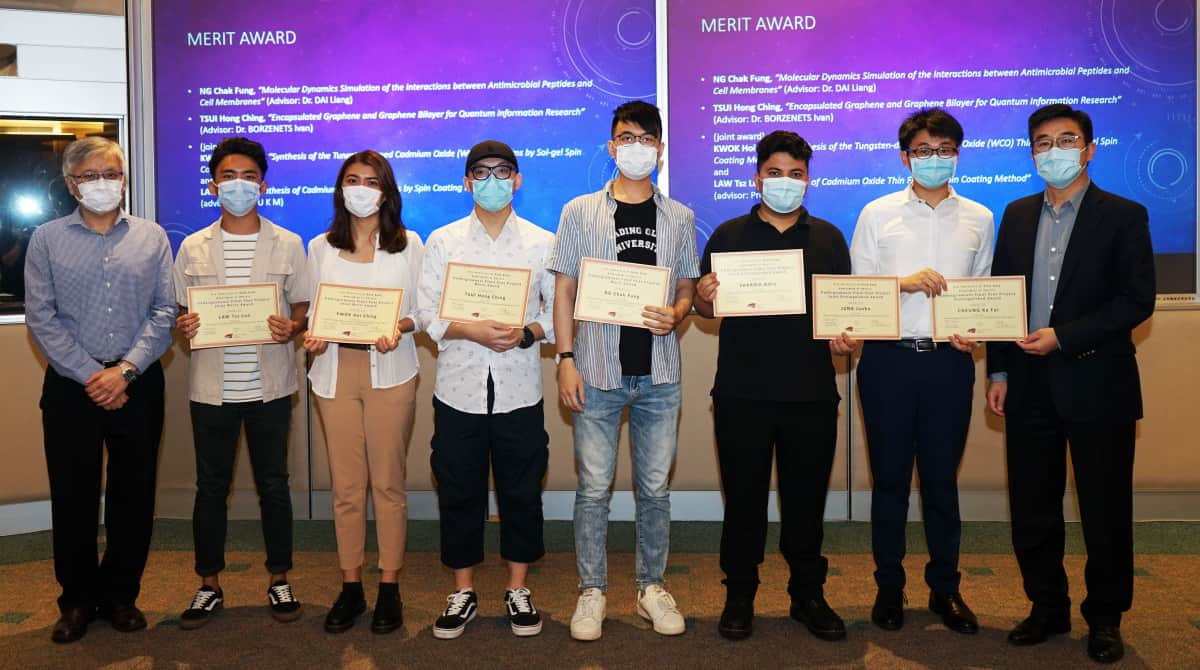


Think big, recruit well, move fast: that’s the ambitious mantra informing the leading-edge research effort and undergraduate education programme within City University of Hong Kong’s Department of Physics. Although it only came into being in 2017, after the university chose to create distinct disciplinary specialisms from the former combined physics and materials science programme, the CityU Department of Physics demonstrates a unity of purpose and collective endeavour that suggest its ultimate goal – to create one of the leading academic centres for physics education and research in the Asia-Pacific region – is a realistic proposition over the medium term.

Automated imaging makes AFM experiments faster and easier


Automated imaging makes AFM experiments faster and easier

21 Oct 2021 Sponsored by Park Systems


By integrating robotics and machine learning into its latest atomic force microscope, Park Systems has for the first time fully automated the imaging process for research users


Scientists and engineers have for many years relied on atomic force microscopy (AFM) to reveal the secrets of materials at the nanoscale. This powerful and versatile technique, first invented by scientists at IBM and Stanford University in 1985, offers a 3D view of the sample’s surface with sub-nanometre resolution, while different measurement modalities allow researchers to map material phenomena that include frictional, nanomechanical, electrical, magnetic and thermal properties. AFM can also image any type of material in ambient conditions as well as under vacuum and in liquid, which has made the technique a vital tool in all areas of science and technology.

SETI Talks: Black Holes Are Real. How Do They Shape Structure and Evolution in Our Universe?


SETI Talks: Black Holes Are Real. How Do They Shape Structure and Evolution in Our Universe?

A SETI Talks sponsored by Daniel Swanson

Fantastical though they may seem, black holes are real, not just science fiction or ideas from the imaginations of theorists. Scientists are now able to study black holes, in detail, throughout our Universe.

Climate change in a nutshell: the causes and effects of global warming, simply put


Climate change in a nutshell: the causes and effects of global warming, simply put

21 Oct 2021 Laura Hiscott
Taken from the October 2021 issue of Physics World. Members of the Institute of Physics can enjoy the full issue via the Physics World app.


Laura Hiscott reviews Small Gases, Big Effect: This is Climate Change by David Nelles and Christian Serrer


It might sound impossible to explain something as complex as the mechanisms of climate change both simply and accurately. But this is exactly what David Nelles and Christian Serrer – students at the University of Friedrichshafen, Germany – have achieved with their book Small Gases, Big Effect: This is Climate Change.

First positronium image recorded during a PET scan


First positronium image recorded during a PET scan

21 Oct 2021 Tami Freeman


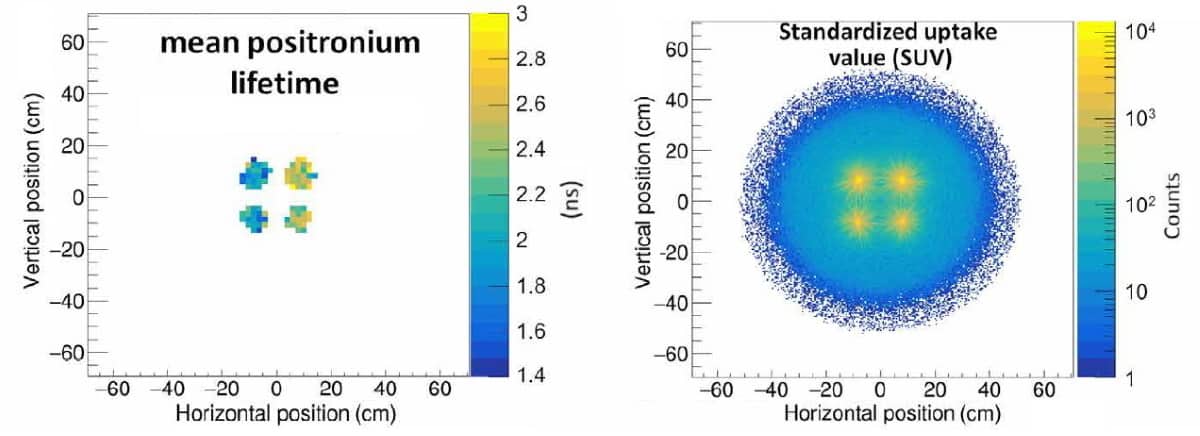
Positron emission tomography (PET) is a molecular imaging method used for cancer diagnosis. During the imaging procedure, positronium is also generated in the patient’s body, but current PET systems are not able to acquire positronium images. Now, researchers in Poland have created the first-ever positronium image recorded during a PET scan, reporting their results in Science Advances.

Τετάρτη 20 Οκτωβρίου 2021

Searching for signs of alien technologies


Searching for signs of alien technologies

20 Oct 2021 James Dacey


In this episode of the Physics World Stories podcast astronomers discuss the search for signs of extraterrestrial technologies. Fingerprints might include traces of pollution in exoplanet atmospheres, lights on the night sides of planets, and even the waste heat from megastructures such as Dyson spheres.

Small-world networks regulate transcription in cells


Small-world networks regulate transcription in cells

19 Oct 2021 Simon Lichtinger


The regulatory patterns that underpin gene expression may originate from the spatial organization of the genome, according to a new study reported in Nature Communications. A collaborative research team, from the universities of Edinburgh, Göttingen and Oxford, has used simulations of a simple DNA model to provide insight into the mechanisms of this genetic control.