Αναζήτηση αναρτήσεων

Παρασκευή 11 Σεπτεμβρίου 2020

Multi-user communication network paves the way towards the quantum internet


Multi-user communication network paves the way towards the quantum internet

08 Sep 2020


The concept of quantum communication, with security guaranteed by the laws of physics, took the world by storm when first unveiled in 1984. The traditional protocol, however, allows only two people to communicate securely. Attempts to extend this to “quantum networking” have usually proved either insecure or impracticably complex. Now, however, researchers in the UK and Austria have demonstrated secure information exchange between eight users spaced all around a city.

The canonical quantum communication protocol relies on two parties generating a secure key by exchanging polarized photons. The security of the link is guaranteed by the fact a third party cannot make a measurement of their state without disturbing them and being detected. Though remarkable, this approach is fundamentally limited to pairwise communication: it does not provide a blueprint for the multi-dimensional quantum network, or “quantum internet” that some researchers have dreamed of, in which multiple users connected together can all communicate simultaneously and securely with any other member of the network.

Κυριακή 6 Σεπτεμβρίου 2020

Molecule’s electronic structure is simulated on a quantum computer

Molecule’s electronic structure is simulated on a quantum computer

05 Sep 2020


Simulating chemical processes is one of the most promising applications of quantum computers, but problems with noise have prevented nascent quantum systems from outperforming conventional computers on such tasks. Now, researchers at Google have taken a major step towards this goal by using the most powerful quantum computer yet built to successfully implement a protocol for calculating the electronic structure of a molecule. The results may form a blueprint for complex, useful calculations on quantum computers affected by noise.

Moth-eye nanostructures make good anti-icing coatings

Moth-eye nanostructures make good anti-icing coatings

03 Sep 2020 Isabelle Dumé


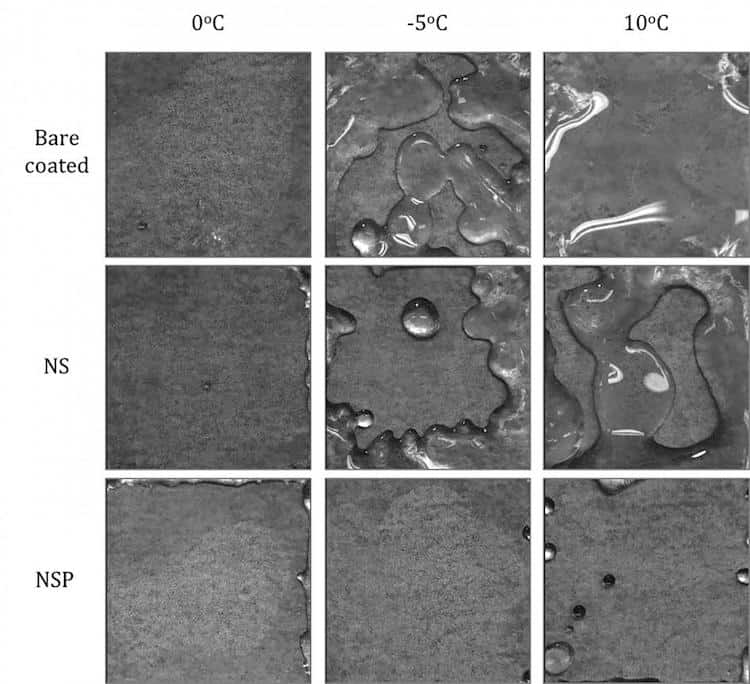
Researchers in Vietnam have developed a transparent nanostructure with anti-icing properties that could keep objects such as aircraft wings and wind turbines ice-free in cold, damp conditions. The material, which is inspired by the structure of moth eyes, consists of a quartz substrate coated with a monolayer of nano-sized polystyrene beads. The ensemble is then covered with a flat, insulating layer of paraffin.

Tinted solar panels allow plants to grow efficiently on ‘agrivoltaic’ farms

Tinted solar panels allow plants to grow efficiently on ‘agrivoltaic’ farms

03 Sep 2020


Tinted solar panels could allow land to be used to grow crops and generate electricity simultaneously, with financial gains, according to researchers in the UK and Italy. The orange solar panels absorb some wavelengths of light, while allowing those that are best for plant growth to pass through. The team even claim that their setup can produce crops offering superior nutrition.

Agrivoltaics uses land to simultaneously grow crops and produce electricity from solar panels. Usually opaque or neutral semi-transparent solar panels are used. Now, Paolo Bombelli, a biochemist at the University of Cambridge, and his colleagues used orange-tinted, semi-transparent solar panels to see if selective use of different wavelengths of light for plant growth and electricity production could offer additional benefits. The solar panels allow orange and red light to pass through, as these wavelengths are the most suitable for plant growth, while absorbing blue and green light to generate electricity.

Acoustic metamaterials and machine learning beat the diffraction limit

Acoustic metamaterials and machine learning beat the diffraction limit

25 Aug 2020


A system that reconstructs and classifies acoustic images with far smaller features than the wavelength of sound they emit has been developed by Bakhtiyar Orazbayev and Romain Fleury at the Swiss Federal Institute of Technology in Lausanne. Their technique beats the diffraction limit by combining a metamaterial lens with machine learning and could be adapted to work with light. The research could lead to new advances in image analysis and object classification, particularly in biomedical imaging.


The diffraction limit is a fundamental constraint on using light or sound waves to image tiny objects. If the separation between two features is smaller than about half the wavelength of the light or sound used, then the features cannot be resolved using conventional techniques.

Intricate sugar printing helps build blood vessels

Intricate sugar printing helps build blood vessels

26 Aug 2020 Catherine Steffel


Late one night I found myself on a Pinterest board trying to understand the appeal of isomalt for candy-making and edible cake decorations.

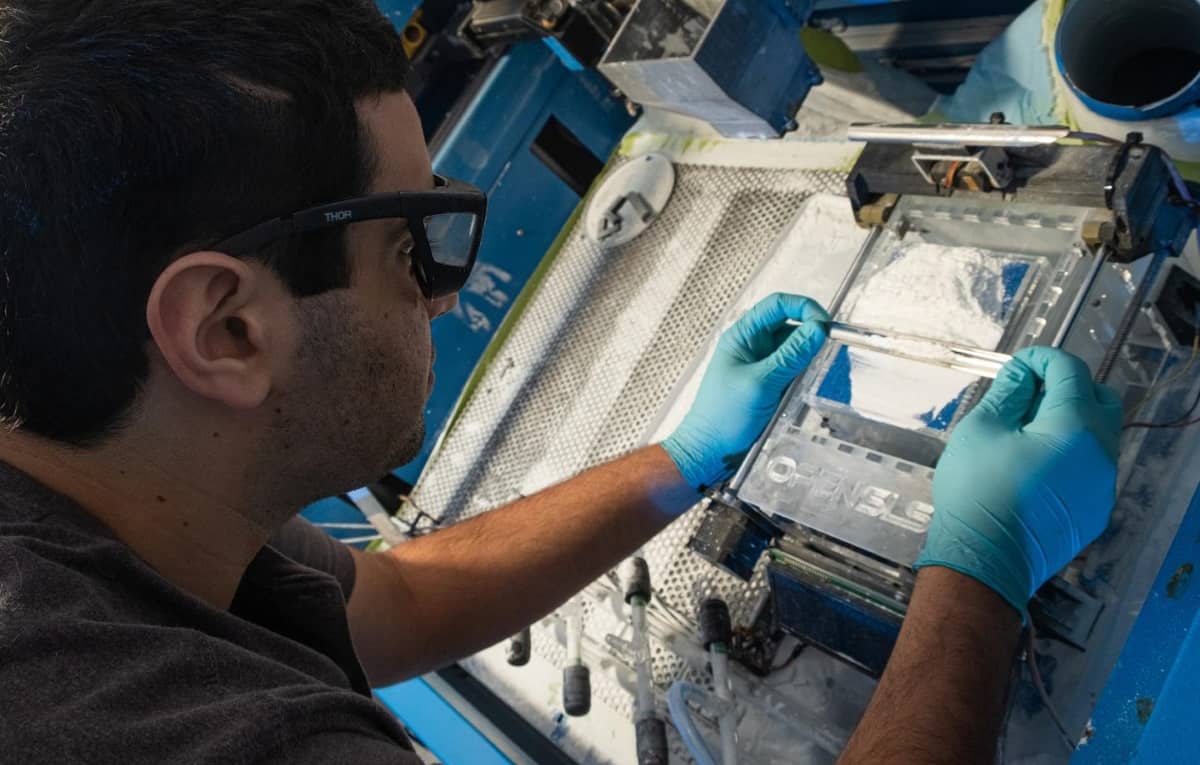
Why? A Twitter post announcing the latest research out of an interdisciplinary collaboration had caught my attention: complex networks of blood vessels can be 3D printed using isomalt, a sugar substitute usually used for making candies and decorative edible sculptures. Such work would open avenues for 3D printing personalized organs, reducing the human organ transplant shortage.

“Each year, thousands of patients die simply waiting for donor organs to become available,” says Jordan Miller, assistant professor at Rice University and the principal investigator leading the study. “These critical medical challenges motivate us every day to apply engineering principles to biology to build tissues and organs that can one day solve this challenge. Our own field of biomanufacturing, though still in its infancy, is rapidly gaining capabilities we couldn’t imagine a decade ago.”

Molecular Trojan Horse breaches blood–brain barrier

Molecular Trojan Horse breaches blood–brain barrier

27 Aug 2020


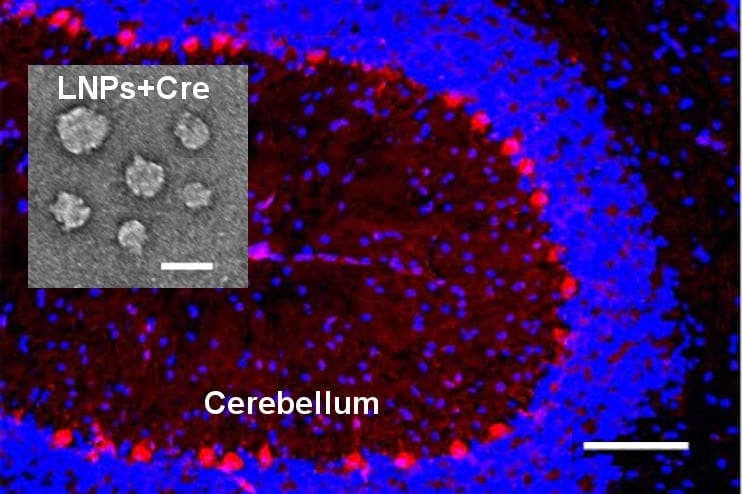
Nanoparticles doped with molecules derived from a neurotransmitter can smuggle chemical cargoes across the blood–brain barrier (BBB). A team at Tufts University in the US created such nanoparticles and used them to deliver a diverse range of therapeutic substances into the brains of mice. The technique could one day be used to treat neurological conditions such as infections and neurodegenerative disorders, while avoiding the side effects that accompany other methods for penetrating the BBB.