Scientists obtain detailed maps of earthquake-triggering high-pressure subsurface fluids
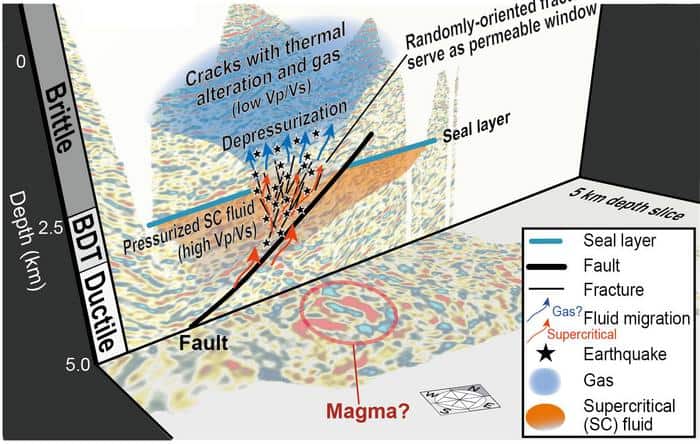 |
Researchers in Japan and Taiwan have captured three-dimensional images of an entire geothermal system deep in the Earth’s crust for the first time. By mapping the underground distribution of phenomena such as fracture zones and phase transitions associated with seismic activity, they argue that their work could improve earthquake early-warning models. It could also help researchers develop next-generation geothermal power technologies. This technology study leader, Takeshi Tsuji of the University of Tokyo, says it has enormous potential for clean, large-scale energy production.
“With a clear three-dimensional image of where supercritical fluids are located and how they move, we can identify promising drilling targets and design safer and more efficient development plans,” Tsuji says.