Bridging borders in medical physics: guidance, challenges, and opportunities
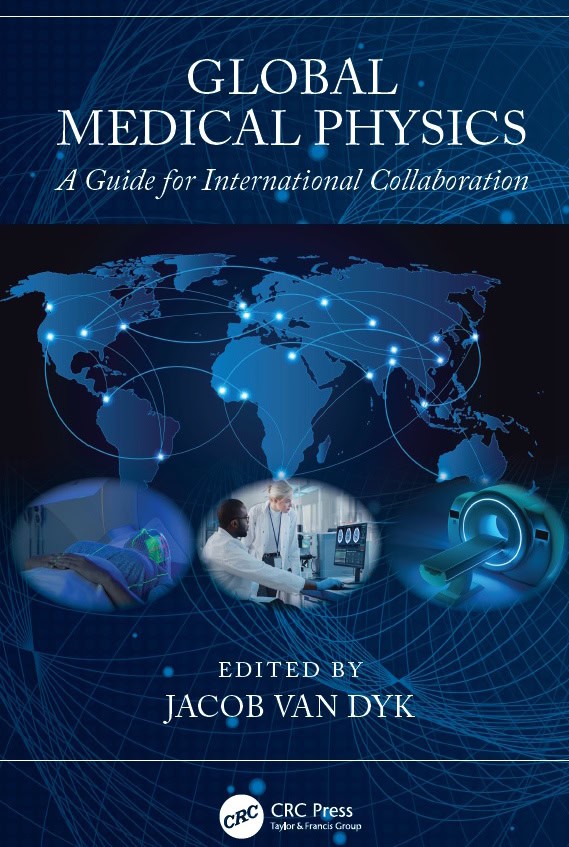
As the world population ages and the incidence of cancer and cardiac disease grows alongside, there’s an ever-increasing need for reliable and effective diagnostics and treatments. Medical physics plays a central role in both of these areas – from the development of a suite of advanced diagnostic imaging modalities to the ongoing evolution of high-precision radiotherapy techniques.
But access to medical physics resources – whether equipment and infrastructure, education and training programmes, or the medical physicists themselves – is massively imbalanced around the world. In low- and middle-income countries (LMICs), fewer than 50% of patients have access to radiotherapy, with similar shortfalls in medical imaging equipment. Lower-income countries also have the fewest medical physicists per capita.
This disparity has led to growing interest in global health initiatives, with professional organizations seeking to support medical physicists in lower-income regions. Alongside medical physicists, other healthcare professionals strive to collaborate internationally across clinical, educational, and research settings.
Successful multicultural collaborations, however, can be hindered by cultural, language, and ethical barriers, as well as by limited access to the internet and the latest technological advances. Medical physicists trained in high-income contexts may not always understand the circumstances and limitations of those working in lower-income environments.
Aiming to overcome these obstacles, a new book titled Global Medical Physics: A Guide for International Collaboration offers essential guidance for those seeking to participate in such initiatives. The text addresses the complexities of partnering with colleagues in different countries and working across diverse healthcare environments, including clinical and educational medical physics circles, as well as research and academic settings.
“I have been involved in providing support to medical physicists in lower-income contexts for several years, especially through the International Atomic Energy Agency (IAEA), but also through professional organizations like the American Association of Physicists in Medicine (AAPM),” explains the book’s editor, Jacob Van Dyk, emeritus professor at Western University in Canada. “It is out of these experiences that I felt it might be appropriate and helpful to provide some educational materials that address these issues. The outcome was this book, with input from those with these collaborative experiences.”
Shared experience
The book brings together contributions from 34 authors across 21 countries, including both high- and low-resource settings. The authors – selected for their expertise and experience in global health and medical physics – provide guidelines for success and identify potential barriers and concerns across a wide range of themes, targeting multiple levels of expertise.
With the rapid emergence of artificial intelligence (AI) in healthcare, the book examines the role of information and communication technologies and AI in global collaboration. Elsewhere, authors highlight the need for data sharing in medical physics and describe examples of data-sharing applications and technologies.
Medical physics explained in 22 tales
Other chapters consider the benefits of cross-sector collaborations with industry, sustainability within global collaborations, the development of effective mentoring programmes – including a look at challenges faced by LMICs in providing adequate medical physics education and training – and equity, diversity, and inclusion and ethical considerations in the context of global medical physics.
The book rounds off by summarizing the key topics discussed in the earlier chapters. This information is divided into six categories: personal factors, collaboration details, project preparation, planning and execution, and post-project considerations.
“Hopefully, the book will provide an awareness of factors to consider when involved in global international collaborations, not only from a high-income perspective but also from a resource-constrained perspective,” says Van Dyk. “It was for this reason that when I invited authors to develop chapters on specific topics, they were encouraged to invite a co-author from another part of the world, so that it would broaden the depth of experience.”


Δεν υπάρχουν σχόλια:
Δημοσίευση σχολίου