‘Relief’, as an industrial megaproject in Chile that threatened the world’s darkest skies,s is cancelled
 |
A proposed industrial-scale green hydrogen and ammonia project in Chile that astronomers warned could cause “irreparable damage” to the clearest skies in the world has been cancelled. The decision by AES Andes, a subsidiary of the US power company AES Corporation, to shelve plans for the INNA complex has been welcomed by the European Southern Observatory (ESO).
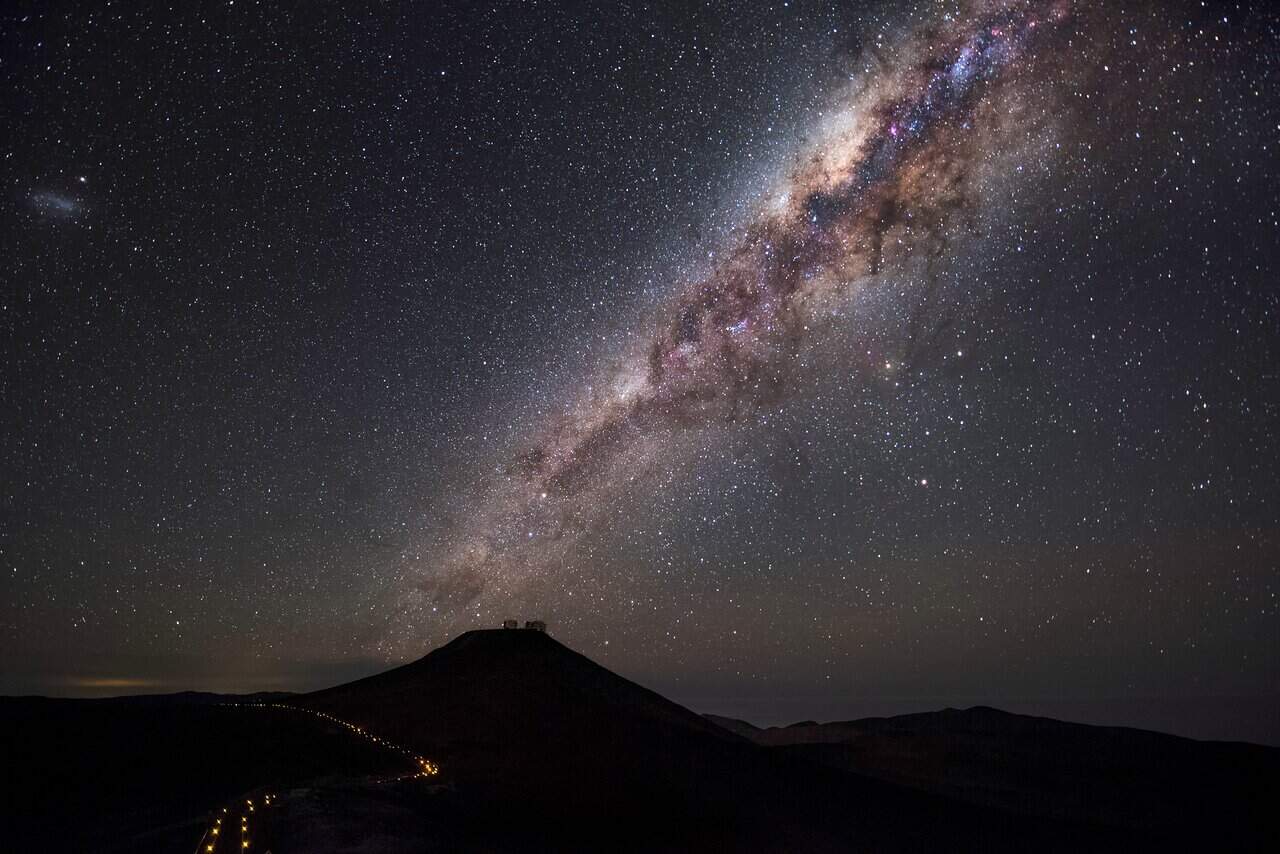
AES Andes submitted an Environmental Impact Assessment for the green hydrogen project in December 2024. Expected to cover more than 3000 hectares, it would have been located just a few kilometres from ESO’s Paranal Observatory in Chile’s Atacama Desert, which is one of the world’s most important astronomical research sites due to its stable atmosphere and lack of light pollution.
That same month, ESO conducted its own impact assessment, concluding that INNA would increase light pollution above Paranal’s Very Large Telescope by at least 35% and by more than 50% above the southern site of the Cherenkov Telescope Array Observatory (CTAO).
Once built, the CTAO will be the world’s most powerful ground-based observatory for very-high-energy gamma-ray astronomy.
ESO director general Xavier Barcons had warned that the hydrogen project would have posed a major threat to “the performance of the most advanced astronomical facilities anywhere in the world”.
On 23 January, however, AES Andes announced that it will discontinue plans to develop the INNA complex. The firm stated that after reviewing its project portfolio, it had chosen to focus on renewable energy and energy storage. On 6 February, AES Andes sent a letter to Chile’s Environmental Assessment Service requesting that INNA not be evaluated, which formally confirmed the end of the project.
Barcons says that ESO is “relieved” about the decision, adding that the case highlights the urgent need to establish clear protection measures in the areas around astronomical observatories.
Barcons notes that green-energy projects, as well as other industrial projects, can be “fully compatible” with astronomical observatories as long as the facilities are located at sufficient distances away.
Romano Corradi, director of the Gran Telescopio Canarias at the Roque de los Muchachos Observatory on La Palma, Spain, told Physics World that he was “delighted” with the decision.
Corradi adds that, while it is unclear whether preserving the region's night-sky darkness was a relevant factor in the decision to cancel the project, he hopes that global pressure to defend the dark skies played a role.
Michael Allen is a science writer based in the UK
FROM PHYSICSWORLD.COM 20/2/2026

Δεν υπάρχουν σχόλια:
Δημοσίευση σχολίου